The Centurion's Servant: Only Say the Word
In Matthew 8:5-13 a centurion in Capernaum pleads for his paralyzed servant, and his humble words are now prayed by the faithful before Communion.
Bless someone else by sharing this story.
Free to copy and share. Please credit lightofsaints.com.
Key idea
Matthew 8:5-13 tells of a centurion in Capernaum who pleads with Jesus for his paralyzed servant, then admits he is not worthy to have Jesus enter his house and trusts that a single word is enough. Jesus praises his faith, and the servant is healed at that very hour. The faithful echo this centurion's humility and faith in the prayer before Communion, when Christ comes as a guest.
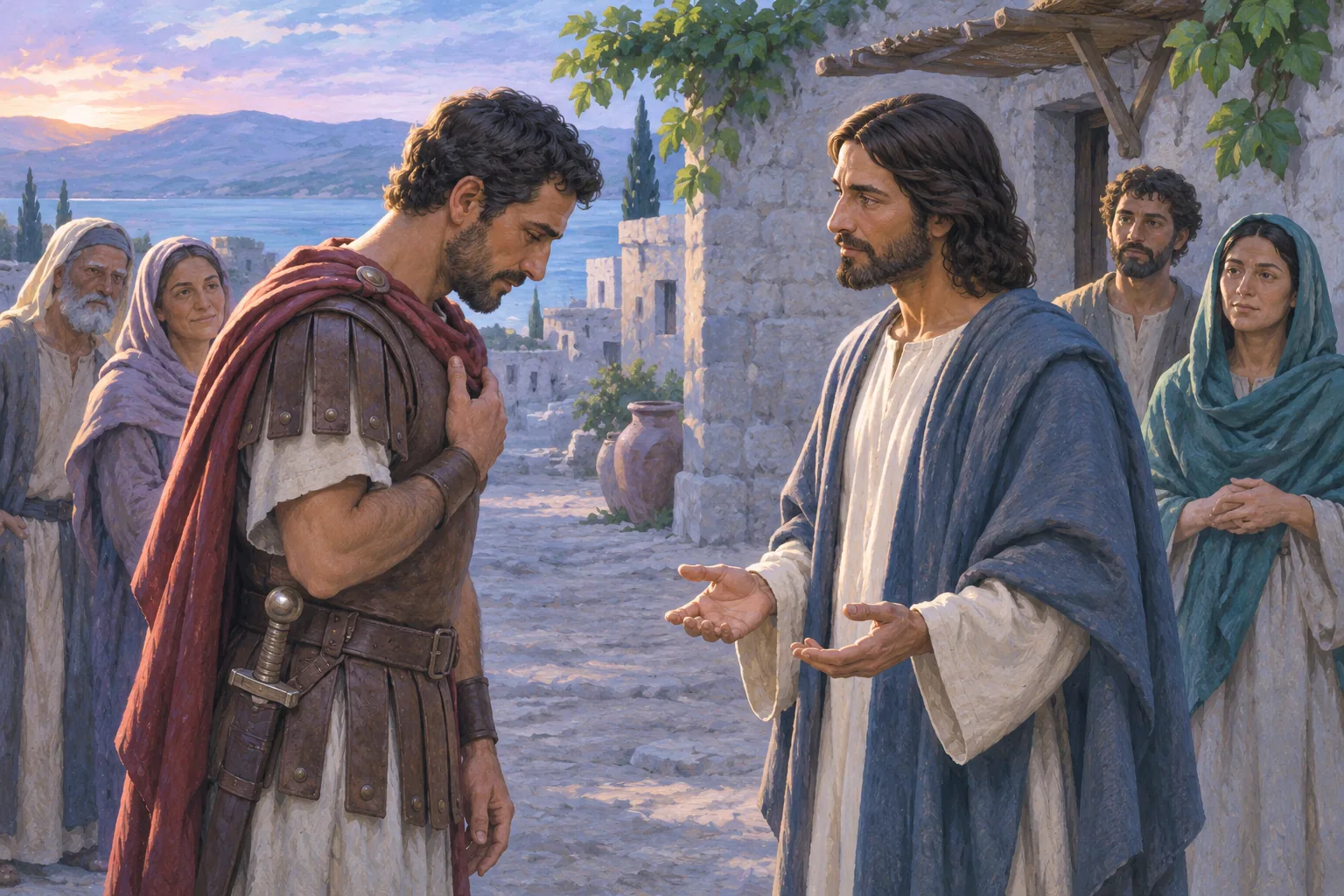
Picture Capernaum that day. Jesus had just entered the town, and people were following him. Then a centurion, a commander of soldiers, came up to him. Perhaps some watched in surprise, since he was used to giving orders, not pleading. Yet that day he came to ask for help, and not for himself.
He told Jesus that his servant was lying at home paralyzed and suffering dreadfully. Jesus did not delay or set any conditions. Matthew records his answer: “He said to him, "I will come and cure him."” (Mt 8:7)

The centurion's reply was unexpected. Perhaps he felt that a visit from Jesus to his house was too great an honor for him. He did not ask Jesus to hurry. Instead he humbly declined that honor, while still hoping with his whole heart.
The centurion said in reply, "Lord, I am not worthy to have you enter under my roof; only say the word and my servant will be healed. (Mt 8:8)
New American Bible: Mt 8:5-13
He then explained his reasoning from his own world. He was a man under authority, yet he also had soldiers under him. If he told one soldier to go, the soldier went; if he called another, that one came; if he told his slave to do something, the slave did it. He believed that the word of Jesus had real power, even from a distance.
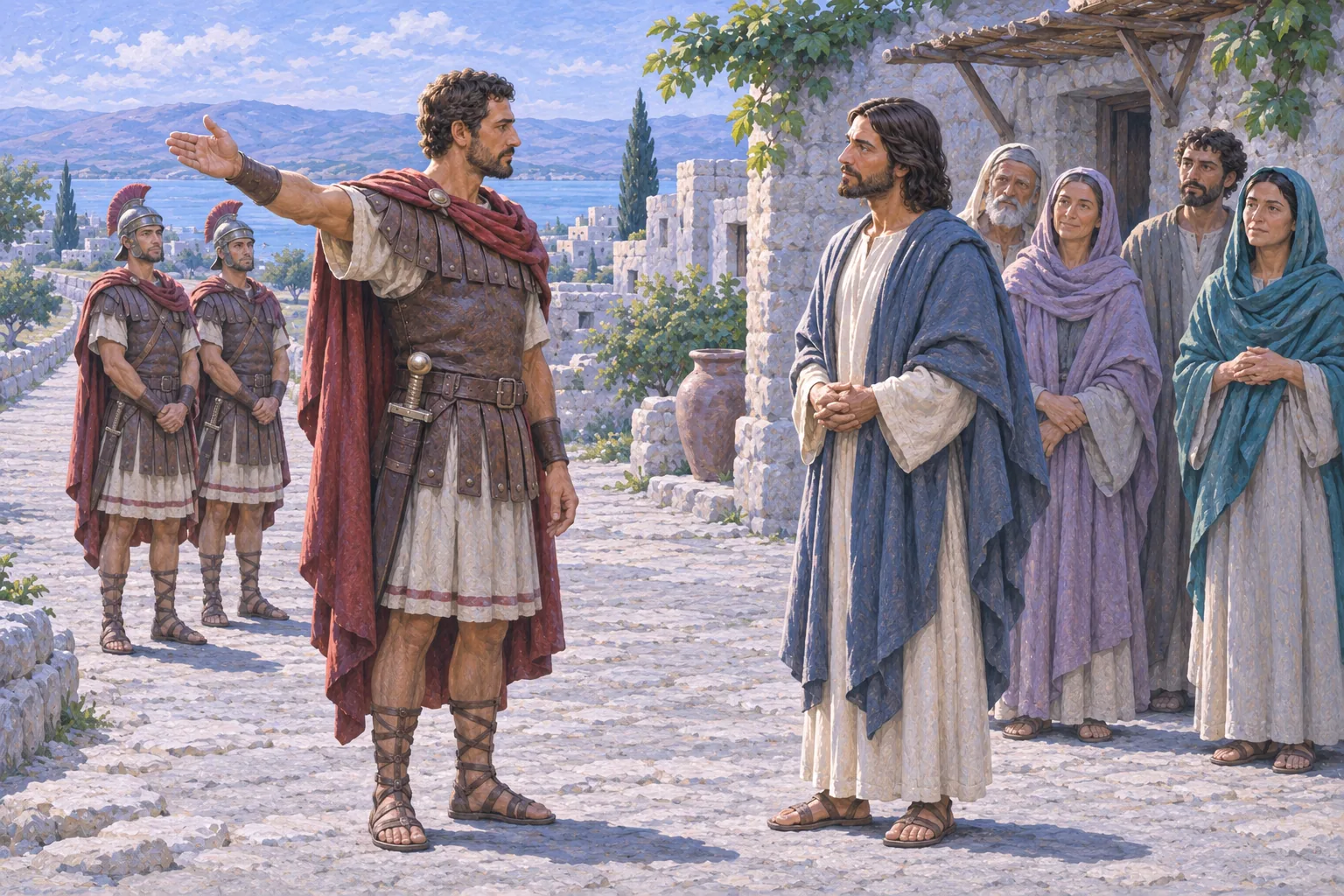
Matthew records what happened next: “When Jesus heard this, he was amazed and said to those following him, "Amen, I say to you, in no one in Israel have I found such faith.” (Mt 8:10) What Jesus praised was his faith, not his rank.
Jesus then said that many would come from the east and the west and share the banquet with Abraham, Isaac, and Jacob in the kingdom of heaven. He also gave a stern warning that the children of the kingdom would be driven out into the outer darkness, a place of wailing and grinding of teeth. These are strong words, an invitation to every listener not to feel secure without faith.
Finally Jesus spoke to the centurion: “And Jesus said to the centurion, "You may go; as you have believed, let it be done for you." And at that very hour (his) servant was healed.” (Mt 8:13) Jesus did not set foot in that house. His word was enough, just as the centurion had believed.

Matthew does not describe the walk home. But imagine the centurion turning back with nothing to hold on to except one sentence from Jesus, without seeing any proof. Perhaps his heart was pounding. Meanwhile the servant who had been lying there suffering was already healed, at the very hour Jesus spoke.
The Centurion and the Kingdom Banquet
Matthew calls him only a centurion and gives no name. Saint John Paul II, in his homily in Reykjavik on June 4, 1989, called him a Roman centurion, a soldier serving in the land of Israel, a foreigner and not a Jew. The centurion himself says he is a man under authority who also commands soldiers, so he lived within a clear chain of command.
Jesus names Abraham, Isaac, and Jacob, the patriarchs of Israel. The image of a banquet with them shows that the kingdom of heaven is open to many from the east and the west. John Paul II stressed that all people, whatever their race, nation, language, and culture, are called into the communion of the People of God.
The warning about the children of the kingdom is not a verdict on one people. Jesus himself, his disciples, and the patriarchs were Israelites. His words are better read as a call to conversion and faith for every listener, including readers today.
The Centurion's Words at Mass
The Catechism teaches that before the Sacrament of the Eucharist the faithful echo the centurion's words humbly and with ardent faith. It cites the prayer before Communion, which runs roughly: Lord, I am not worthy that you should enter under my roof, but only say the word and my soul shall be healed (CCC 1386). In this prayer, what we ask for is the healing of the soul.
Saint John Paul II reminded the faithful that they say these words at every Mass because they express a strong and deep faith: God is all-holy and the Creator, while we are his creatures and children, in need of healing from sin. In the Eucharist, the faithful share sacramentally in that same gift.
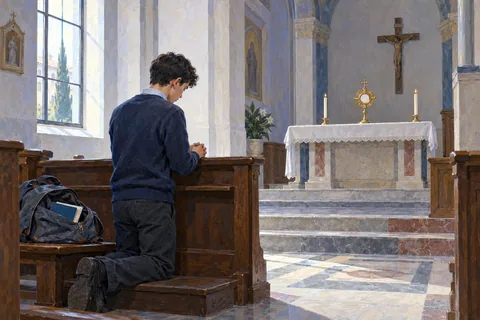
The Catechism also teaches that the faithful should prepare themselves, and anyone conscious of grave sin should receive the sacrament of Reconciliation first. For teenagers and young adults, the centurion's attitude points the way: feeling unworthy is not a reason to stay away from Jesus but a reason to come and trust. Even our posture at Communion can show reverence and joy, because Christ comes as our guest.
At a glance
- Reading
- Matthew 8:5-13
- Form
- Event
- People
- Jesus · The centurion · The centurion's servant · Those following Jesus · Abraham, Isaac, and Jacob
- Places
- Capernaum · The centurion's house · Israel · Kingdom of heaven
People in this story
This story is retold by the Light of Saints editorial team from the Catholic edition of Scripture and the Church sources listed, with the help of AI, and checked by an editor. Some of the atmosphere and the characters' feelings are our portrayal. For the full text, read the passage in Scripture.
Take this story into your prayer.
Common questions
Who was the centurion in Capernaum in Matthew's Gospel?
Matthew does not give his name. He was a man under authority who also commanded soldiers, and Saint John Paul II called him a Roman centurion, a foreigner serving in the land of Israel.
Why did the centurion say he was not worthy to have Jesus enter his house?
He admitted he was unworthy and believed one word from Jesus was enough to heal his servant. According to Saint John Paul II, he knew this gift far exceeded anything human beings can achieve.
How is the centurion's story connected to the prayer before Communion?
The Catechism teaches that before the Eucharist the faithful echo the centurion's words with humility and faith, in a prayer asking the Lord only to say the word so that the soul may be healed (CCC 1386).
Did Jesus go to the centurion's house?
No. Jesus told the centurion to go home and said it would be done for him as he had believed, and his servant was healed at that very hour.
What do the people from the east and the west mean in this story?
Jesus said many from the east and the west would share the banquet with Abraham, Isaac, and Jacob in the kingdom of heaven. John Paul II taught that all people, whatever their nation, are called into the People of God.
Context & sources
Mt 8:5-13
Scripture quotations are from the New American Bible © Confraternity of Christian Doctrine, Washington, D.C.
Published at www.vatican.va
Cited as a Church source; the source text remains its publisher's.
Published at www.vatican.va
Cited as a Church source; the source text remains its publisher's.
Free to copy and share. Please credit lightofsaints.com. Copyright