The Annunciation: Mary's Yes in Nazareth
In Luke 1:26-38, the angel Gabriel brings God's message to Mary in Nazareth, and she answers freely as the handmaid of the Lord.
Bless someone else by sharing this story.
Free to copy and share. Please credit lightofsaints.com.
Key idea
In Luke 1:26-38, God sends the angel Gabriel to Mary, a virgin in Nazareth, to announce that she will conceive Jesus, the Son of God, by the power of the Holy Spirit. Mary is troubled, asks a question, then declares herself the handmaid of the Lord. The Annunciation shows a God who comes gently without forcing, and a Mary who answers freely, humbly and with trust.
Luke opens this story with a sending. In the sixth month, God sent the angel Gabriel to Nazareth, a town of Galilee. He was sent to a virgin named Mary, betrothed to Joseph, of the house of David. That sixth month, as the angel himself later explains, is the sixth month of the pregnancy of Elizabeth, Mary's relative.
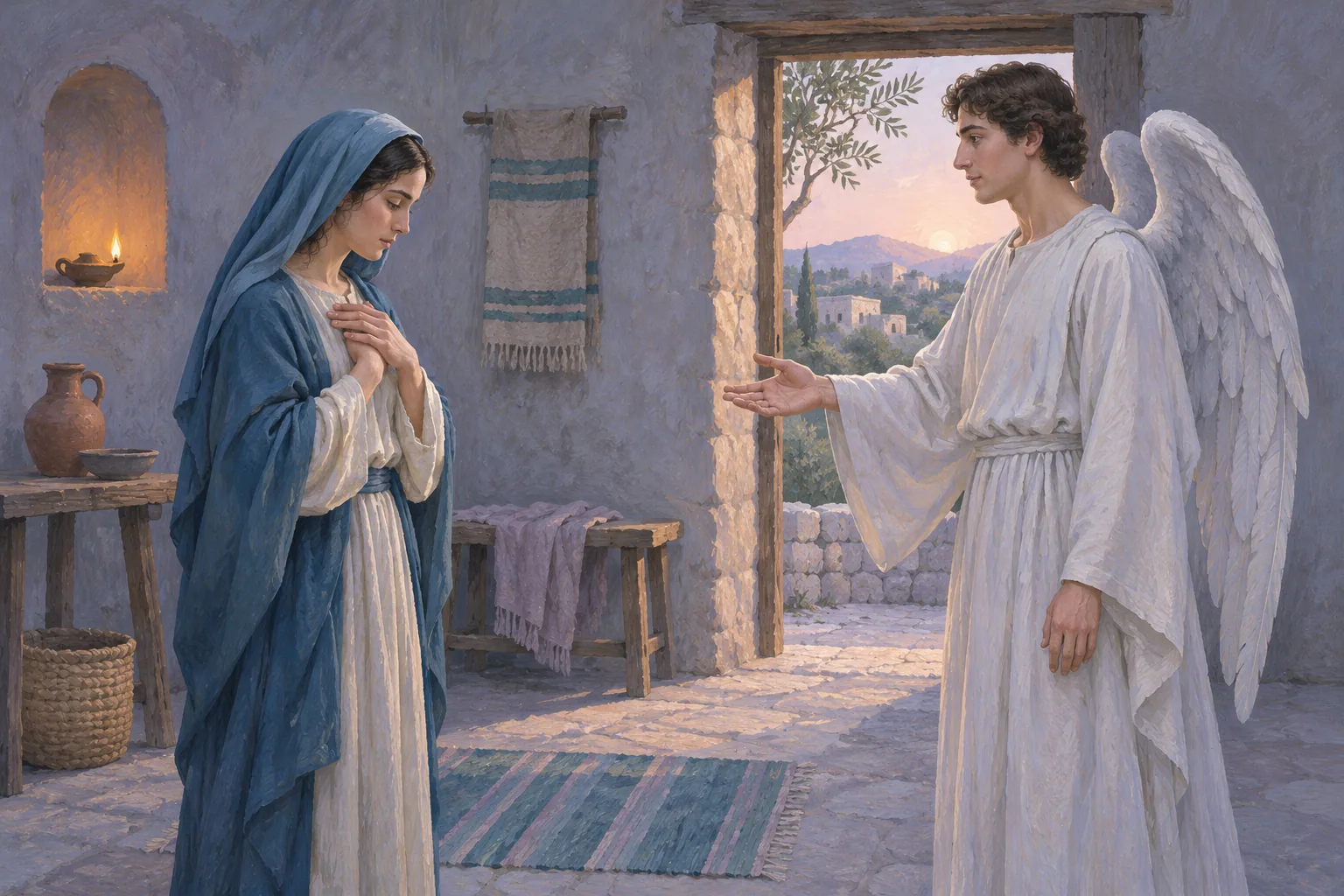
Imagine that simple house in Nazareth and a young virgin expecting nothing unusual. Then God's messenger came. Luke writes: “And coming to her, he said, "Hail, favored one! The Lord is with you."” (Lk 1:28)
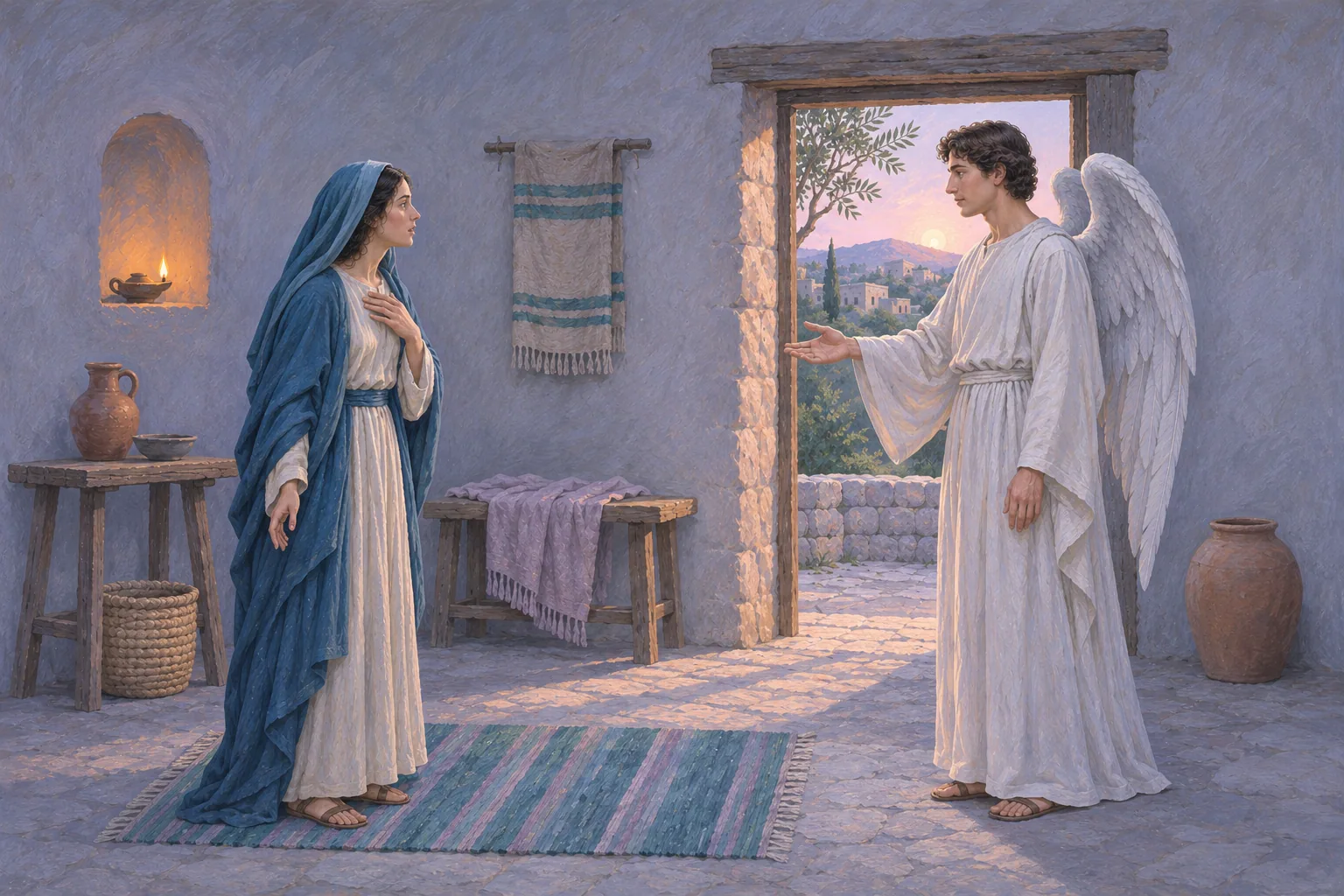
Mary was greatly troubled at what was said and pondered what sort of greeting this might be. Perhaps she wondered why she was called favored, and what the Lord wanted of her. She did not rush to answer. She weighed the greeting in her heart.
The angel told Mary not to be afraid, for she had found favor with God. Then he gave the news that changes everything: Mary would conceive and bear a son, and she was to name him Jesus.
The angel said that the child would be great and would be called Son of the Most High. The Lord God would give him the throne of David his father. He would rule over the house of Jacob forever, and of his kingdom there would be no end.
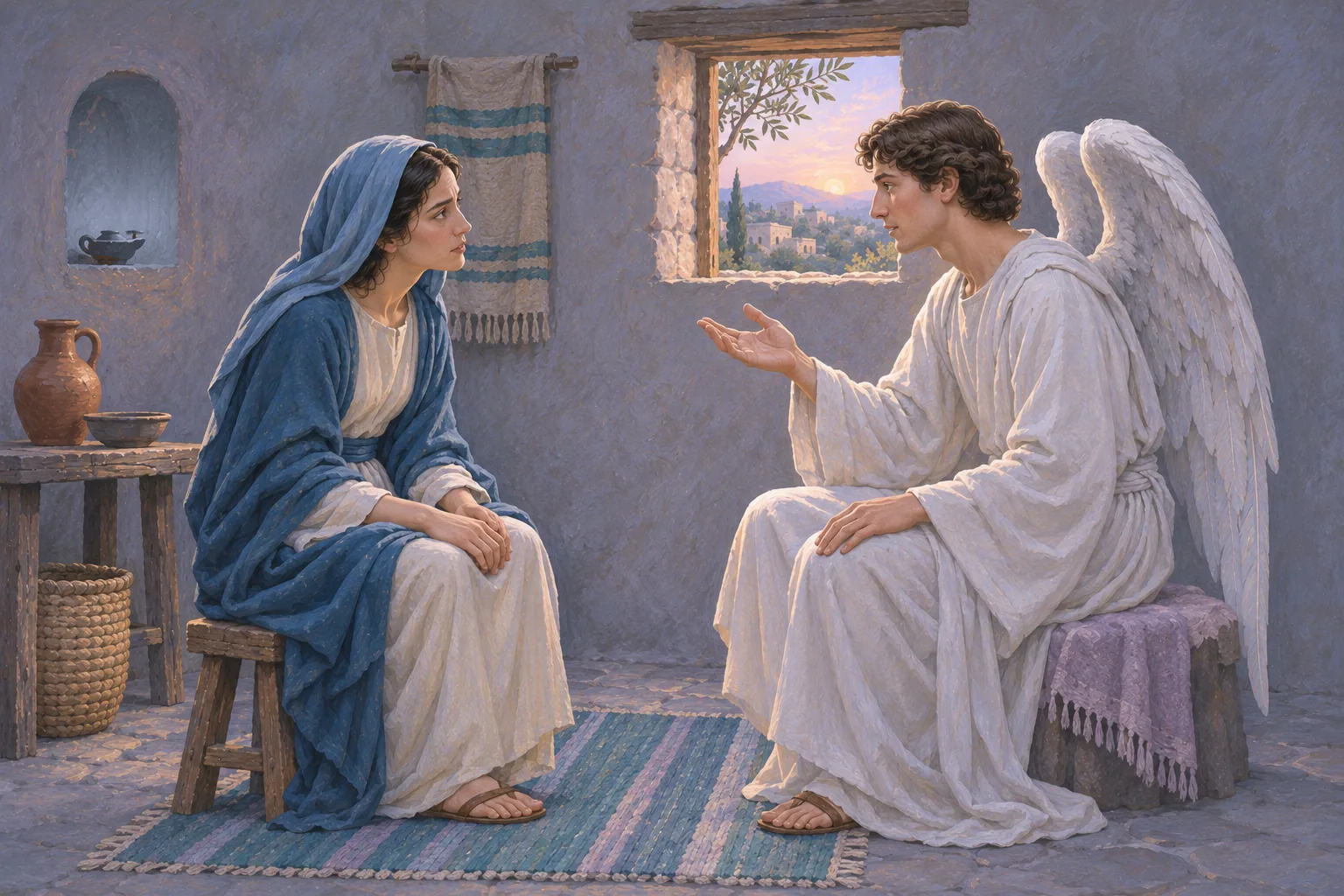
Mary did not hide her question. Luke records: “But Mary said to the angel, "How can this be, since I have no relations with a man?"” (Lk 1:34). Her question was not a refusal. Perhaps she simply wanted to truly understand what God was asking before giving her answer.
The angel answered that the Holy Spirit would come upon her and the power of the Most High would overshadow her. Therefore the child to be born would be called holy, the Son of God. The angel also gave a sign: Elizabeth, Mary's relative, who was called barren, had conceived a son in her old age, and this was her sixth month. For, the angel said, nothing will be impossible for God.
Then Mary gave her answer: “Mary said, "Behold, I am the handmaid of the Lord. May it be done to me according to your word." Then the angel departed from her.” (Lk 1:38). In a single sentence, the virgin of Nazareth placed the plan of her life in God's hands. Luke's account ends there, with Mary having said yes.
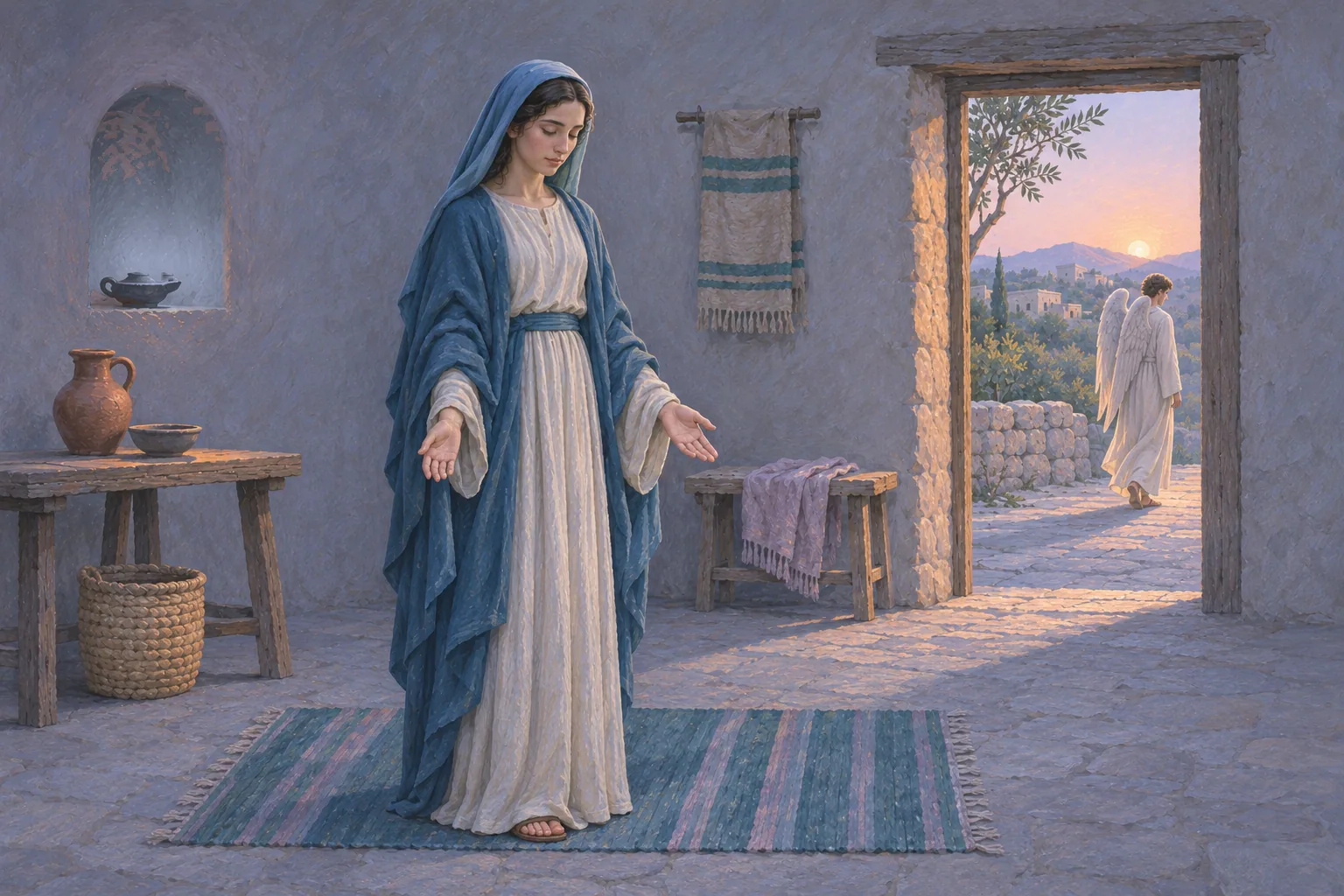
The Setting of the News from Nazareth
Luke places this event in Nazareth, a town in the region of Galilee. He notes two things about Mary: she is a virgin, and she is betrothed to Joseph, of the house of David. The detail about David's house matters, because the angel says that Mary's son will receive the throne of David his father. The throne of Israel's royal ancestor is now linked to a child to be conceived in Nazareth.
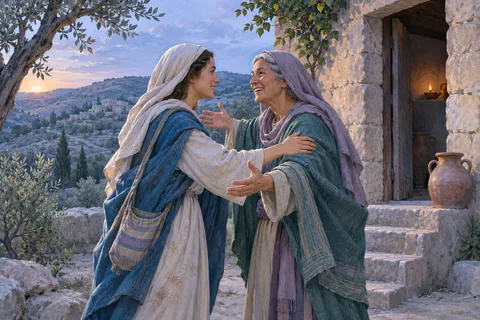
The text itself explains the sixth month: it is the sixth month of Elizabeth's pregnancy, not the name of a calendar month. A Church message to young people notes that after this event Mary went to help Elizabeth. In the liturgy, Pope Francis noted that the Gospel of the Annunciation was read on the Fourth Sunday of Advent in 2023, and on the Sunday before Christmas in 2017.
The Meaning of Mary's Yes
Pope Francis stresses that the child to be born of this simple girl of Nazareth is called Son of the Most High, a dignity greater than anyone could imagine. Yet Mary does not exalt herself. According to the Pope, she remains humble and declares her readiness for the Lord's plan, aware that its fulfillment depends on her answer.
Pope Francis also reads the image of overshadowing in verse 35 as the way God acts: a tender love that protects without violating freedom. Mary's answer can therefore be understood as a free consent full of faith. God offers, and Mary answers willingly.
In his Message for the 37th World Youth Day, Pope Francis wrote that after hearing the Annunciation, Mary could have been absorbed in her own worries and fears because of her situation. Instead, she entrusted herself completely to the Lord.
For teenagers and young adults, this story is close to the experience of having life plans suddenly change. The same message says that the young Mary was not paralyzed by that change, because Jesus was within her. Pope Francis invites us to love as God loves: welcoming, protecting and respecting others, for example by staying beside a friend who feels lost.
At a glance
- Reading
- Luke 1:26-38
- Form
- Event
- People
- Mary · Gabriel · Joseph · Elizabeth · Jesus · David
- Places
- Nazareth · Galilee
- Read at Mass
- Fourth Sunday of Advent (example: 2023) vatican.va
- Read at Mass
- Sunday before Christmas (example: 2017) press.vatican.va
People in this story
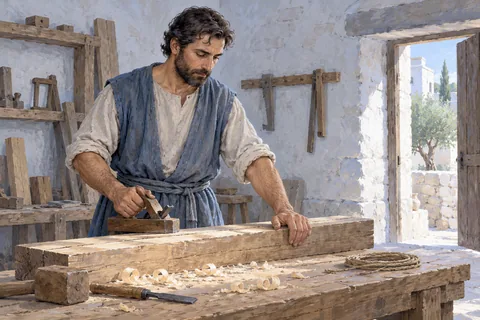
This story is retold by the Light of Saints editorial team from the Catholic edition of Scripture and the Church sources listed, with the help of AI, and checked by an editor. Some of the atmosphere and the characters' feelings are our portrayal. For the full text, read the passage in Scripture.
Take this story into your prayer.
Common questions
Which angel brought the Annunciation to Mary?
Luke writes that God sent the angel Gabriel to Nazareth in Galilee, to a virgin named Mary who was betrothed to Joseph, of the house of David.
Where is the Annunciation in the Bible?
The story is found in the Gospel of Luke 1:26-38. Pope Francis noted that this Gospel was read on the Fourth Sunday of Advent in 2023.
Did Mary doubt when she questioned the angel?
Mary's question in Luke 1:34 is better read as a desire to understand God's will. According to Pope Francis, Mary remained humble and declared her readiness for the Lord's plan.
What sign did the angel give Mary at the Annunciation?
The angel said that Elizabeth, Mary's relative who was called barren, had conceived in her old age and was in her sixth month, for nothing will be impossible for God.
What did Mary do after the Annunciation?
Pope Francis's Message for the 37th World Youth Day says that Mary went to help Elizabeth, because she was convinced that the Lord's plan was the best plan for her life.
Context & sources
Lk 1:26-38
Scripture quotations are from the New American Bible © Confraternity of Christian Doctrine, Washington, D.C.
Published at www.vatican.va
Cited as a Church source; the source text remains its publisher's.
Published at press.vatican.va
Cited as a Church source; the source text remains its publisher's.
Published at www.vatican.va
Cited as a Church source; the source text remains its publisher's.
Free to copy and share. Please credit lightofsaints.com. Copyright