The Visitation: Mary Brings Jesus to Others
In the Visitation (Luke 1:39-56), Mary hurries to the hill country of Judah, Elizabeth, filled with the Holy Spirit, blesses her, and Mary praises God.
Bless someone else by sharing this story.
Free to copy and share. Please credit lightofsaints.com.
Key idea
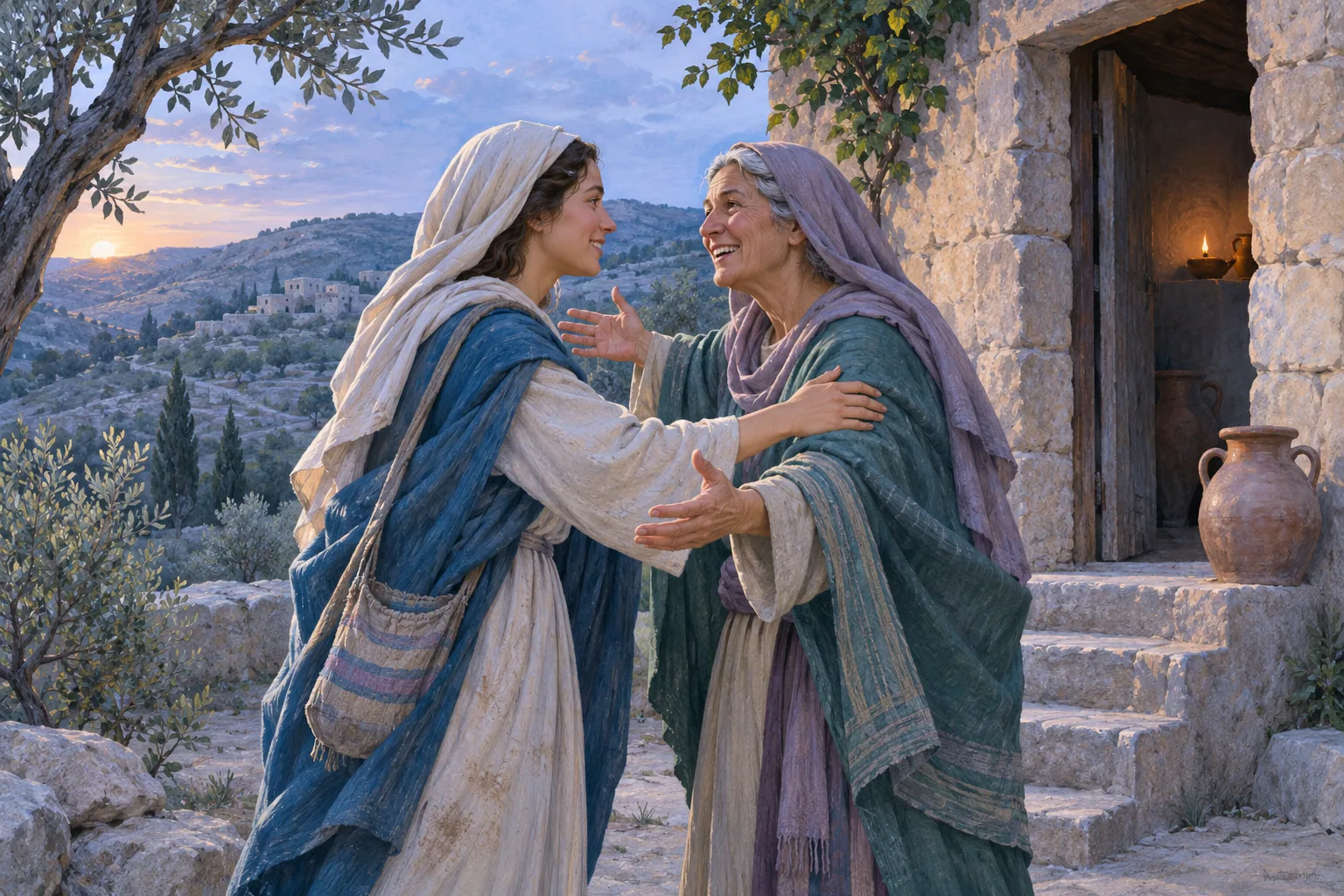
The story of the Visitation is found in Luke 1:39-56: Mary travels to the hill country of Judah, greets Elizabeth, and the infant in Elizabeth's womb leaps for joy. Elizabeth praises Mary for her faith, and Mary glorifies the Lord in her song. Mary at once carries the grace she has just received to someone else, and she gives all the praise back to God.
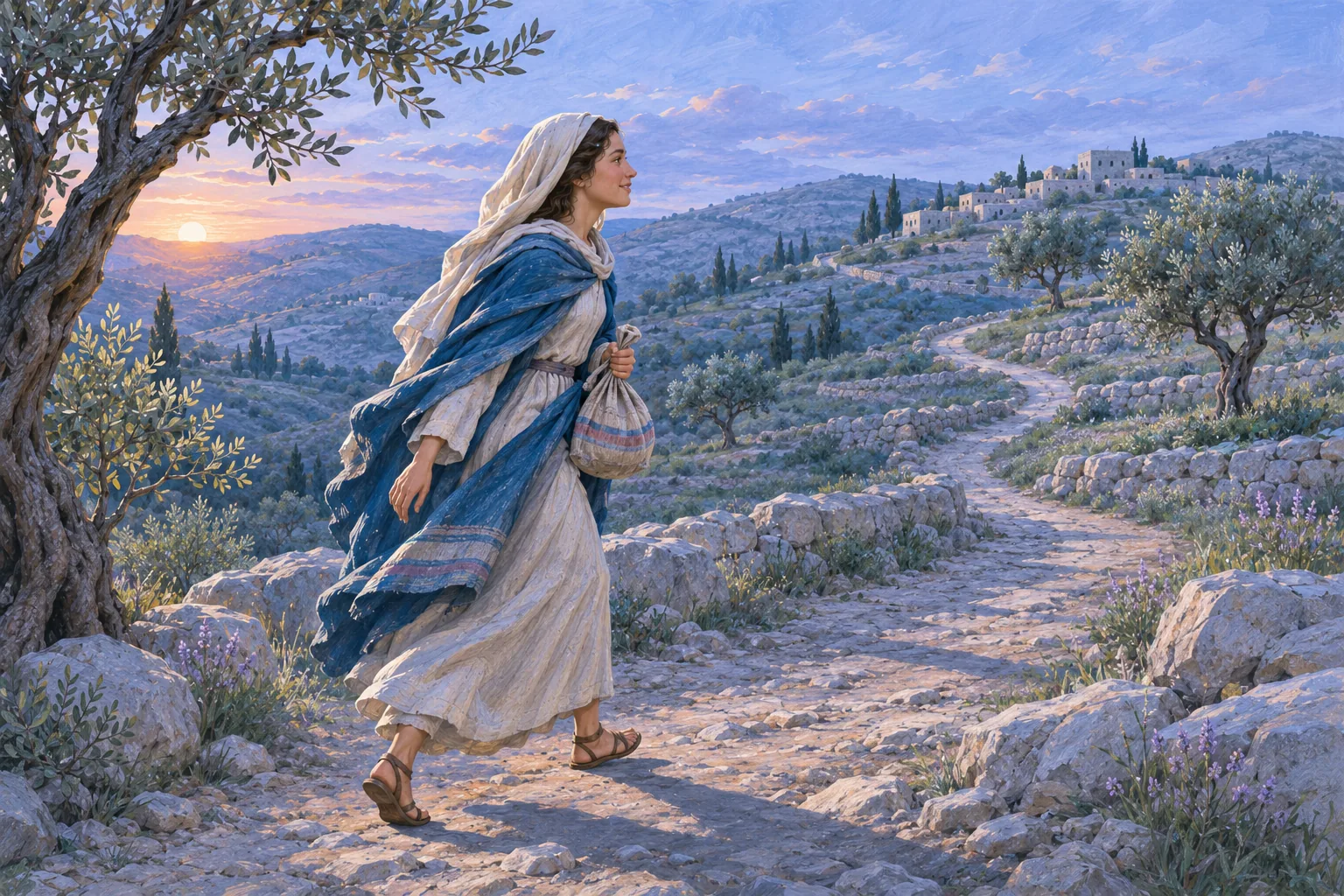
Some time after the angel came to her, Mary set out. Luke writes that she went in haste into the hill country to a town of Judah. Imagine a rocky road rising and falling, and a young woman who does not delay. Perhaps the great news she had just received was still echoing in her heart.
The angel had also told Mary that Elizabeth, her relative who was called barren, was in her sixth month. Now Mary reached her destination. She entered the house of Zechariah and greeted Elizabeth. That simple greeting opened the way to something far greater.
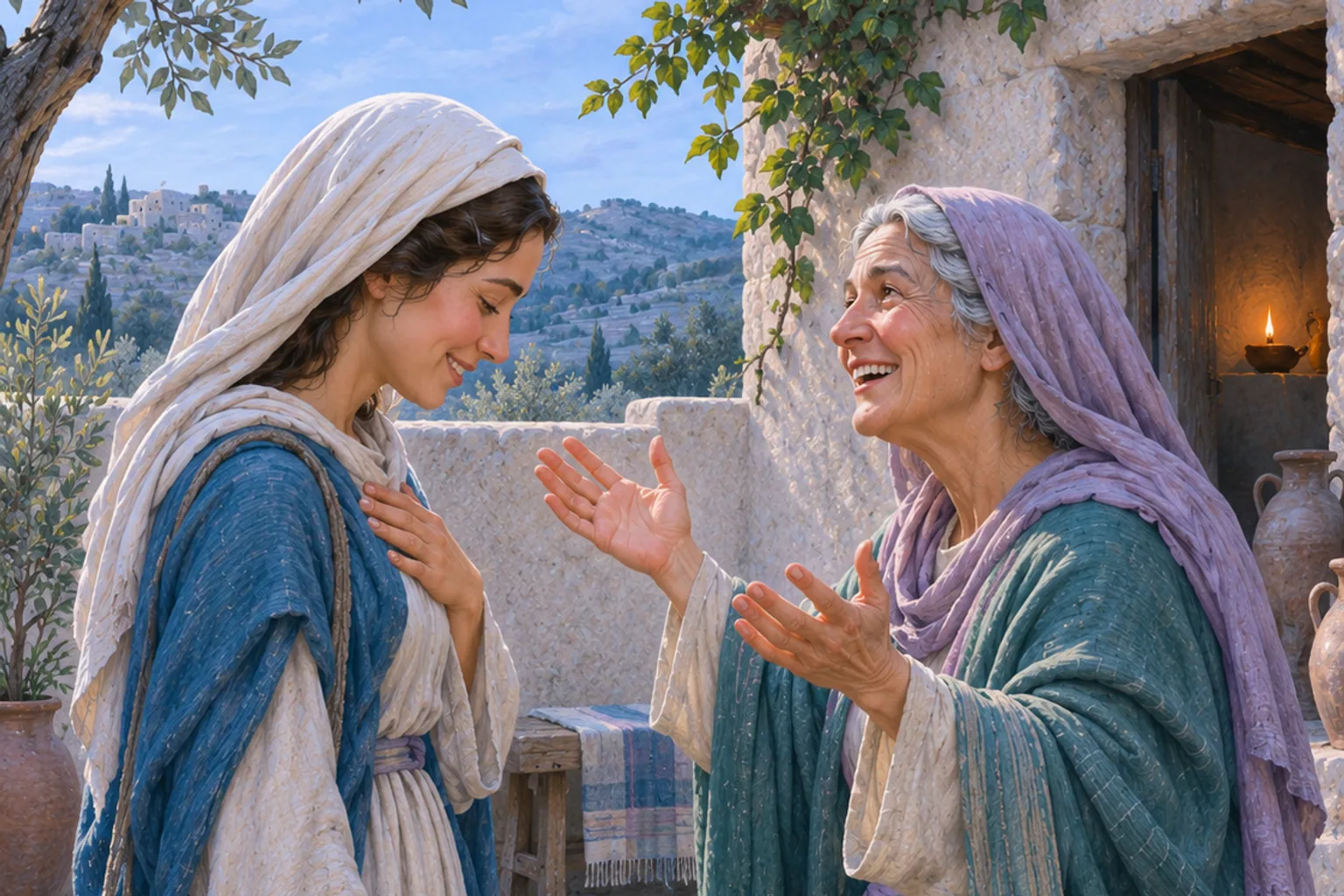
When Elizabeth heard Mary's greeting, the infant leaped in her womb, and Elizabeth was filled with the Holy Spirit. She cried out in a loud voice that Mary was blessed among women and that the fruit of her womb was blessed too. Then she asked: “And how does this happen to me, that the mother of my Lord should come to me?” (Lk 1:43)
Perhaps Elizabeth herself was amazed by what she had just experienced. She told Mary that the moment her greeting reached her ears, the infant in her womb leaped for joy. Then she praised Mary's faith: “Blessed are you who believed that what was spoken to you by the Lord would be fulfilled."” (Lk 1:45)
Mary answered with a song. Luke records it: “And Mary said: "My soul proclaims the greatness of the Lord; my spirit rejoices in God my savior.” (Lk 1:46-47). Mary praises God, who has looked upon the lowliness of his handmaid. From now on, she says, all ages will call her blessed, because the Mighty One has done great things for her, and holy is his name.
The song then widens from Mary's own story to the whole people. Mary praises God's mercy, which reaches from age to age to those who fear him, and the God who scatters the arrogant of mind and heart. She sings: “He has thrown down the rulers from their thrones but lifted up the lowly.” (Lk 1:52). God fills the hungry and sends the rich away empty.
At the end of her song, Mary praises God, who has helped Israel his servant, remembering his mercy. All this happens as God promised to our ancestors, to Abraham and to his descendants forever.
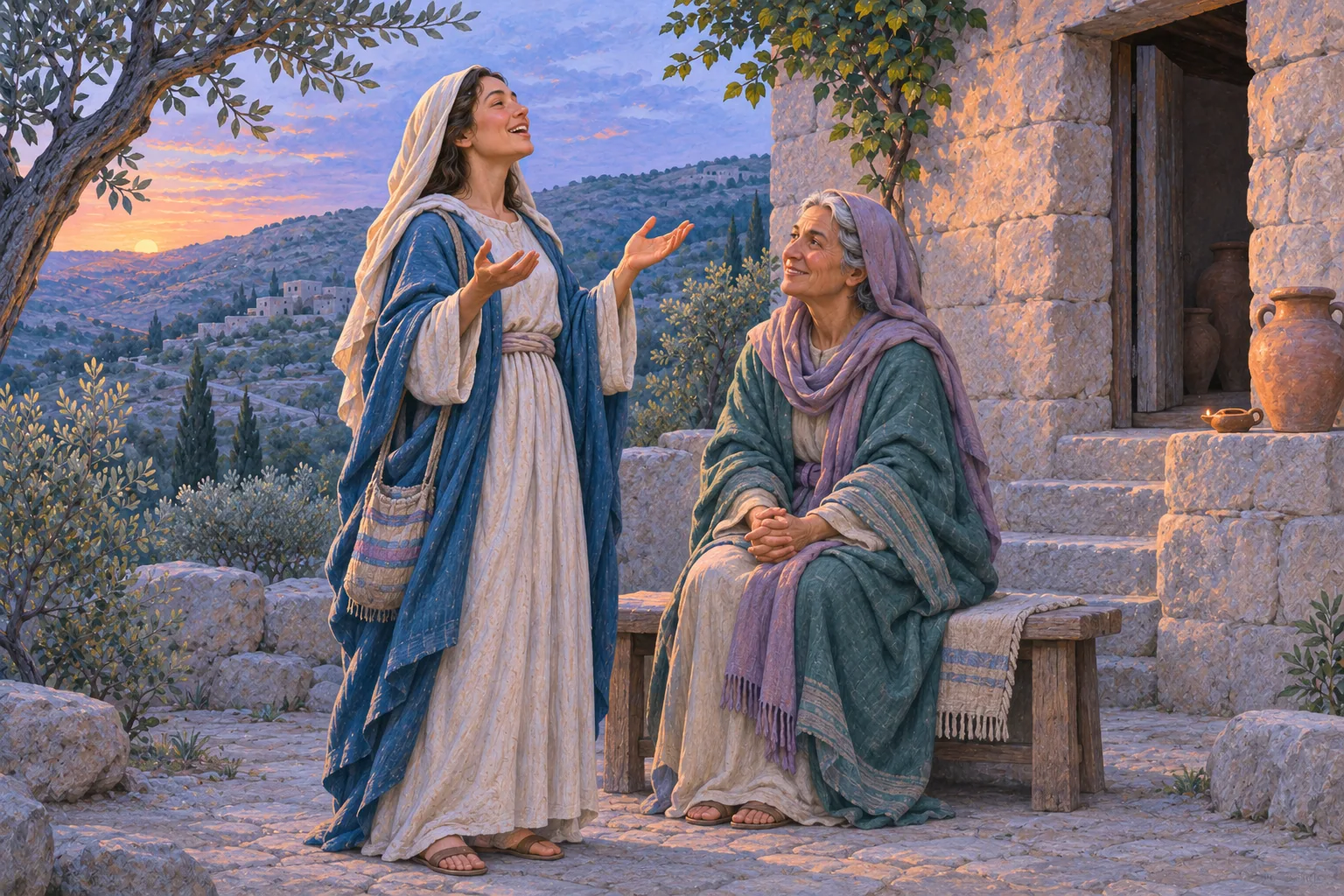
Mary then remained with Elizabeth about three months and returned to her home. Luke does not describe those days. Imagine two women, both expecting a child through God's work, sharing a home, prayer and a joy that was perhaps hard to explain to anyone else.
Background of Mary's Visit to Elizabeth
In Luke's Gospel, this story comes right after the angel's announcement to Mary. Vatican News says the scene links two annunciations, to Elizabeth and to Mary: two women and two promises. Why did Mary hurry? According to Vatican News, there are many possible reasons. One is that perhaps she wished to serve her relative, who was expecting a child in her old age.
The Church celebrates this event as the Feast of the Visitation of the Blessed Virgin Mary. According to Vatican News, the feast comes from Byzantium, where the Gospel of the Visitation was read on July 2. The Franciscans adopted it in 1263, and Pope Urban VI established it in 1389 to ask Mary's intercession for an end to the Great Schism. After the liturgical reform of the Second Vatican Council, it was set on May 31, the end of Mary's month.
The Meaning of a Joyful Visit
Vatican News explains that in this encounter Jesus, the Messiah still in his mother's womb, meets his forerunner, the prophet, who is also still in Elizabeth's womb. The infant's leap of joy is compared with David dancing before the ark of the Lord. In her haste, Mary appears as a missionary woman who carries the joy of the Good News, and as a loving woman who serves.
Elizabeth praises Mary because she believed; Mary's blessedness can be read as the fruit of her trust in the Lord's word. In her song Mary does not glorify herself but gives every great deed back to the faithful God. Vatican News calls the Magnificat a hymn about the reversal of human logic: the last become first, and life is built through service.
For teenagers and young people today, this story shows that grace is not kept for oneself. Mary, who had just received great news, went out to meet someone else and carried the Jesus she bore within her. A living faith shows itself in simple steps: visiting, greeting, keeping someone company and praising God for his goodness.
At a glance
- Reading
- Luke 1:39-56
- Form
- Event
- People
- Mary · Elizabeth · Zechariah · The child in Elizabeth's womb · Abraham
- Places
- The hill country · A town of Judah · The house of Zechariah · Israel
People in this story
This story is retold by the Light of Saints editorial team from the Catholic edition of Scripture and the Church sources listed, with the help of AI, and checked by an editor. Some of the atmosphere and the characters' feelings are our portrayal. For the full text, read the passage in Scripture.
Take this story into your prayer.
Common questions
How long did Mary stay with Elizabeth?
Luke records that Mary remained with Elizabeth about three months and then returned to her home. The text does not describe what happened during those three months.
Why did the baby leap in Elizabeth's womb?
Elizabeth herself said that her infant leaped for joy when Mary's greeting reached her ears. Vatican News explains that the forerunner was meeting Jesus, still in his mother's womb, and his joy is compared with David dancing before the ark of the Lord.
How were Mary and Elizabeth related?
In Luke 1:36 the angel calls Elizabeth Mary's relative. The Gospel does not explain that family relationship in more detail.
What does Mary's song in the Visitation say?
In Luke 1:46-55, Mary proclaims the greatness of the Lord, who has looked upon his lowly handmaid, lifted up the lowly, filled the hungry and kept his promise to Abraham. This song is known as the Magnificat.
When is the Feast of the Visitation celebrated?
According to Vatican News, after the liturgical reform of the Second Vatican Council the feast was set on May 31, at the end of the month dedicated to Mary.
Context & sources
Lk 1:39-56
Scripture quotations are from the New American Bible © Confraternity of Christian Doctrine, Washington, D.C.
Published at www.vaticannews.va
Cited as a Church source; the source text remains its publisher's.
Free to copy and share. Please credit lightofsaints.com. Copyright