Saint Benedict of Nursia: Leaving Rome to Seek God
Saint Benedict of Nursia left his studies in Rome, faced temptation alone at Subiaco, founded monasteries and became the Founder of Western monastic life.
Bless someone else by sharing this story.
Free to copy and share. Please credit lightofsaints.com.
Saint Benedict of Nursia was born around the year 480 in the region of Nursia, now known as Norcia. His parents were fairly well-off and sent him to study in Rome. But in that city, the young man instead made a decision that changed the direction of his life.
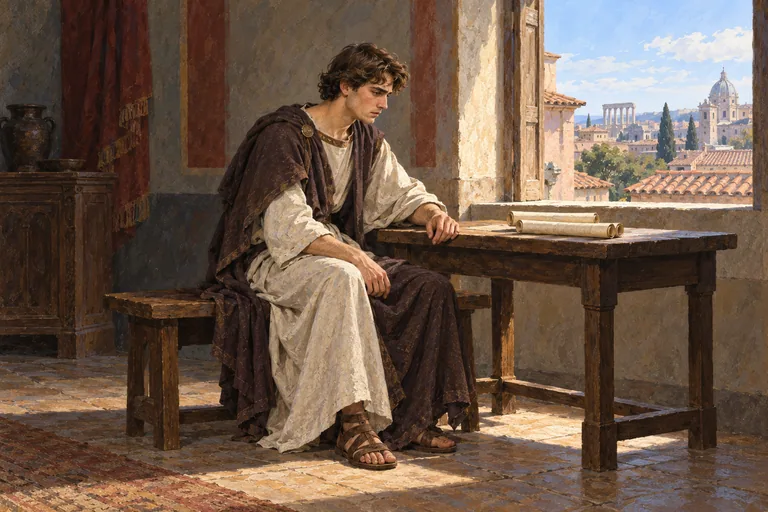
His life story is known mainly from the second book of the Dialogues by Saint Gregory the Great. That book is not a biography in the usual sense; Gregory wanted to show how God is present and acts in human life. According to Gregory, the young Benedict could not bear the dissolute lifestyle of many of his fellow students and did not want to fall into the same mistakes. He wanted only to please God. Pope Benedict XVI judged this explanation to be very plausible.
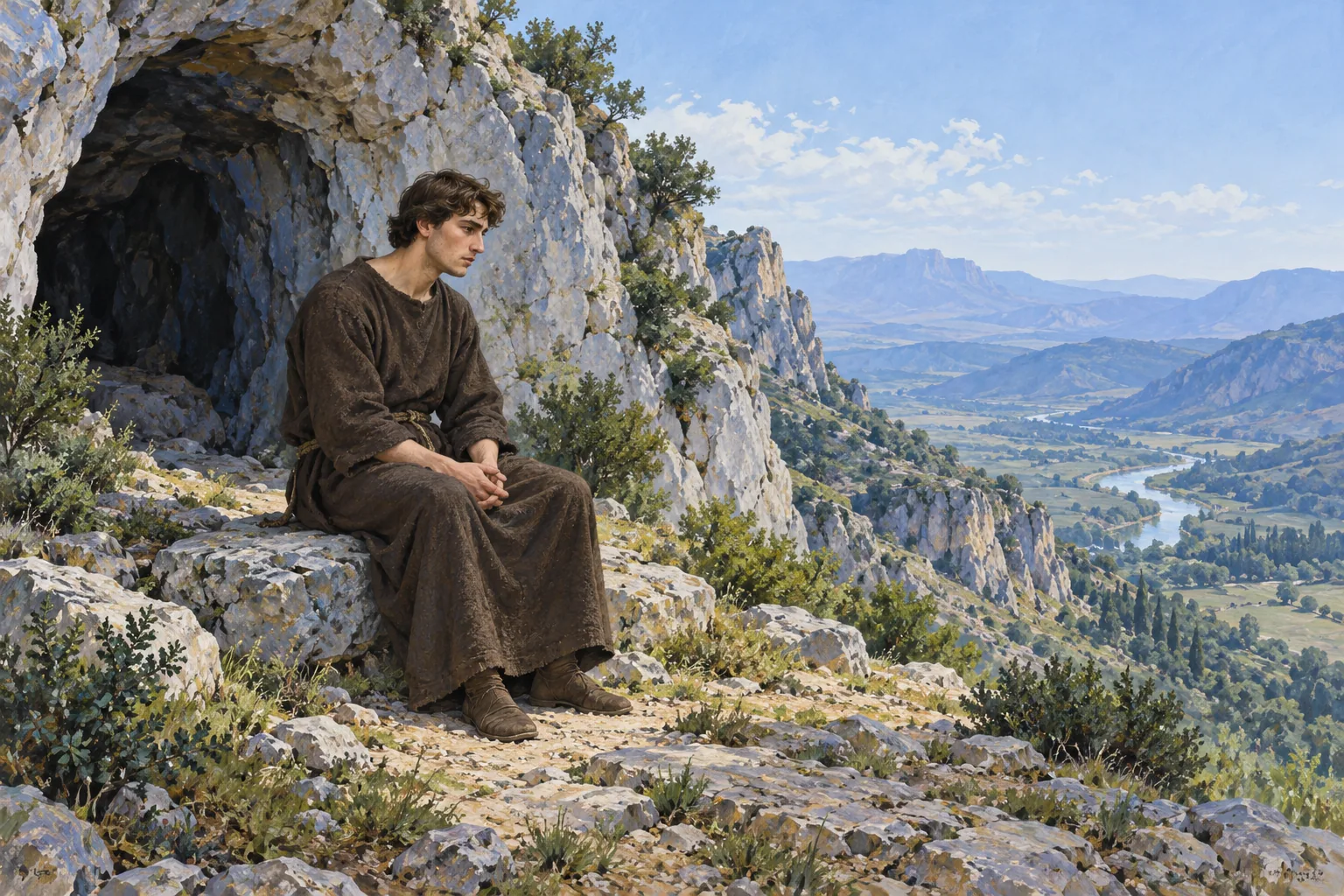
Before finishing his studies, Benedict left Rome and withdrew into the mountains east of the city. He stayed for a short time with a community of monks in the village of Enfide, now called Affile. Then he moved to nearby Subiaco and became a hermit. For three years he lived alone in a cave. Since the early Middle Ages, that cave has been the heart of a Benedictine monastery called the Sacro Speco, which means Holy Grotto.
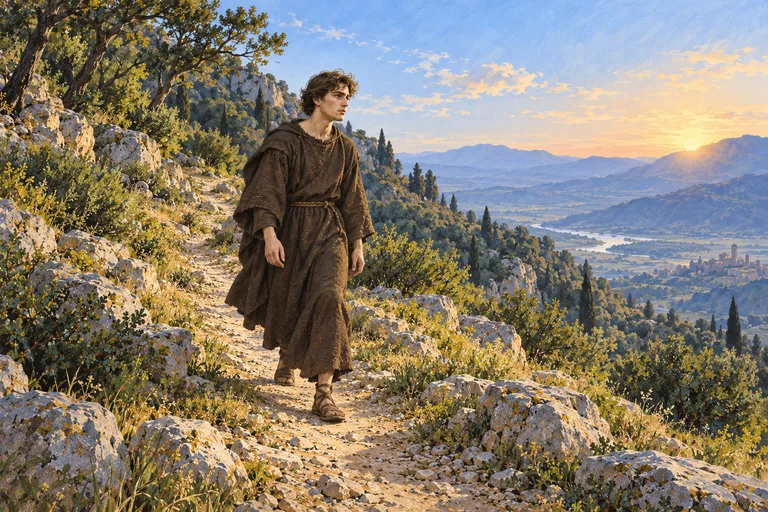
Solitude in the cave did not free him from struggle. In a General Audience in 2008, Pope Benedict XVI interpreted the Subiaco period as a time alone with God and also a time of maturation. According to the Pope, it was there that Benedict bore and overcame the three fundamental temptations of every human being: the desire to put oneself forward and be at the center, the temptation of sensuality, and anger and the urge for revenge. This source does not describe in detail how that struggle took place.
Gregory portrays Benedict's whole life as steeped in prayer, which was the foundation of his existence. Pope Benedict XVI explained that Benedict was convinced he could offer a useful word to others in difficulty only after overcoming those temptations. With his soul calmed, he was able to master the drives of his ego and create peace around him.
Only then did he decide to found his first monasteries in the Valley of the Anio, near Subiaco. In 529 he left Subiaco and settled at Monte Cassino. According to Pope Benedict XVI, this move came about because he had entered a new stage of inner maturity and monastic experience. In the Rule, the rule of life for monks, Benedict teaches that prayer means first of all listening, which is then expressed in action.
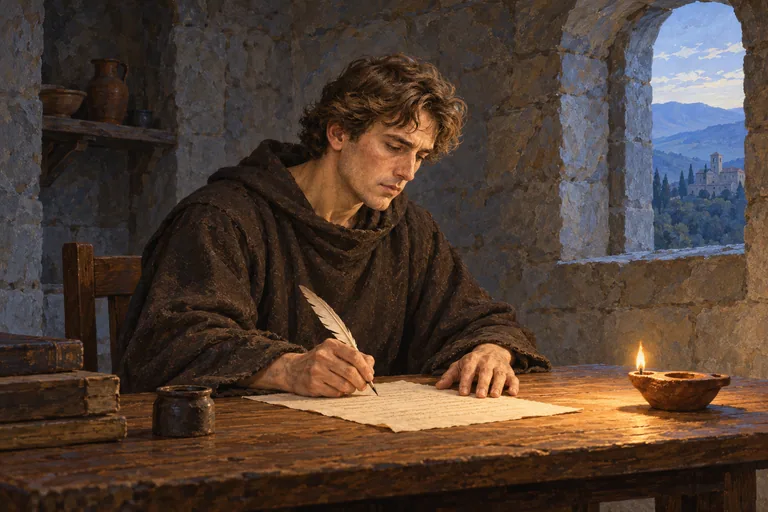
Benedict died on March 21, 547. He left behind the Rule and the Benedictine family he founded, a legacy that continues to bear fruit throughout the world. On October 24, 1964, Pope Paul VI declared him Patron of Europe in recognition of the work of his Rule for the formation of European civilization and culture. The Church honors him as a saint and as the Founder of Western monastic life.
- Born
- Around 480 (estimated), region of Nursia (Norcia)
- Died
- March 21, 547
- Time at Subiaco
- Lived alone for three years in a cave that is now the Sacro Speco (Holy Grotto) monastery
- Moved to Monte Cassino
- 529
- Main source for his life
- The second book of the Dialogues by Saint Gregory the Great, which is not a biography in the classical sense
- Patron of Europe
- Declared by Pope Paul VI on October 24, 1964
- Status
- Saint; Founder of Western monastic life
Bring this story into your prayer.
Context & sources
General Audience of April 9, 2008: title and opening sentence; paragraph on the sources of Benedict's life; para. on his youth; para. on Subiaco; para. on Monte Cassino; para. on prayer and the Rule; para. on Patron of Europe
Official holy-see source from vatican.va, supplied in the approved brief. Official website of the Holy See; paraphrase and link, quotations within limits. Research snapshot; rights and final paraphrase require human review.
Free to copy and share. Please credit lightofsaints.com. Copyright