Saint Teresa of Avila: Prayer as Friendship with God
Teresa of Avila, a Carmelite nun who long struggled with her weaknesses, was moved by a statue of the wounded Christ and lived prayer as friendship with God.
Bless someone else by sharing this story.
Free to copy and share. Please credit lightofsaints.com.
Even as a child, Teresa wanted to see God. Saint Teresa of Avila was born in Avila, Spain, in 1515 as Teresa de Cepeda y Ahumada. In her autobiography she recalls that before she was nine years old she read the stories of the martyrs. Her longing to become a martyr was so great that she briefly ran away from home.
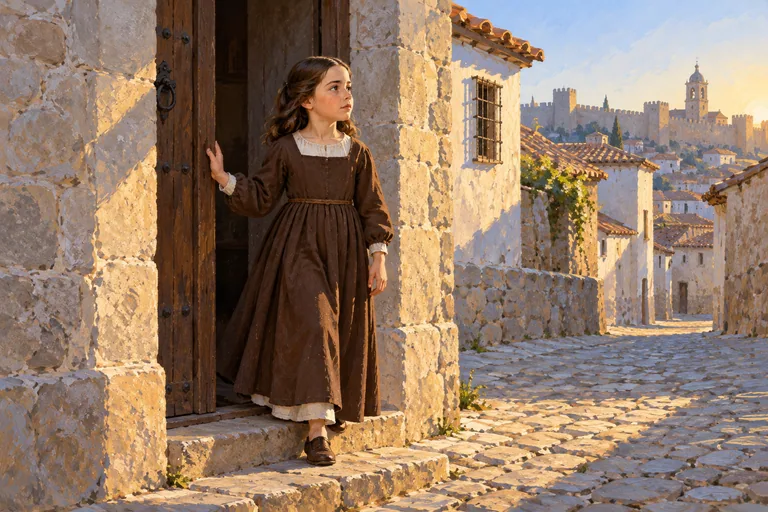
Her teenage years did not always follow that longing. Worldly reading for a time drew her into the many distractions of a worldly life. However, while studying with the Augustinian nuns and reading spiritual books, especially works of Franciscan spirituality, she began to discover inner recollection and prayer. At the age of 20 she entered the Carmelite Monastery of the Incarnation in Avila and took the name Teresa of Jesus.
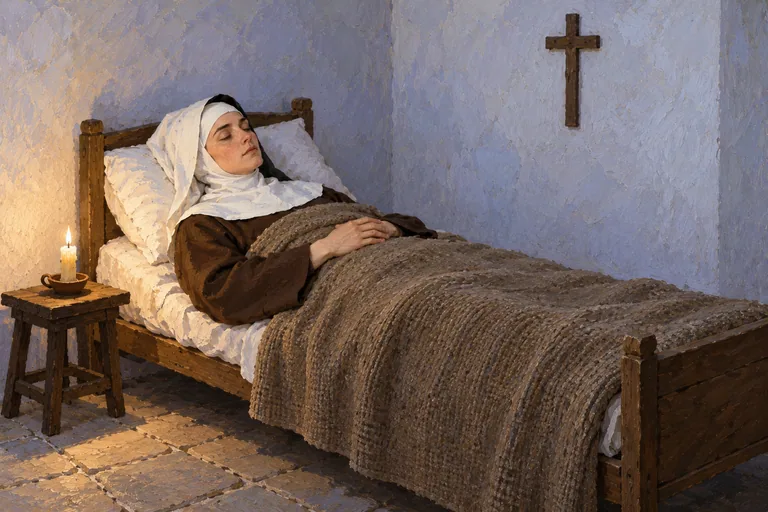
Entering the monastery did not immediately end her struggle. Three years later Teresa fell so seriously ill that she was in a coma for four days. In her writings, she saw the fight against that illness also as a fight against her own weaknesses and her resistance to God's call. She honestly admitted that she had left the Lord many times, even though the Lord had brought her back many times.
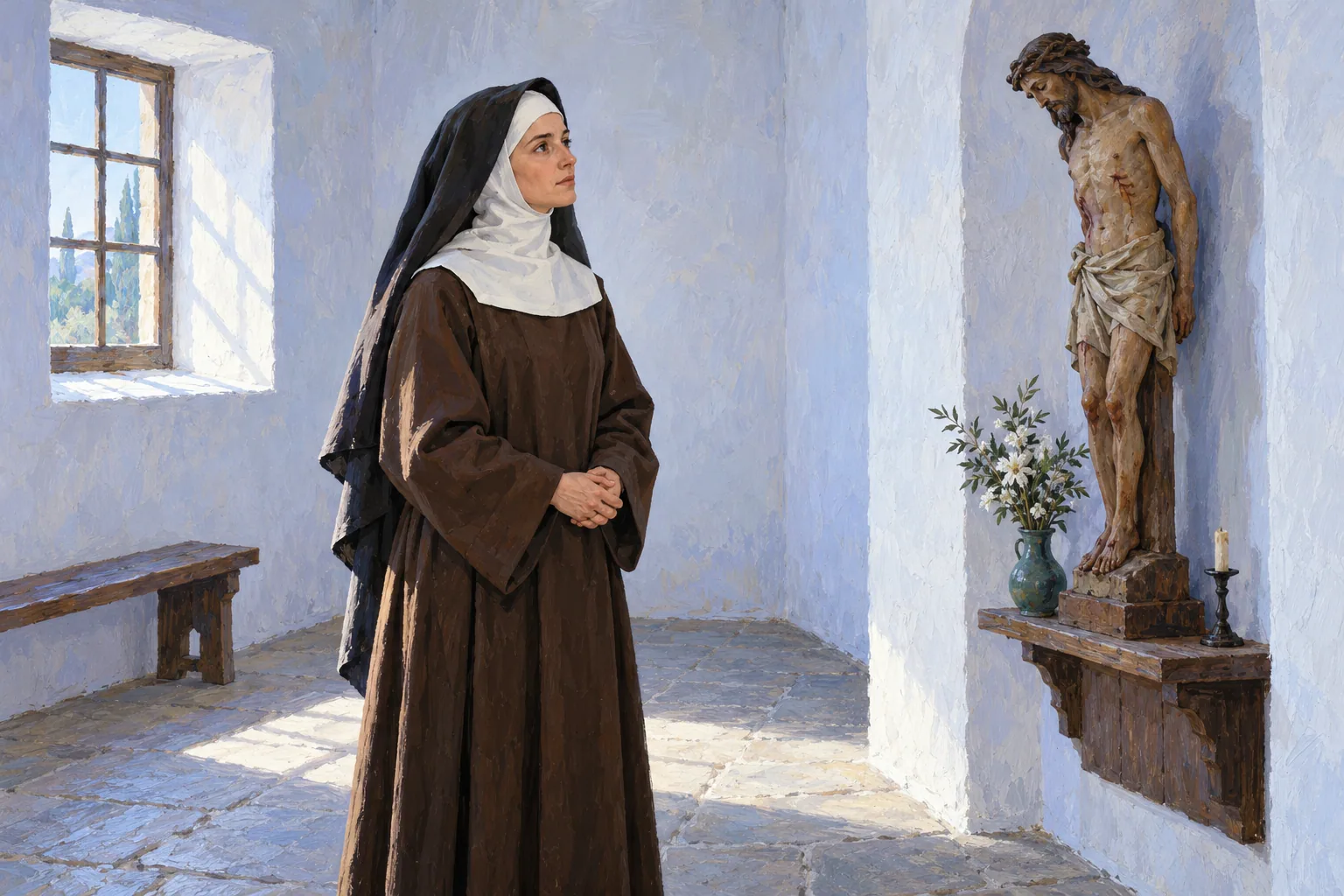
That struggle reached its climax in Lent of 1554, the season of penance leading up to Easter, when Teresa was 39 years old. At that time she came upon a statue of Christ most grievously wounded, without having planned to. The sources do not tell the details of the event, but that encounter left a deep mark on her life.
In the same period, Teresa felt deeply in tune with Saint Augustine through his book, the Confessions. In her autobiography she also wrote about an experience in which the presence of God came unexpectedly, so that she no longer doubted that God was within her. The sources do not confirm whether this experience happened at the same time as the encounter before the statue.
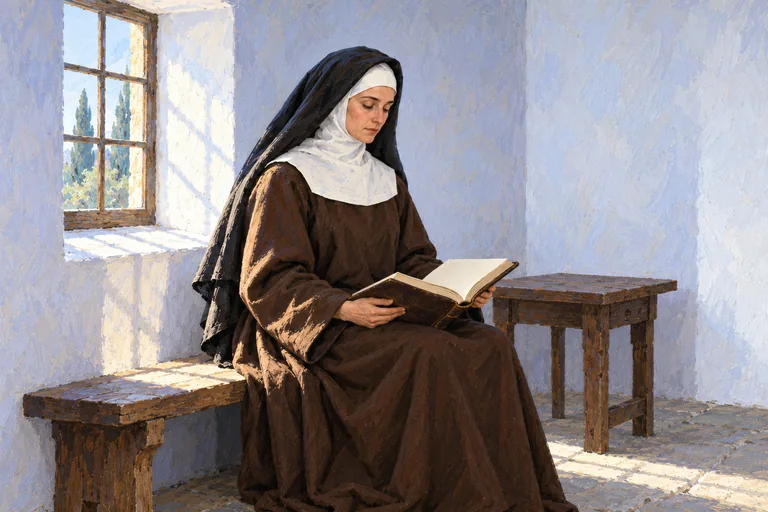
For Teresa, praying meant being friends with God: often speaking personally with him who, we know, loves us. Pope Benedict XVI explains that this friendship is not begun by human beings, because God offers it first. Because for her the Christian life was a personal relationship with Jesus, Teresa emphasized meditation on the Passion of Christ and on the Eucharist.
As she grew inwardly, Teresa began in practice to reform the Carmelite Order. In 1562, with the support of the Bishop of Avila, she founded the first reformed Carmel in that city. Afterward she went on founding new Carmelite convents, 17 in all.
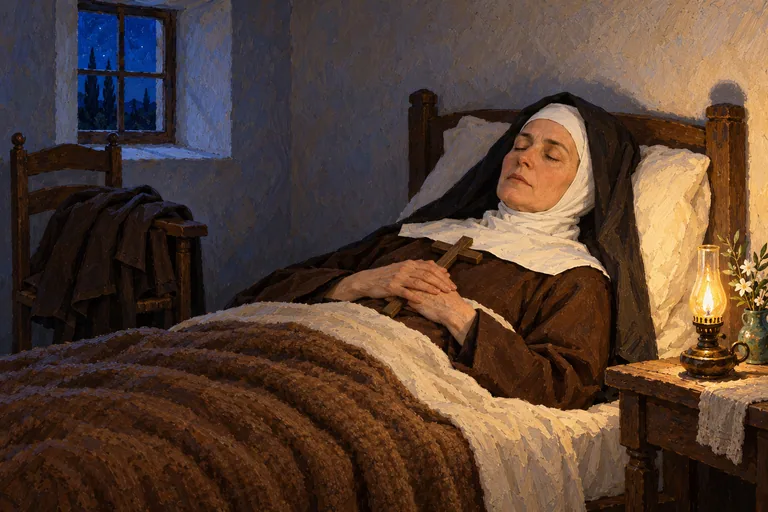
Teresa died on the night of October 15, 1582, in Alba de Tormes, while she was still traveling for the work of founding convents. Pope Paul V beatified her in 1614, and Pope Gregory XV canonized her in 1622. In 1970 Pope Paul VI proclaimed her a Doctor of the Church.
- Born
- Avila, Spain, 1515, as Teresa de Cepeda y Ahumada
- Religious name
- Teresa of Jesus, from her entry into the Carmelite Monastery of the Incarnation in Avila at the age of 20
- Turning point
- Lent 1554, at the age of 39
- First reformed Carmel
- Avila, 1562; 17 convents founded in all
- Died
- Night of October 15, 1582, Alba de Tormes
- Church status
- Blessed 1614, Saint 1622, Doctor of the Church 1970
Bring this story into your prayer.
Context & sources
General Audience of Benedict XVI, February 2, 2011 (GA), para. on the end of her life and the Church's recognition; GA, first biographical para.; GA, childhood para. (citing Vida 1, 4); GA, adolescence para.; GA, adolescence para. (cont.); GA, para. on entering the monastery; General Audience of Benedi
Official holy-see source from vatican.va, supplied in the approved brief. Official Holy See website; paraphrase and link, quotations within limits. Research snapshot; rights and final paraphrase require human review.
ocarm.org, article of October 13, 2026, 'St. Teresa of Jesus and Some of Her Insights', list of quotations
Official religious-order source from ocarm.org, supplied in the approved brief. Research snapshot; rights and final paraphrase require human review.
Free to copy and share. Please credit lightofsaints.com. Copyright