Saint John of God: From Mental Asylum to Caring for the Sick
Saint John of God was once locked up in a mental asylum, and from that experience he found a calling to care for the sick in a new way.
Bless someone else by sharing this story.
Free to copy and share. Please credit lightofsaints.com.
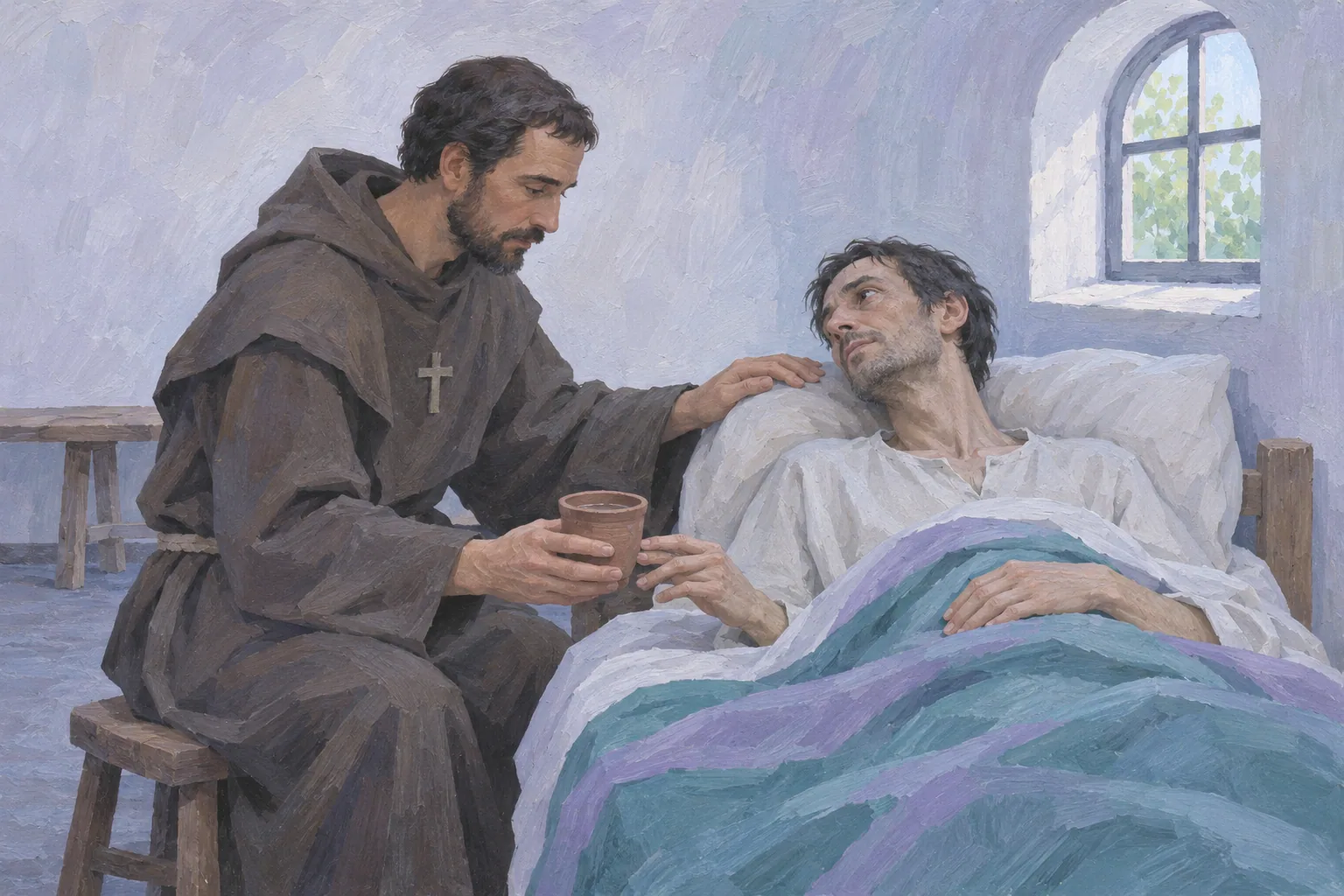
A bookshop owner in Granada was once arrested and locked up in a mental asylum because of the striking way he lived out his conversion. Born in Portugal in 1495, the man was named João Cidade; the Church now honors him as Saint John of God. He is remembered as the founder of the Fatebenefratelli and as the patron of the sick and of hospitals, because his experience among the most marginalized patients bore fruit in service to them.
From Shepherd to Bookseller
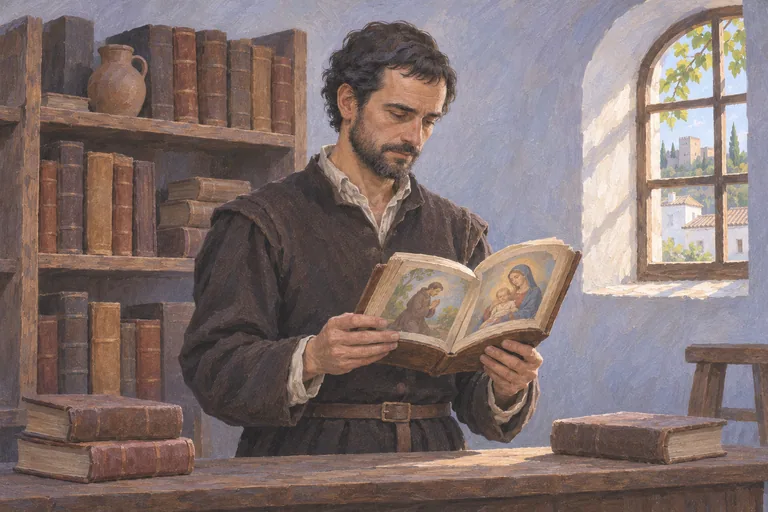
Long before that, João had already left home at the age of eight. In Oropesa, Spain, he lived with a family of shepherds until he was 27, then became a soldier and fought at Pavia and Vienna. After wandering for some time, he settled in Granada and opened a bookshop. He loved books, especially those with holy pictures, as an aid to prayer and faith.
The Path of Conversion
It was in Granada that his life changed course. One day he heard a sermon by John of Ávila and experienced a sudden spiritual awakening. The tradition of the Hospitaller Sisters places this event in 1539. Afterward, João went around begging alms for the poor with a short appeal that urged people to do good to their brothers. At the same time he practiced penance, that is, acts of repentance, so striking that he was arrested and put into a mental asylum. The Sisters' tradition tells it slightly differently: in that spiritual crisis, he was considered insane.
The biography from the Dicastery for the Causes of Saints records that there João met the most marginalized of the sick. They had been locked up by families who wanted to hide them and be rid of them. He also experienced firsthand methods of treatment that were little short of torture. The Sisters' tradition names the place as the Royal Hospital of Granada and mentions dark cells, chains, physical punishment and isolation. In the midst of that experience, João understood that he had to do something and stand beside them, because God willed it.
Living for Those Who Suffer
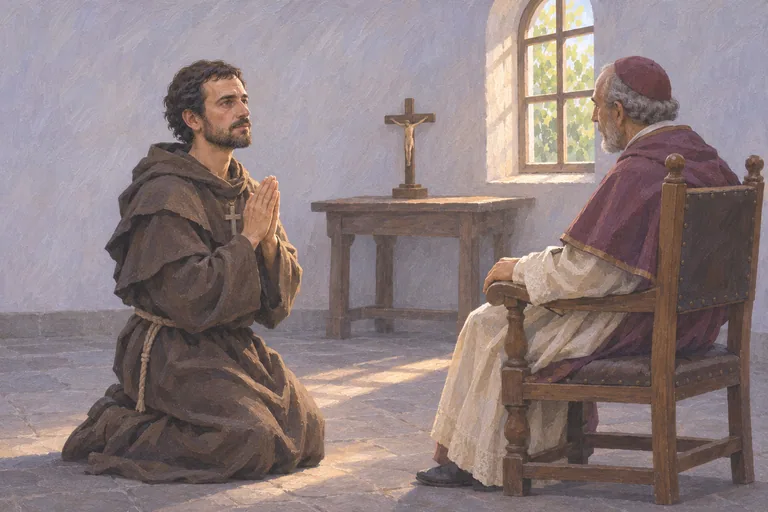
After leaving the mental asylum, João went to the bishop. Before him, he promised to live for those who suffer and to welcome anyone who wished to follow his path. According to the Dicastery's biography, Divine Providence gave him two companions. The three of them wore a simple habit with a cross, and in 1540 they founded the first nucleus of the Congregation of the Brothers of Mercy.
João had no medical knowledge. Even so, he was convinced that the sick had to be cared for in a new way: by listening to them and meeting their needs on many levels. With this principle he founded his first hospital in Granada, then one in Toledo. At the same time he looked after orphans, women caught up in prostitution, and the unemployed. The tradition of the Hospitaller Sisters adds that he gathered the sick and poor from the streets of Granada and gave them dignity, respect and affection, because in every person he recognized the face of the suffering Christ.
The End of His Life and His Legacy
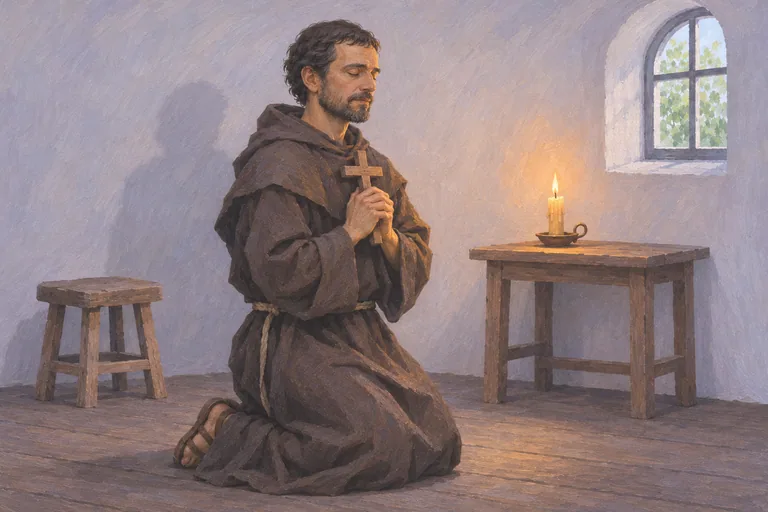
João died in 1550 at the age of 55. The Dicastery's biography relates that at that moment he was praying on his knees and clutching a cross. He left no written Rule, but his companions carried on his work of charity. Forty-five years later, his teachings were set down in the Rule of the Hospitaller Order of Saint John of God, also known as the Fatebenefratelli, after the appeal he had once used to beg for alms.
At a glance
- Remembered on
- 8 March Saints calendar
- Baptism name
- John “the Lord is gracious”
- Birth name
- João Cidade causesanti.va
- Born
- March 8, 1495, in a small village in Portugal causesanti.va
- Died
- 1550, at the age of 55 causesanti.va
- Church status
- Saint; beatified on September 21, 1630, by Pope Urban VIII causesanti.va
- Patron of
- The sick, and hospitals and their workers causesanti.va
- Liturgical memorial
- March 8 causesanti.va
- Work
- First nucleus of the Congregation of the Brothers of Mercy (1540), forerunner of the Fatebenefratelli causesanti.va
Bring this story into your prayer.
Context & sources
Page title and date
Official holy-see source from vaticannews.va, supplied in the approved brief. Official site of the Dicastery for Communication; paraphrase and link. Research snapshot; rights and final paraphrase require human review.
A Path of Conversion, paragraph 1; A Path of Conversion, paragraph 2; A Path of Conversion, paragraph 3; The Birth of a New Form of Hospitality, paragraph 1; The Birth of a New Form of Hospitality, paragraph 2
Official religious-order source from hospitalarias.org, supplied in the approved brief. Research snapshot; rights and final paraphrase require human review.
Profile header, beatification and canonization data; Profile header, beatification data; Biografia, paragraph 1; Biografia, paragraph 2; Biografia, paragraph 3; Biografia, paragraph 4; Profile summary below liturgical data; Biografia, last sentence; Profile header, memoria liturgica
Official holy-see source from causesanti.va, supplied in the approved brief. Official site of the dicastery; paraphrase and link. Research snapshot; rights and final paraphrase require human review.
Free to copy and share. Please credit lightofsaints.com. Copyright