Saint Thomas the Apostle: From Doubt to Profession of Faith
The story of Saint Thomas the Apostle, the disciple whose doubt about Jesus' resurrection became a profession of faith when he met the risen Jesus.
Bless someone else by sharing this story.
Free to copy and share. Please credit lightofsaints.com.
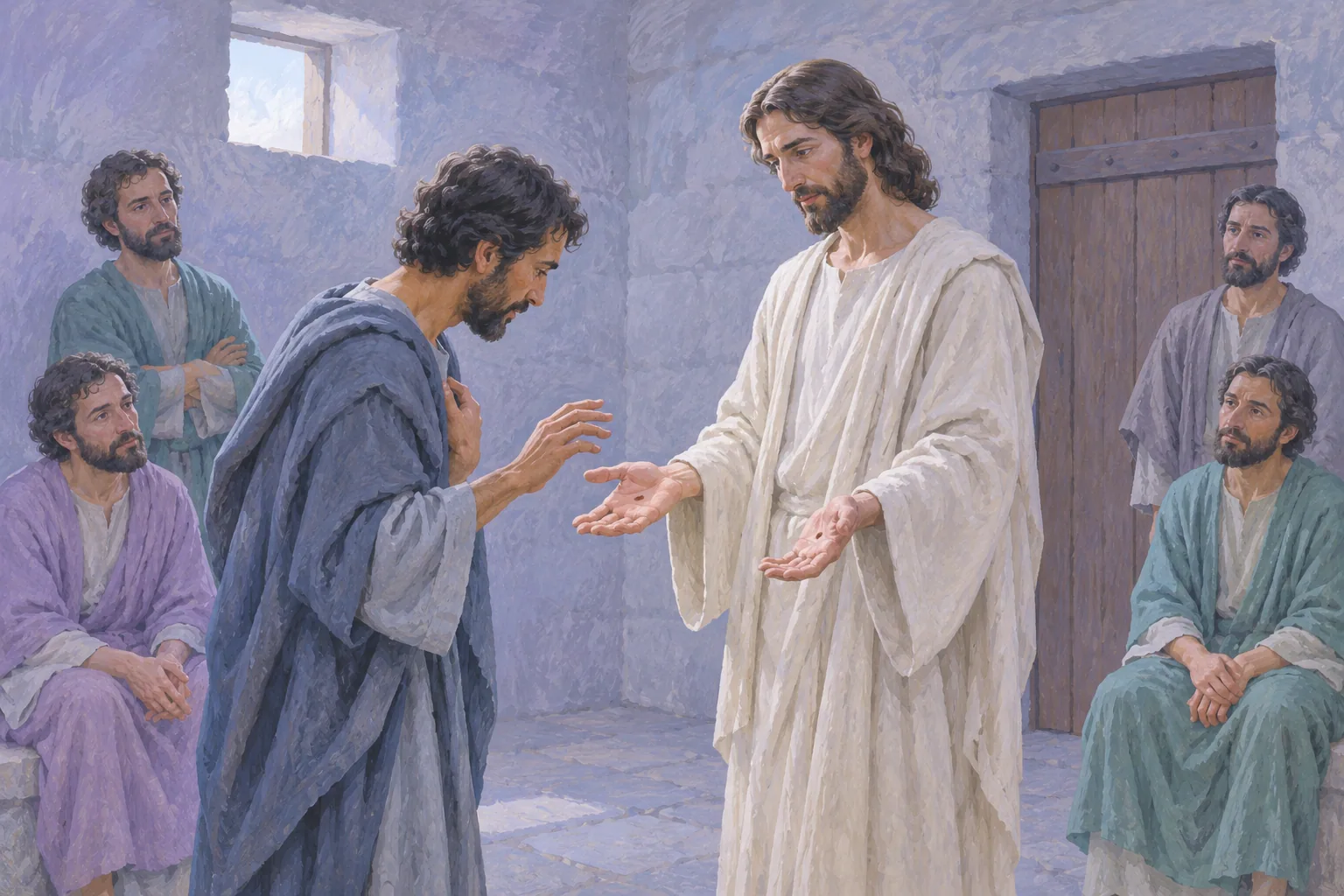
The Gospel of John records a critical moment when Jesus decided to go to Bethany to raise Lazarus. That journey brought him close to Jerusalem, where danger threatened him. It was then that Thomas, one of the Twelve Apostles, urged the other disciples to go along, ready to die with Jesus if necessary (Jn 11:16). Benedict XVI saw this as a total readiness to unite his own destiny with that of his Master. This Apostle, called Didymus, is remembered because his doubt about Jesus' resurrection became a profession of faith when he met the risen Jesus.
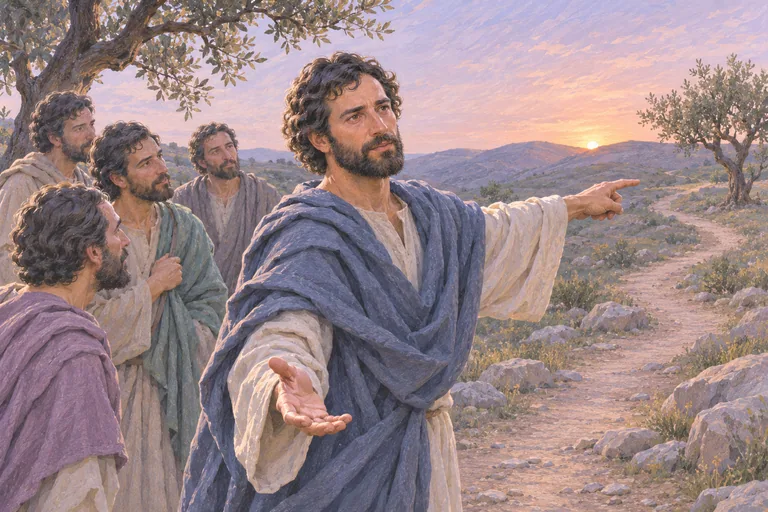
A Question at the Last Supper
Thomas's readiness to follow Jesus did not make him pretend to understand everything. At the Last Supper, he frankly admitted that he did not know where Jesus was going or how the disciples could know the way. That very question became an opportunity for Jesus to reveal himself as the Way, the Truth and the Life. Pope Benedict XVI, in a General Audience on this Apostle, saw such frankness as the true way of praying and of speaking to Jesus.
From Doubt to Belief
The same frankness appears after the resurrection. According to the Gospel of John, Thomas was not with the disciples when the risen Jesus came. When they said they had seen the Lord, Thomas refused to believe. He would believe only if he could see and touch the mark of the nails in Jesus' hands and his side. Benedict XVI notes that Thomas was not mistaken in looking for a sign in those wounds, because it is there that the greatness of Jesus' love is seen.
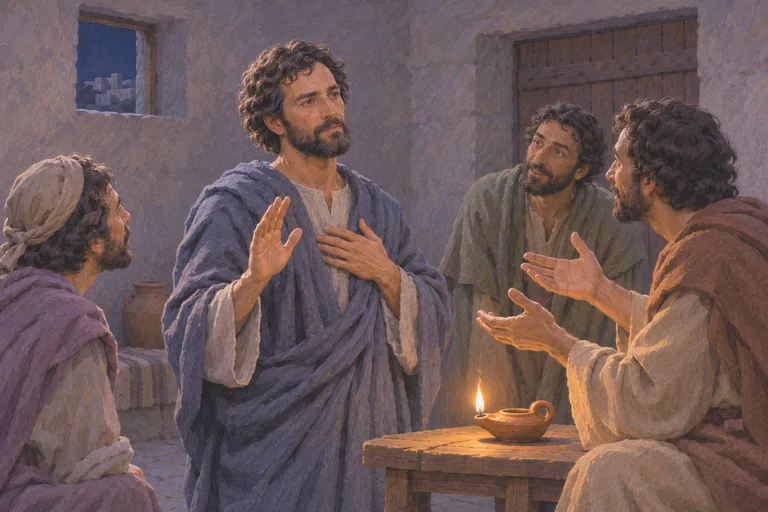
Eight days later, the disciples gathered again, and this time Thomas was with them. Jesus came and invited Thomas to see his hands and touch his side. He asked Thomas to stop being unbelieving and to believe. Thomas responded by acknowledging Jesus as his Lord and his God. After that, Jesus said that those who have not seen and yet believe are blessed.
Benedict XVI calls Thomas's answer the most splendid profession of faith in the whole New Testament. He cites Saint Augustine, who explains that Thomas saw and touched the man Jesus, but acknowledged the God whom he neither saw nor touched. Through what he touched, Thomas put away his doubt. For Benedict, Jesus' words about believing without seeing become a fundamental principle for all Christians who come after Thomas. This story comforts those who feel uncertain, because doubt can lead to an outcome brighter than uncertainty.
The Tradition of Preaching in Asia
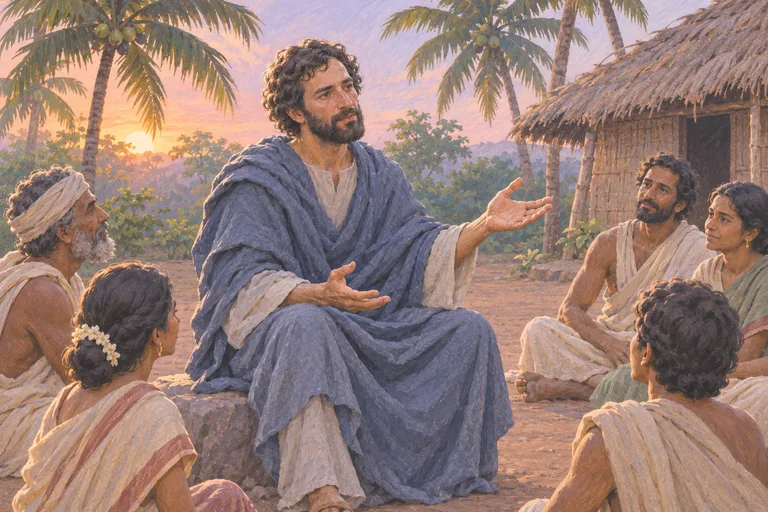
What follows no longer comes from the Gospel but from tradition. Benedict XVI mentions an ancient tradition that Thomas first preached the Gospel in Syria and Persia, then in Western India, and finally in Southern India. Part of that tradition rests on the Acts of Thomas, an apocryphal work, that is, a writing outside Sacred Scripture, written in his name. The Christian faithful of Kerala have handed down from generation to generation the belief that their ancestors became Christians through this Apostle's preaching.
The Tomb at Mylapore
That journey, according to the tradition held by the Santhome pilgrimage shrine in Chennai, ended near Mylapore, where Thomas was killed and buried. Santhome Cathedral Basilica is widely known as the church built over his tomb. The Holy See sources used here do not mention that martyrdom or that tomb, so these details should be read as local tradition.
At a glance
- Remembered on
- 3 July Saints calendar
- Church status
- Saint. The Feast of Saint Thomas, Apostle, is listed in the Vatican liturgical calendar published by Vatican News (July 3, 2026). The Apostles have been venerated since the early Church, before there was any formal canonization process. vaticannews.va
- Role
- One of the Twelve Apostles chosen directly by Jesus; his name appears in all four lists of the Apostles in the New Testament. vatican.va
- Meaning of the name
- According to Benedict XVI, the name Thomas comes from a Hebrew root meaning paired or twin. The Gospel of John several times calls him Didymus, a Greek nickname that also means twin. The reason for the nickname is unclear. vatican.va
- Profession of faith
- In the Gospel of John (Jn 20:28), Thomas acknowledges the risen Jesus as his Lord and his God. vaticannews.va
- Preaching tradition
- An ancient tradition mentioned by Benedict XVI links Thomas with preaching in Syria, Persia, Western India and Southern India; part of it rests on the apocryphal Acts of Thomas. vatican.va
- Pilgrimage site
- Santhome Cathedral Basilica in Chennai, India, which according to local tradition stands over the tomb of Saint Thomas. santhomechurch.org
Bring this story into your prayer.
Context & sources
General Audience of Benedict XVI, September 27, 2006, para. 1; General Audience of September 27, 2006, para. 1; General Audience of September 27, 2006, para. 2; General Audience of September 27, 2006, para. 3; General Audience of September 27, 2006, para. 4; General Audience of September 27, 2006, para. 5; General Audience of September 27, 2006, closing paragraph of the catechesis
Official holy-see source from vatican.va, supplied in the approved brief. Official website of the Holy See; paraphrase and link, quotations within limits. Research snapshot; rights and final paraphrase require human review.
Word of the day, 03/07/2026, title of the day; Word of the day, program description; Gospel of the day, Jn 20:24; Gospel of the day, Jn 20:24-25; Gospel of the day, Jn 20:26-27; Gospel of the day, Jn 20:28
Official holy-see source from vaticannews.va, supplied in the approved brief. Official website of the Dicastery for Communication; paraphrase and link. Research snapshot; rights and final paraphrase require human review.
Our Archdiocese, paragraph 2
Official shrine source from santhomechurch.org, supplied in the approved brief. Research snapshot; rights and final paraphrase require human review.
Our History, Saint Thomas section
Official shrine source from santhomechurch.org, supplied in the approved brief. Research snapshot; rights and final paraphrase require human review.
Free to copy and share. Please credit lightofsaints.com. Copyright