Saint Camillus de Lellis: Former Soldier Who Served the Sick
Saint Camillus de Lellis left gambling and a disordered life behind, then found his calling in caring for the body and soul of the sick.
Bless someone else by sharing this story.
Free to copy and share. Please credit lightofsaints.com.
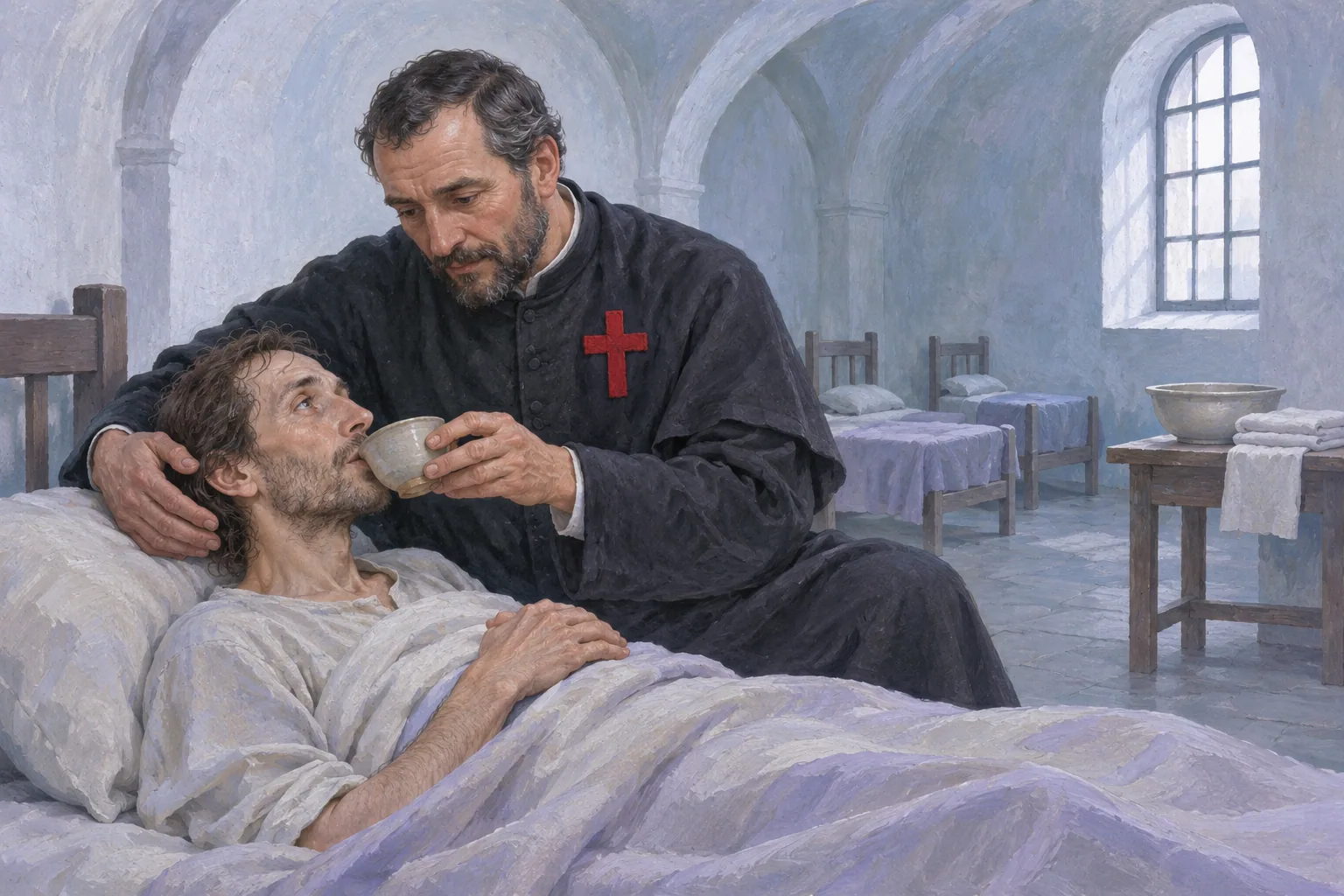
From his teenage years, Saint Camillus de Lellis set his heart on war, gambling and a disordered life. Born in Bucchianico, Abruzzo, in 1550, this young man lived as a soldier. After his conversion, he became a priest and founded in Rome a congregation devoted to caring for the sick.
Turning Back to God
The change came in 1575, when the grace of God reached Camillus. He welcomed the desire to change his life and give himself to God. He stopped gambling and began to pray. The biography from the Dicastery for the Causes of Saints recounts that on a journey to the friary of San Giovanni Rotondo, a friar took him aside to speak with him privately: God is everything, and the soul that does not die must be saved.
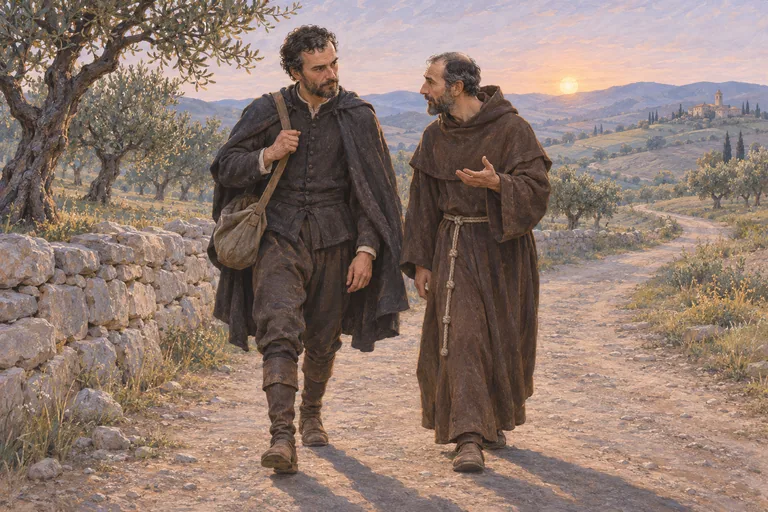
After his conversion, Camillus wanted to become a Capuchin friar. That plan came to nothing because of a wound in his leg, which had been open since his adventurous days as a soldier. According to the Dicastery, he was dismissed from the friary twice because of that wound, while L'Osservatore Romano tells of only one dismissal.
Serving the Sick as if They Were Christ
Because of that wound, Camillus was treated at the hospital of San Giacomo in Rome. His plans had failed, but his calling began to appear among the sick. In the hospital for the incurable, he served the patients diligently, as if they were Christ himself. In that service his idea took shape: to unite a soldier's discipline with Christian charity.
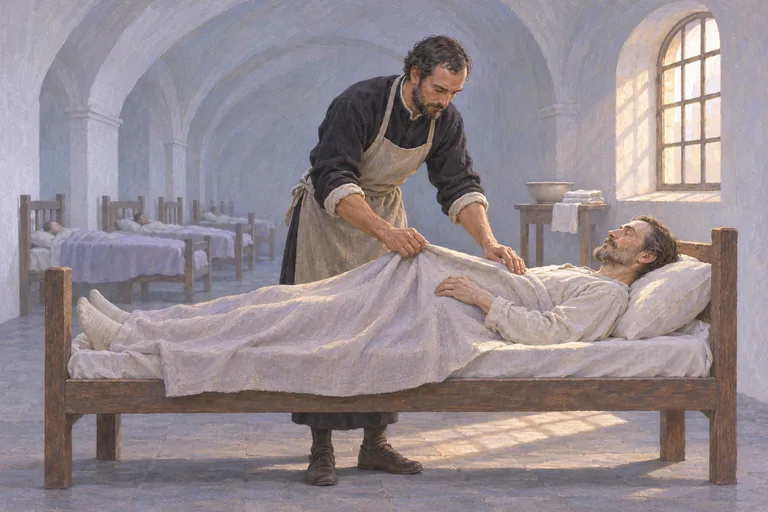
In his time, many hospitals left patients neglected. Camillus thought otherwise: those who care for patients must attend to their body and their soul alike. In written guidelines from 1584, he asked that every dimension of the sick person, from the physical to the spiritual, be attended to with respect. He regarded the sick as masters to be served. In his Rule, he invites others to ask the Lord for the grace of a mother's love for one's neighbor, so that the body and soul of the sick may be served with true love.
Founding a Congregation to Serve the Sick
Although already an adult, Camillus went back to study at the Collegio Romano to become a priest, and on June 10, 1584, he celebrated his first Mass. As a priest, he founded in Rome the Congregation of the Clerks Regular Ministers to the Sick. To the three usual vows, that is, the promises of poverty, chastity and obedience, he added a fourth vow: to serve the sick in body and spirit, even those stricken by plague.
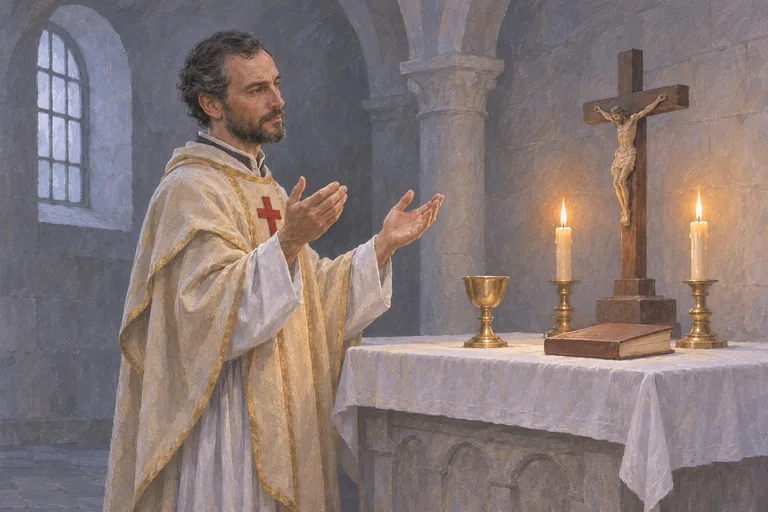
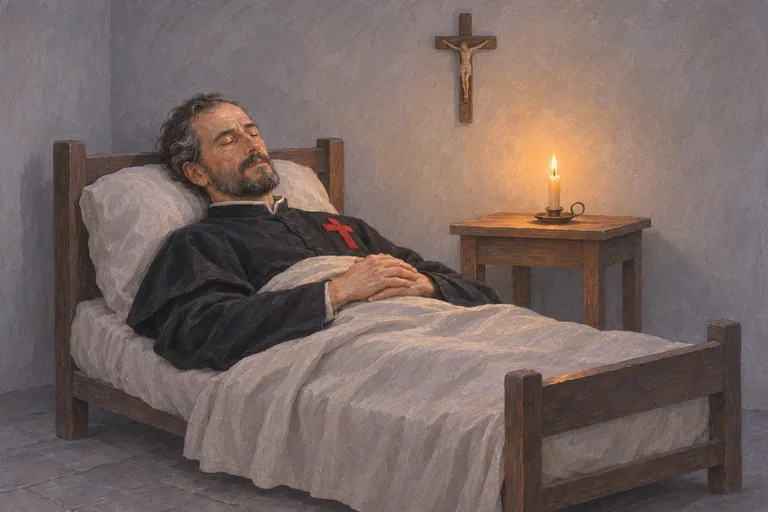
In 1586 Pope Sixtus V allowed Camillus to wear a red cross sewn onto his habit. According to Sanzio Cicatelli, his first biographer, the cross signified that the members were dedicated to serving the poor sick. In 1591 Pope Gregory XIV approved the Rule of this order.
The Legacy of Camillus
Camillus died in Rome on July 14, 1614. Pope Benedict XIV beatified him in 1742 and declared him a saint in 1746. Later popes proclaimed him patron of the sick and of hospitals, and patron of health-care workers. Pope Francis described him as a man who lived the Gospel of the Good Samaritan to the full.
At a glance
- Remembered on
- 14 July Saints calendar
- Born
- May 25, 1550, in Bucchianico, Province of Chieti (Abruzzo) causesanti.va
- Died
- July 14, 1614, in Rome causesanti.va
- Church status
- Beatified on April 7, 1742, and canonized on June 29, 1746, by Pope Benedict XIV causesanti.va
- Liturgical memorial
- July 14 causesanti.va
- Patron
- The sick and hospitals (Leo XIII, 1886) and health-care workers (Pius XI, 1930) vatican.va
- Founder
- Congregation of the Clerks Regular Ministers to the Sick in Rome osservatoreromano.va
Bring this story into your prayer.
Context & sources
Angelus, July 14, 2013, paragraph before the closing greeting before the Angelus prayer; Angelus, July 14, 2013, paragraph about Saint Camillus
Official holy-see source from vatican.va, supplied in the approved brief. Official Holy See website; paraphrase and link, quotations within limits. Research snapshot; rights and final paraphrase require human review.
Message of John Paul II, May 15, 2000, no. 1; Message of John Paul II, May 15, 2000, no. 2; Message of John Paul II, May 15, 2000, no. 5
Official holy-see source from vatican.va, supplied in the approved brief. Official Holy See website; paraphrase and link, quotations within limits. Research snapshot; rights and final paraphrase require human review.
L'Osservatore Romano, July 13, 2020: first sentence of the article; first paragraph; second paragraph; paragraph after the vision of the cross; paragraph on the first Mass; paragraph on the approval of the Rule
Official holy-see source from osservatoreromano.va, supplied in the approved brief. Research snapshot; rights and final paraphrase require human review.
Dicastery for the Causes of Saints: header of the Camillo de Lellis profile page (Beatificazione/Canonizzazione/Memoria Liturgica); biography, opening paragraph after the quotation on the four vows; summary of his life below the liturgical date; biography, paragraph after the Cicatelli quotation; section heading above the biography; biography, first paragraph; b
Official holy-see source from causesanti.va, supplied in the approved brief. Official website of the dicastery; paraphrase and link. Research snapshot; rights and final paraphrase require human review.
Free to copy and share. Please credit lightofsaints.com. Copyright