Saint Joseph Freinademetz: Mission as the Greatest Grace
Saint Joseph Freinademetz, an SVD priest from Tyrol, gave his life for the Chinese people of Shandong and saw his mission as God's greatest grace.
Bless someone else by sharing this story.
Free to copy and share. Please credit lightofsaints.com.
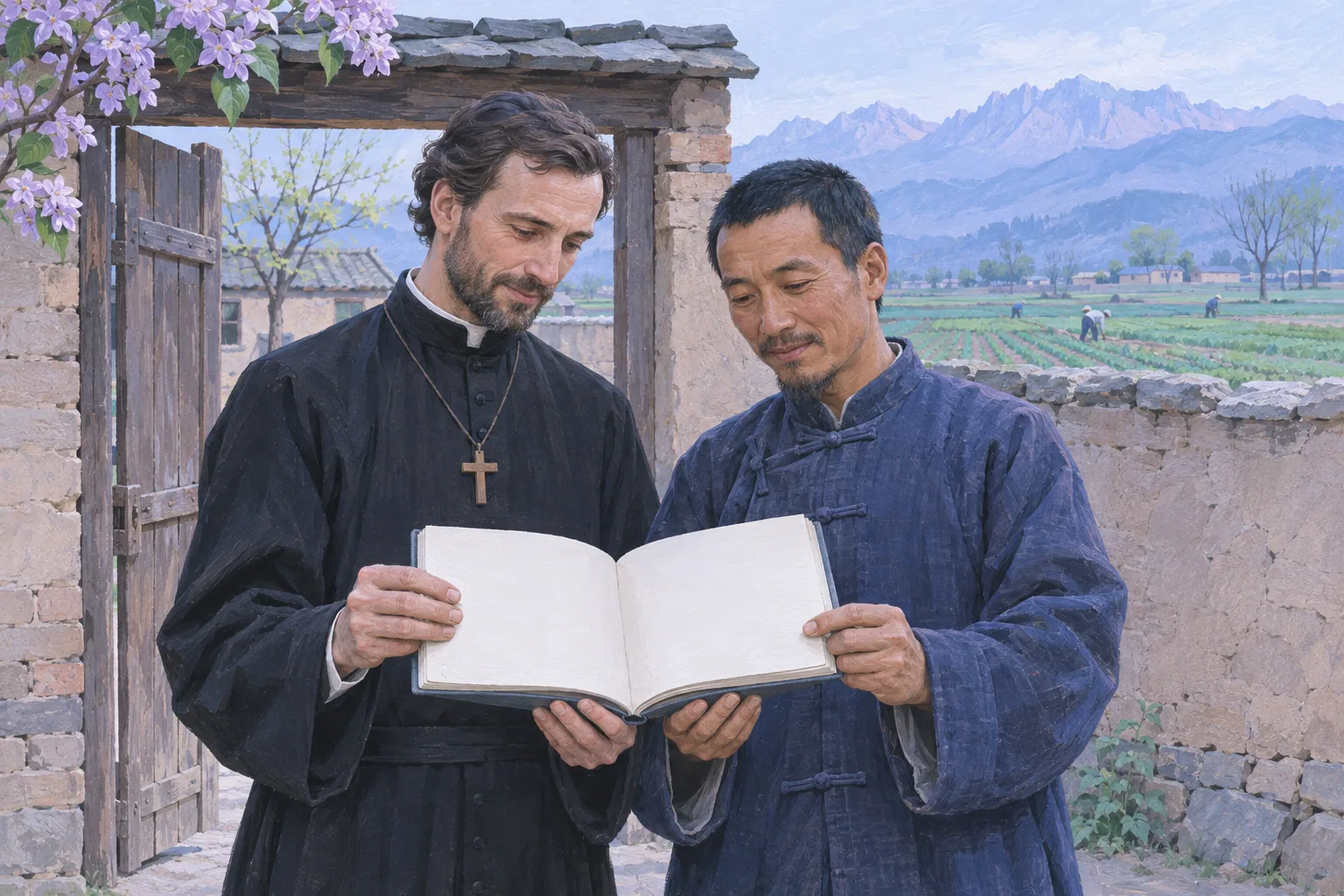
The hamlet of Oies in the Dolomites of South Tyrol consisted of only five houses. It was there that Saint Joseph Freinademetz was born in 1852 and inherited a simple but steadfast faith from his family. This priest of the Society of the Divine Word (SVD) would later give himself for the Chinese people of southern Shandong, and the Church remembers him as a witness of love who brought the Gospel by sharing their life.
A missionary call that would not fade
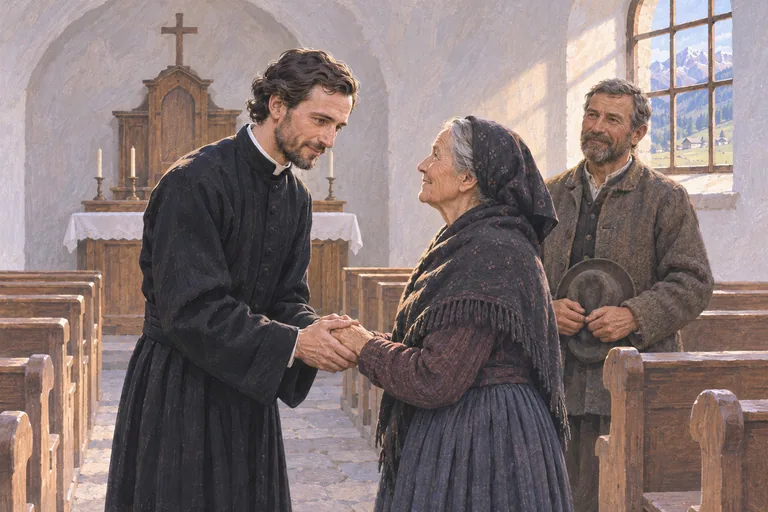
While studying theology at the diocesan seminary of Bressanone (Brixen), Joseph began to think seriously about life as a missionary. After he was ordained a priest in 1875, he served the faithful in Saint Martin, near his home. The people soon loved him. Yet the call to mission in a distant land did not go away.
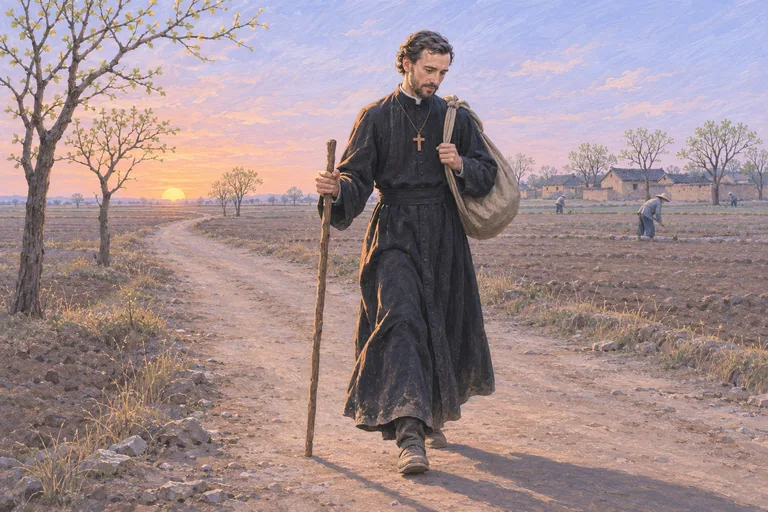
Two years after his ordination, he contacted Father Arnold Janssen, the founder of a mission house in Steyl, the Netherlands. With his bishop's permission, Joseph entered it in 1878. In 1879 he received the mission cross and left for China with Father John Baptist Anzer. After two years of preparation in Hong Kong, they set out for southern Shandong in 1881. Of the province's 12 million inhabitants, only 158 were Christians.
Building the Church in Shandong
The first years there were hard. Joseph made long, exhausting journeys, faced attacks by bandits, and worked hard to form the first Christian communities. Often, as soon as a new community began to grow, an order would come from the bishop telling him to leave everything and start again from the beginning.
He soon realized the importance of committed laypeople, especially catechists, or teachers of the faith, for first proclamation. He devoted much energy to forming them and wrote a handbook of catechesis in Chinese. At the same time, he helped form Chinese priests and encouraged many Chinese Christians to become catechists, religious brothers, nuns, and priests for their own people.
Becoming Chinese out of love
The day of Joseph's perpetual vows was marked by the formula that his whole life was for the Chinese people he loved. According to Pope John Paul II, with God's help he was always faithful to that formula. He became Chinese with the Chinese, taking on their way of thinking, their practices, and their customs.
He learned to discover the greatness and beauty of Chinese culture and to love deeply the people to whom he had been sent. His motto was that love is the language everyone understands. He wrote to his family that he loved China and the Chinese people and wanted to die and be buried among them. The Pope also recalled that he once even said he wanted to be Chinese in heaven.
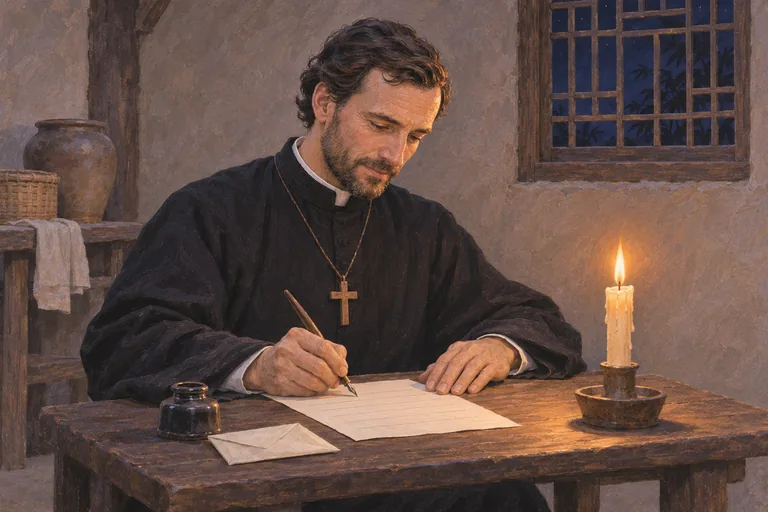
In the canonization homily, the Pope cited Joseph's testimony of faith: he did not see missionary life as a sacrifice he offered to God, but as the greatest grace God had ever lavished on him. The homily does not say when or where he expressed this. The Pope also recalled Joseph's advice to his missionaries that missionary work is useless if one does not love and is not loved.
Illness and death in Taikia
His heavy workload and many other hardships wore down his health. In 1898 he fell ill with laryngitis and showed the beginnings of tuberculosis. At the insistence of the bishop and the priests, he was sent to Japan to rest, and then returned to China before he had fully recovered.
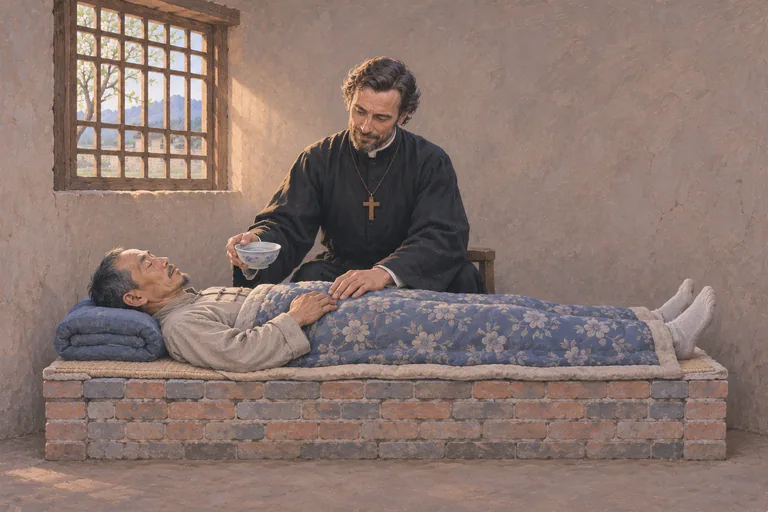
In 1907, when the bishop had to travel outside China, Joseph took on the task of running the administration of the diocese. At that time an epidemic of typhus broke out. Like a good shepherd, he tirelessly helped and visited many communities until he himself was infected. He returned to Taikia, the seat of the diocese, and died there on January 28, 1908. His grave soon became a place of pilgrimage for Christians.
At a glance
- Baptism name
- Joseph “he will add”
- Born
- April 15, 1852, in Oies, South Tyrol (then part of the Austro-Hungarian Empire) vatican.va
- Priestly ordination
- July 25, 1875 vatican.va
- Departed for China
- March 2, 1879, with Father John Baptist Anzer vatican.va
- Died
- January 28, 1908, in Taikia, China, after contracting typhus while serving the faithful vatican.va
- Canonization
- October 5, 2003, by Pope John Paul II, together with Daniel Comboni and Arnold Janssen vatican.va
- Religious institute
- Society of the Divine Word (SVD) vatican.va
Bring this story into your prayer.
Context & sources
Homily of John Paul II, title and section 1; Homily, section 1; Homily, section 4
Official holy-see source from vatican.va, supplied in the approved brief. Official Holy See website; paraphrase and link, quotations within limits. Research snapshot; rights and final paraphrase require human review.
Address to pilgrims, October 6, 2003, section 1; Address to pilgrims, section 4
Official holy-see source from vatican.va, supplied in the approved brief. Official Holy See website; paraphrase and link, quotations within limits. Research snapshot; rights and final paraphrase require human review.
Vatican biography, paragraph 1; Vatican biography, paragraph 2; Vatican biography, paragraph 4; Vatican biography, paragraph 3
Official holy-see source from vatican.va, supplied in the approved brief. Official Holy See website; paraphrase and link, quotations within limits. Research snapshot; rights and final paraphrase require human review.
Free to copy and share. Please credit lightofsaints.com. Copyright