Saint Ignatius of Antioch: A Bishop Longing for Christ
The story of Saint Ignatius of Antioch, an early Church bishop who strengthened believers by sermons and letters while being taken as a prisoner to martyrdom.
Bless someone else by sharing this story.
Free to copy and share. Please credit lightofsaints.com.
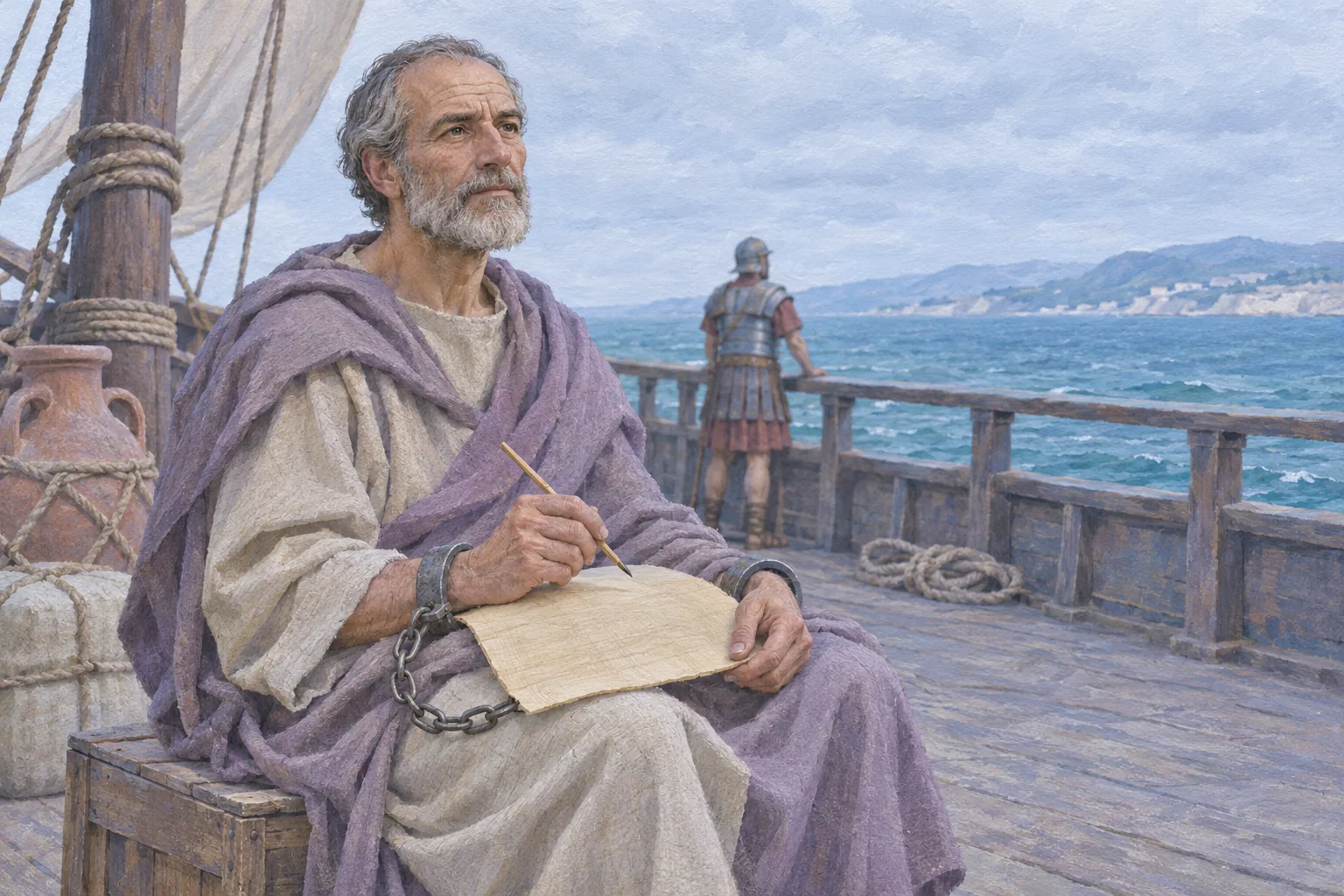
Ignatius did not set out for Rome as an honored guest. According to the oldest account, this bishop of Antioch in Syria was taken there as a prisoner, closely guarded by soldiers, because of his testimony to Christ. The Church remembers him as a bishop and martyr who, all along that journey, kept strengthening the Christian communities through counsel and letters.
A bishop of the early Church
Antioch, a city now located in Turkey, had a flourishing Christian community. The Acts of the Apostles records that it was in this city that the disciples were first called Christians. According to tradition, the Apostle Peter was its first bishop. Ignatius is said to be the third bishop of Antioch, or the second if Peter is not counted.
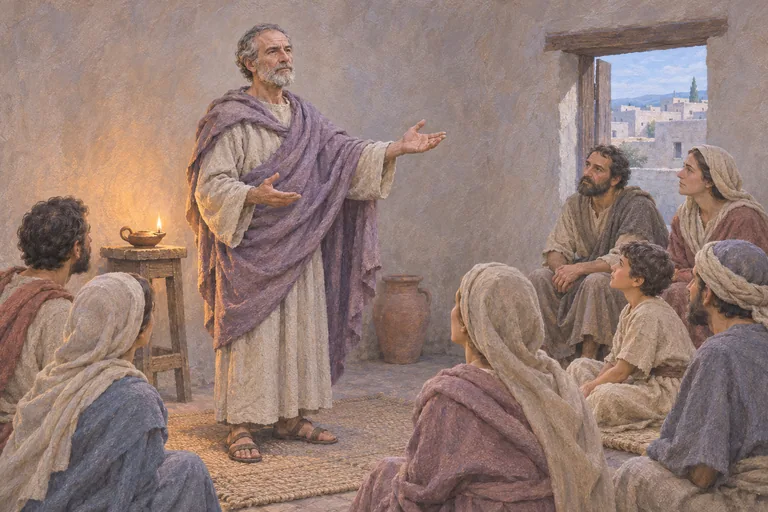
Ignatius was a friend of Polycarp, a disciple of the Apostle John. He may have known John too, but the sources do not confirm it. Pope Benedict XVI noted that Ignatius's letters radiate the freshness of faith of a generation that had still known the Apostles.
A journey as a prisoner
The shepherd's life changed when he was arrested. According to an ancient report recorded by the historian Eusebius and cited by Benedict XVI, Ignatius was sent from Syria to Rome to be made prey for wild beasts. His journey across Asia was guarded very strictly by soldiers. In his letter to the Christian community in Rome, Ignatius compared these guards to ten leopards.
Although he was a prisoner, Ignatius kept working as a shepherd. In the cities where he stopped, he strengthened the communities through sermons and exhortations. He asked them to be on guard against the false teachings that were beginning to spread and to hold fast to the tradition of the Apostles.
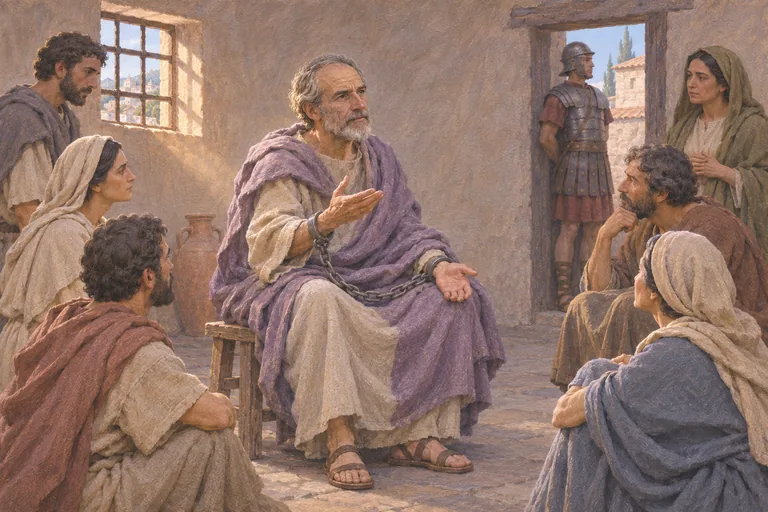
Besides preaching, he wrote letters. His first stop was Smyrna, where Polycarp was bishop. There Ignatius wrote to the communities of Ephesus, Magnesia, Tralles, and Rome. After arriving in Troas, he wrote again to the communities of Philadelphia and Smyrna, as well as to Polycarp. In his letter to the community of Smyrna, Ignatius became the first person in Christian writing to call the Church catholic, meaning universal. For him, wherever Jesus Christ is, there is the Catholic Church.
Longing for union with Christ
The letter to the community in Rome shows how Ignatius viewed the death that awaited him. He begged the Christians there not to prevent his martyrdom and not to appeal his death sentence, because he wanted to reach Jesus Christ soon. A source from the Governorate of Vatican City State says that he viewed death by wild beasts as a glorious union with his Savior. Benedict XVI even judged that no Father of the Church has expressed the longing to be united with Christ and to live in him as intensely as Ignatius.
Death as a martyr in Rome
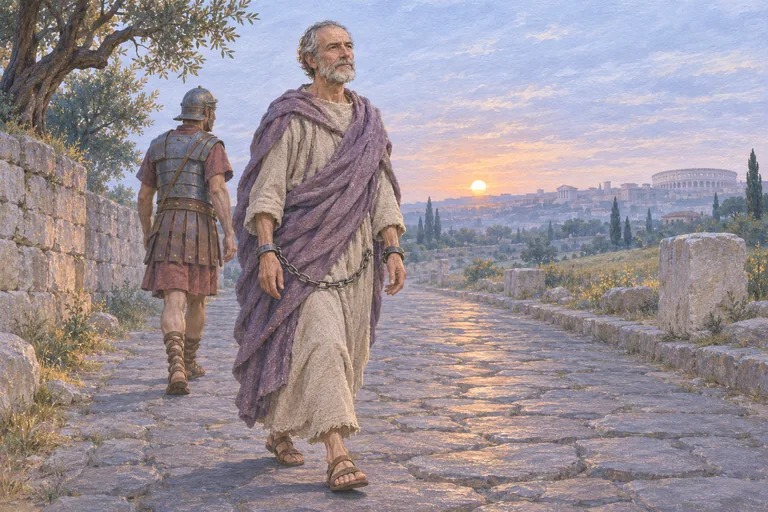
From Troas, Ignatius was taken all the way to Rome. Benedict XVI says that there he was thrown to wild beasts in the Flavian Amphitheater, while another Vatican source writes more cautiously that the place was probably the Coliseum. The Church celebrates the Memorial of Saint Ignatius of Antioch on October 17.
At a glance
- Remembered on
- 17 October Saints calendar
- Church status
- Saint; liturgical Memorial on October 17 vatican.va
- Role
- Bishop of Antioch; said to be the third bishop, or the second if the Apostle Peter is not counted vatican.va
- Year of martyrdom
- 107 according to Benedict XVI; this date is uncertain vatican.va
- Writings
- Seven letters written after his arrest, from Smyrna and Troas vatican.va
- Death
- Martyr in Rome; according to Benedict XVI in the Flavian Amphitheater, according to another source probably in the Coliseum vatican.va
Bring this story into your prayer.
Context & sources
1st para. of the March 14, 2007 audience; 2nd para. of the March 14, 2007 audience; Para. on Ignatius's letters; 2nd para., quotation from Eusebius, Church History 3:36; 2nd para., continued Eusebius quotation; 3rd para. of the March 14, 2007 audience; Para. after the account of the journey to Rome; Para. on two spiritual currents, ref. Letter to the Romans 5–6; 3rd para. of the March 14, 2007 audience, last sentence; Para. on the Catholic Church, ref. Letter to the Smyrnaeans 8:
Official holy-see source from vatican.va, supplied in the approved brief. Official website of the Holy See; paraphrase and link, quotations within limits. Research snapshot; rights and final paraphrase require human review.
Closing greetings of the general audience, last paragraph; Header of the general audience document
Official holy-see source from vatican.va, supplied in the approved brief. Official website of the Holy See; paraphrase and link, quotations within limits. Research snapshot; rights and final paraphrase require human review.
Saint of the Day page title; Section 'A precious link to the Apostles', second paragraph; Section 'Becoming “Christ’s pure bread”'
Official holy-see source from vaticannews.va, supplied in the approved brief. Official website of the Dicastery for Communication; paraphrase and link. Research snapshot; rights and final paraphrase require human review.
Opening paragraph 'Saint Ignatius of Antioch'
Official holy-see source from vaticanstate.va, supplied in the approved brief. Research snapshot; rights and final paraphrase require human review.
Free to copy and share. Please credit lightofsaints.com. Copyright