Saint Juan Diego: Faithful Even When Not Believed
The story of Saint Juan Diego, a simple Indigenous farmer who faithfully carried the Guadalupe message to the bishop even though his story was doubted.
Bless someone else by sharing this story.
Free to copy and share. Please credit lightofsaints.com.
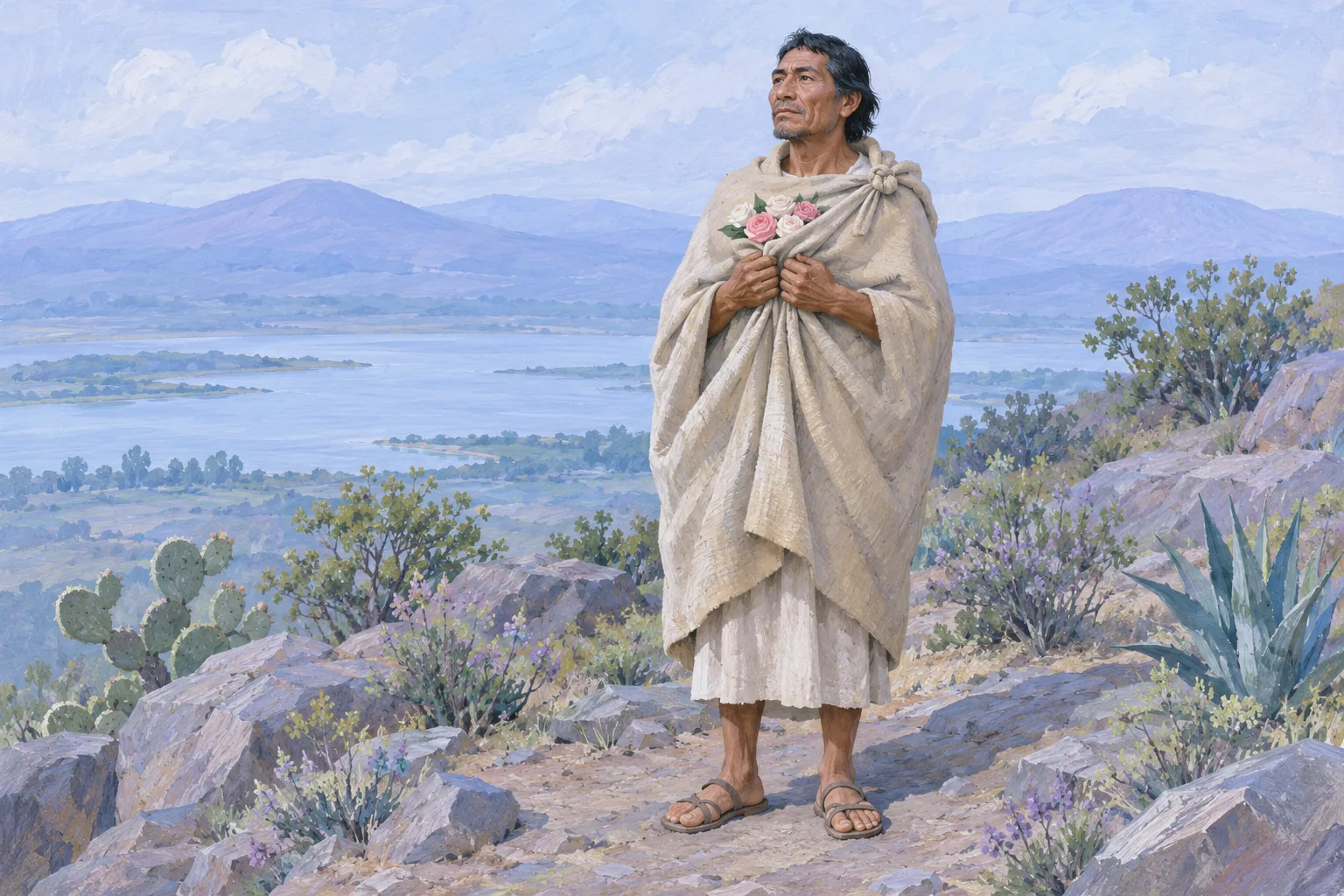
According to the Guadalupe account, a simple farmer was once sent to bring a request to a bishop, but the bishop did not believe him. That farmer was Cuauhtlatoatzin of the Chichimeca people, who after his baptism was named Juan Diego. He received this message from the Blessed Virgin Mary on Tepeyac Hill, near present-day Mexico City, in 1531. The Church remembers him as the first Indigenous saint from the American continent.
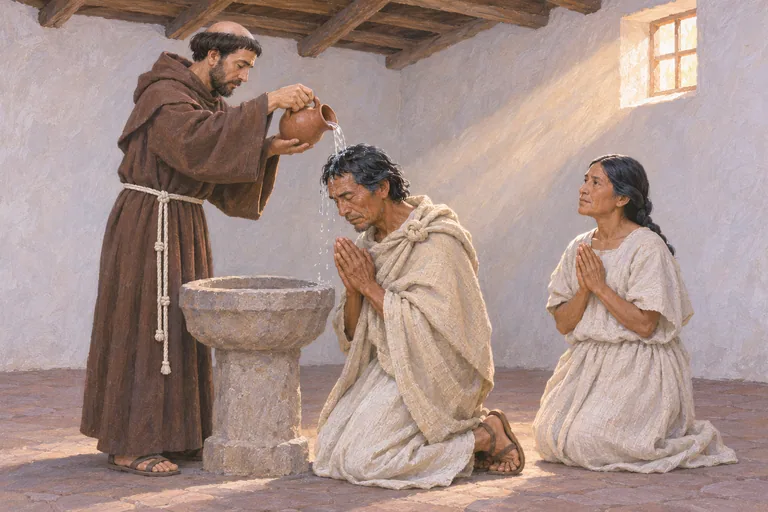
Little is known about the life of Cuauhtlatoatzin before his conversion. What is known about him comes from tradition, archaeological and iconographic sources, and the Nican Mopohua, the oldest Indigenous document on the event of Guadalupe. According to tradition, he was born in 1474, and his name means talking eagle. As an adult, he and his wife asked for baptism and received a new name along with a new life in Christ. The Vatican biography adds that he was baptized at the age of 50 by Father Peter da Gand, one of the first Franciscan missionaries.
Carrying the message to the bishop
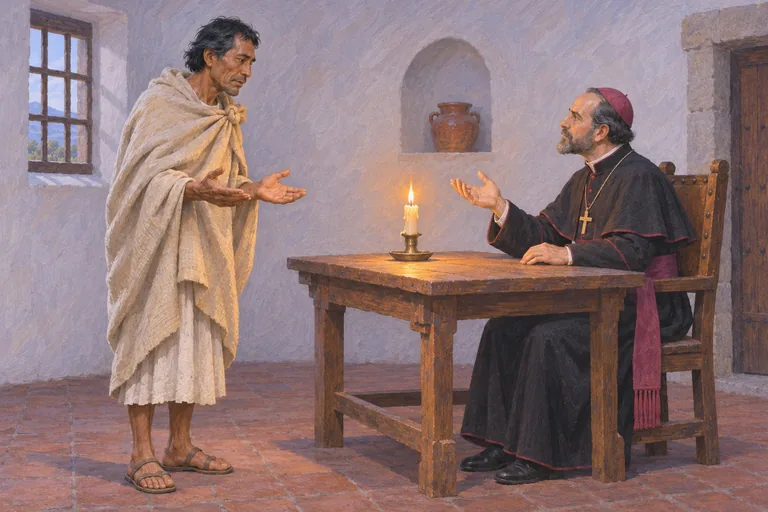
Juan Diego's new life was tested by a task that felt too great for him. According to the Guadalupe account, on December 9, 1531, the Blessed Virgin Mary appeared to him on Tepeyac Hill. He was asked to go to the bishop and request, in Mary's name, that a shrine be built on that hill. Juan Diego went, but the bishop doubted his story.
Juan Diego returned to the Blessed Mother. Vatican News recounts that he felt he was a man of no importance and begged that a better messenger be chosen. Yet he was still sent, and he went to the bishop a second time. This time the bishop asked for a sign to prove that the apparition was true.
The same account continues. Juan Diego obeyed when he was asked to pick flowers on the hill, and he found roses blooming even though it was winter. When he opened his tilma, that is, his mantle, before the bishop, the flowers fell and an image of the Blessed Virgin Mary appeared imprinted on the cloth. The canonization homily also tells of this sign.
A life of prayer as a hermit
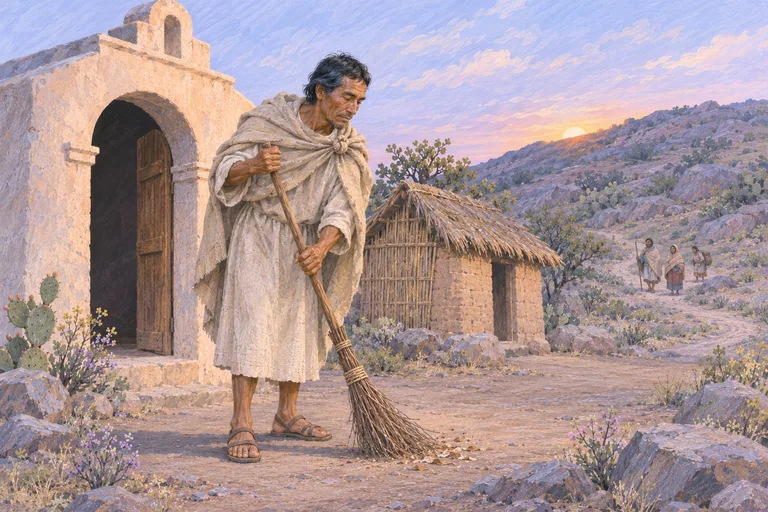
That event brought a change in Juan Diego's own life. The Vatican biography interprets the inner enlightenment he received as a grace deeper than being chosen as a messenger. From then on he devoted his life to prayer, virtue, and love of God and neighbor. With the bishop's permission, he lived as a hermit in a small hut near the chapel where the image was venerated. There he cared for the church, served the first pilgrims, taught the faith to others, and above all prayed.
Faithfulness recognized by the Church
Juan Diego died in 1548 and was buried in the first chapel dedicated to the Virgin of Guadalupe. Centuries later, Pope John Paul II beatified him on May 6, 1990, and then declared his holiness at the canonization Mass in the Basilica of Our Lady of Guadalupe, Mexico City, on July 31, 2002. On that occasion the Pope called Juan Diego an example of a just and upright man, a son of the Church who was faithful and obedient to his pastors, who deeply loved the Blessed Virgin Mary and was a faithful disciple of Jesus.
At a glance
- Remembered on
- 9 December Saints calendar
- Name before baptism
- Cuauhtlatoatzin, meaning talking eagle (according to tradition) vatican.va
- Born
- 1474, according to tradition; of the Chichimeca people vatican.va
- Died
- 1548; buried in the first chapel of the Virgin of Guadalupe vatican.va
- Beatification
- May 6, 1990, by Pope John Paul II in the Basilica of Guadalupe, Mexico City vatican.va
- Canonization
- July 31, 2002, by Pope John Paul II in the Basilica of Our Lady of Guadalupe, Mexico City; the first Indigenous saint from the American continent vatican.va
Bring this story into your prayer.
Context & sources
Canonization homily, title and paragraph 1; Canonization homily, paragraph 1; Greeting after the celebration; Canonization homily, paragraph 3; Canonization homily, paragraph 5
Official holy-see source from vatican.va, supplied in the approved brief. Official website of the Holy See; paraphrase and link, quotations within limits. Research snapshot; rights and final paraphrase require human review.
Biography, paragraph about death and beatification; Biography, paragraph 1; Biography, paragraph 2; Biography, paragraph 3; Biography, paragraph 4; Biography, paragraph 6; Biography, paragraph 5
Official holy-see source from vatican.va, supplied in the approved brief. Official website of the Holy See; paraphrase and link, quotations within limits. Research snapshot; rights and final paraphrase require human review.
Section 'An indigenous Christian', paragraph 1; Section 'The messenger', paragraph 1; Section 'A man of prayer', paragraph 2
Official holy-see source from vaticannews.va, supplied in the approved brief. Official website of the Dicastery for Communication; paraphrase and link. Research snapshot; rights and final paraphrase require human review.
Free to copy and share. Please credit lightofsaints.com. Copyright