The Magi: Following the Star to Bow in Worship
In Matthew 2:1-12, magi from the east follow a star to Bethlehem, prostrate themselves before Jesus, and then go home by another way.
Bless someone else by sharing this story.
Free to copy and share. Please credit lightofsaints.com.
Key idea
Matthew 2:1-12 tells of magi from the east who follow a star, ask questions in Jerusalem, and then find Jesus with Mary in Bethlehem and do him homage. Herod is troubled and lies, while the magi rejoice and go home by another way. The Church sees in them the nations called to Christ, and everyone who dares to seek God.
Imagine a group of foreigners arriving in Jerusalem after a long journey from the east. Perhaps the dust of the road still clings to their clothes. They do not ask about the market or a place to stay. They are looking for a newborn king. Matthew opens his account briefly:
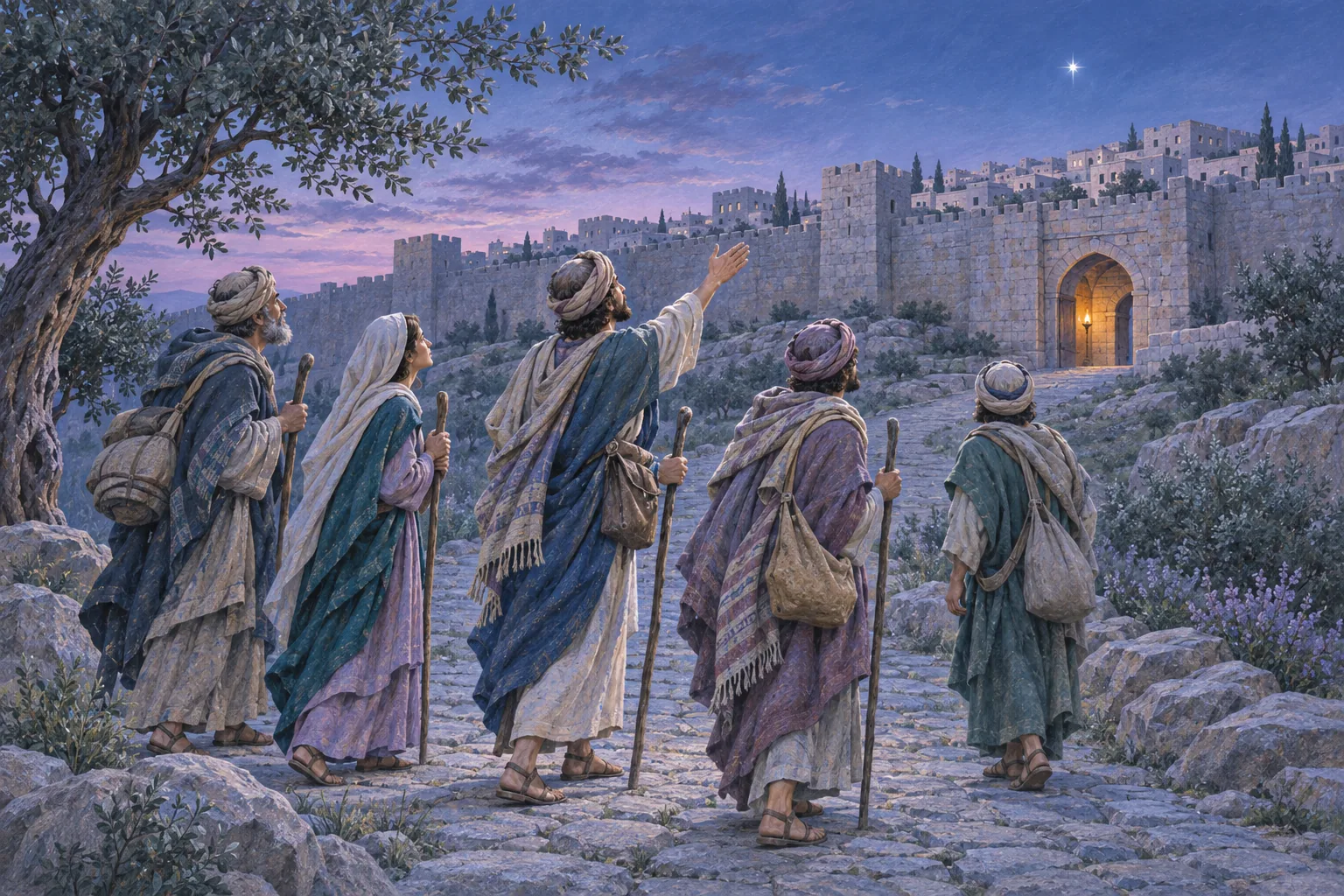
When Jesus was born in Bethlehem of Judea, in the days of King Herod, behold, magi from the east arrived in Jerusalem, saying, "Where is the newborn king of the Jews? We saw his star at its rising and have come to do him homage." (Mt 2:1-2)
New American Bible: Mt 2:1-12
Their question was not met with joy. When King Herod heard it, he was greatly troubled, and all Jerusalem with him. Herod then assembled all the chief priests and the scribes of the people, men who studied the Scriptures, and asked them where the Messiah was to be born. They answered: in Bethlehem of Judea, for so it had been written through the prophet.
Then they cited the prophet's words about Bethlehem: “'And you, Bethlehem, land of Judah, are by no means least among the rulers of Judah; since from you shall come a ruler, who is to shepherd my people Israel.'"” (Mt 2:6) That humble town turns out to be named as the place from which a ruler would arise for God's people.
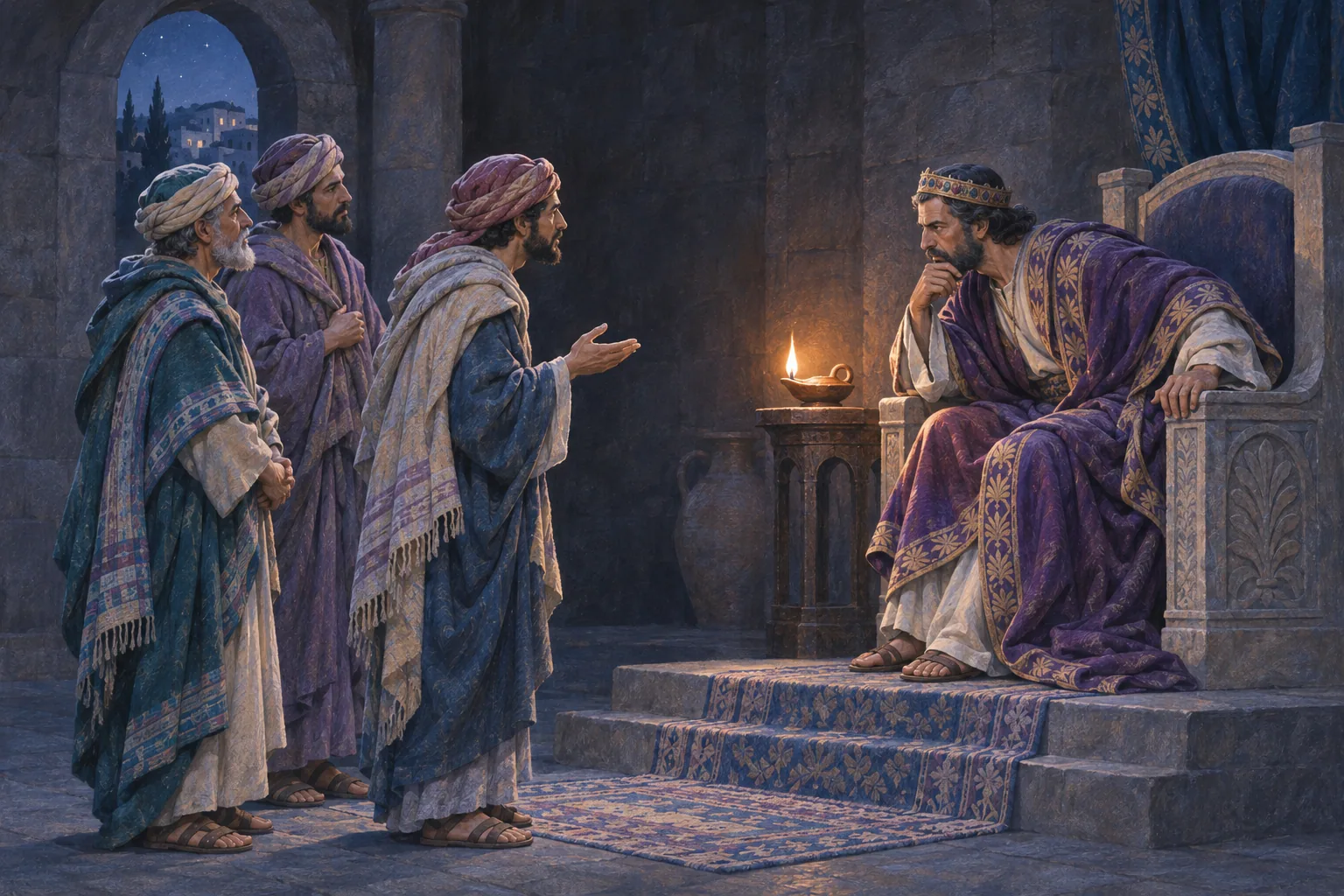
Then Herod called the magi secretly and found out from them exactly when the star had appeared. He sent them to Bethlehem to search diligently for the child and to bring him word once they had found him, saying that he too wanted to go and do him homage. Perhaps his words sounded friendly, but that secret meeting may already have hidden another purpose.
After hearing the king, the magi set out. The star they had seen in the east went ahead of them until it stopped over the place where the child was. When they saw the star, they were overjoyed. Imagine the relief of these seekers: their long journey had not been in vain, and the way they had been looking for was now clear.
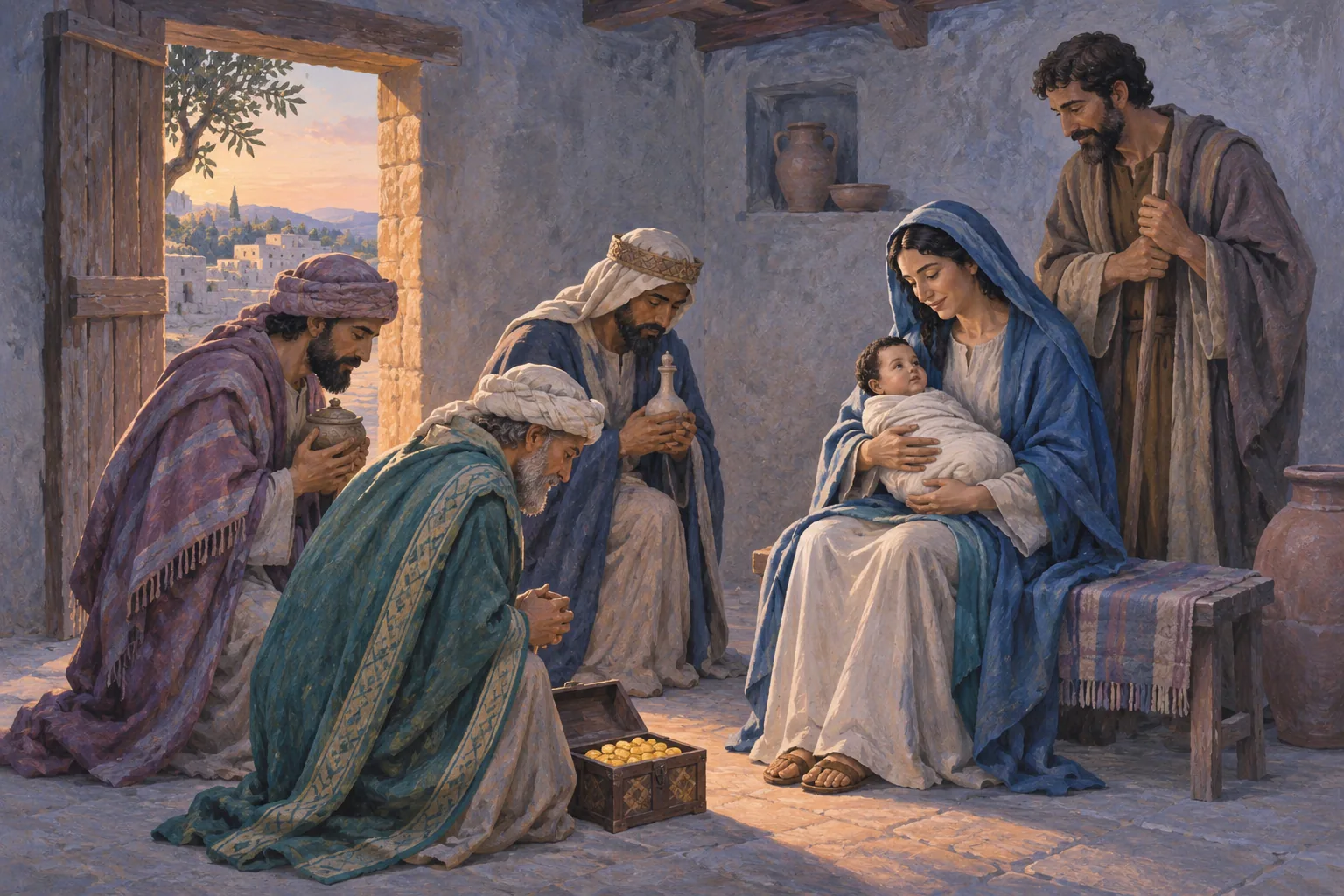
They entered the house and saw the child with Mary his mother. It was not Herod's palace but a house in Bethlehem. There the visitors from afar prostrated themselves and did him homage. They opened their treasures and offered him gifts of gold, frankincense, and myrrh.
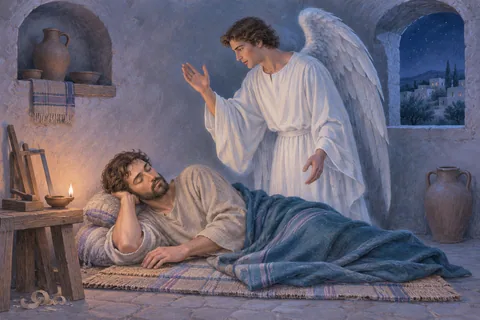
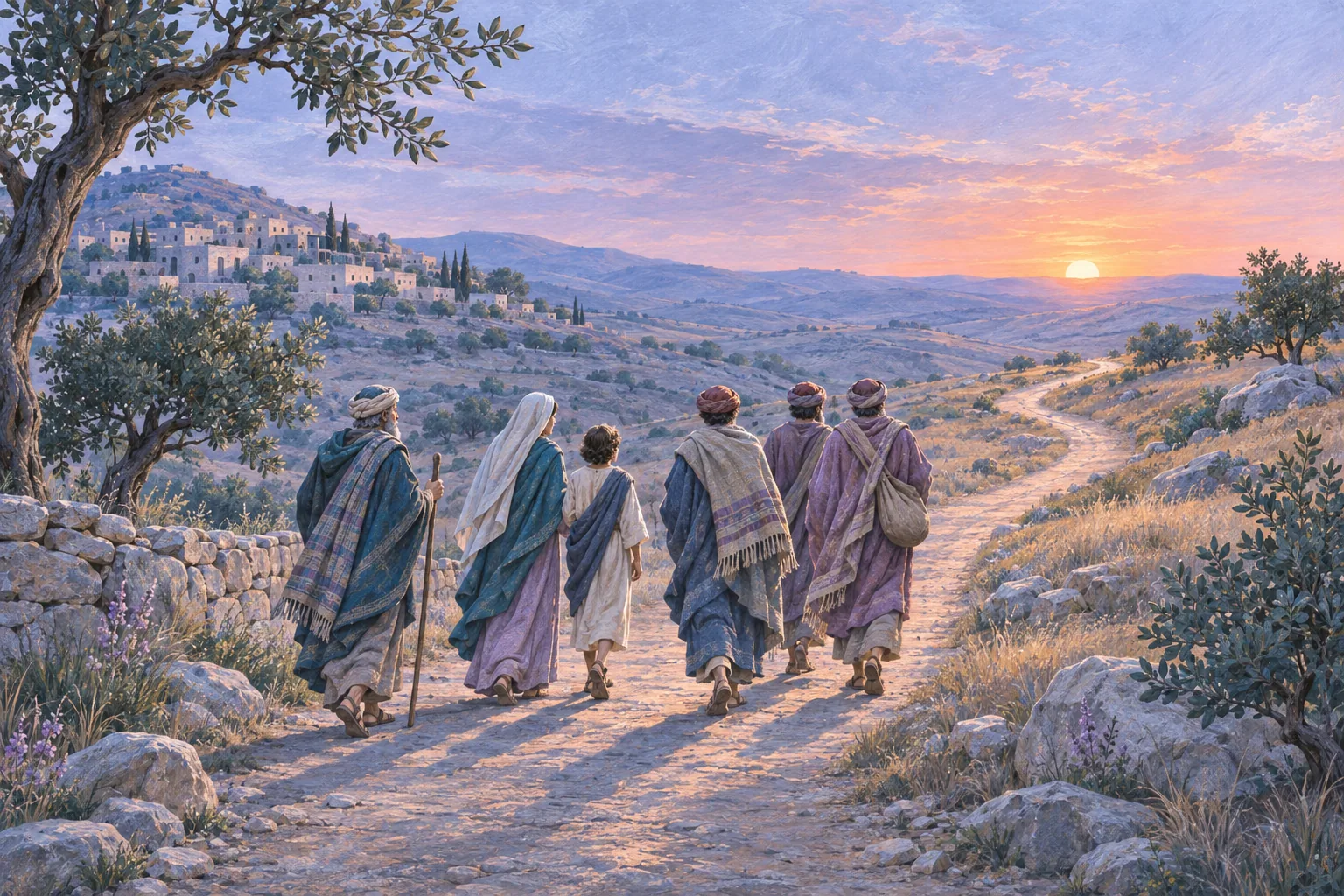
The magi did not go back to Herod. Having been warned in a dream not to return to him, they departed for their country by another way. Matthew does not tell us what happened to them afterward. All he records is a journey home that was different from the journey there.
Background of the Magi Story
Who were the magi? Matthew says only that they came from the east; he gives no country, number, or names, and never calls them kings. The number and names many people know do not come from the Gospel text. Pope Benedict XVI explained that they were probably wise men who studied the sky, but not in order to foretell the future.
Herod was the king in power when Jesus was born. In his homily for Epiphany 2026, Pope Leo XIV noted that Herod feared losing his throne and was troubled by things he felt were beyond his control. That is why a question about a newborn king sounded to him like a threat.
Saint John Paul II called the Epiphany both an event and a symbol, and noted that the story of the magi has long inspired popular devotion and become a traditional part of the Christmas crib. In Matthew's text itself, the magi find the child in a house, with no shepherds or manger in this scene.
The Meaning of the Magi's Journey
Pope Benedict XVI taught that the Son of God came not only for the people of Israel, represented by the shepherds of Bethlehem, but for all humanity, represented by the magi. That is why the Epiphany stresses the universal meaning of Jesus' birth. Saint John Paul II wrote that with the magi, the nations begin their journey toward the divine Light.
This story shows two attitudes. Pope Leo XIV points to the great joy of the magi and the unease of Herod. Benedict XVI explained that Herod lied: he sought the child not to worship him but to kill him. The Pope invited every believer to ask whether there is a little of Herod in them, a part that sees God as a rival.
According to Pope Leo XIV, the child the magi worshiped is a priceless gift revealed in a humble place, and the magi saw the star again only after leaving the palace and the temple. He said that there are still magi today: people who dare to go out and seek. For young people, this can mean daring to ask questions and to seek God honestly.
Pope Francis invited the faithful to be like that star, leading the people they meet to Jesus through love. As an interpretation, going home by another way can be read as a picture of how an encounter with Jesus changes the direction of a person's life.
At a glance
- Reading
- Matthew 2:1-12
- Form
- Event
- People
- Jesus · King Herod · The magi · Chief priests and scribes · Mary
- Places
- Bethlehem · Judea · Jerusalem · The East
- Read at Mass
- Gospel for the Solemnity of the Epiphany of the Lord vatican.va
- Read at Mass
- Gospel at Mass on the Solemnity of the Epiphany of the Lord vatican.va
This story is retold by the Light of Saints editorial team from the Catholic edition of Scripture and the Church sources listed, with the help of AI, and checked by an editor. Some of the atmosphere and the characters' feelings are our portrayal. For the full text, read the passage in Scripture.
Take this story into your prayer.
Common questions
Who were the magi in the Bible?
Matthew calls them magi from the east who saw a star and came to do homage to the newborn king of the Jews. Pope Benedict XVI explained that they were probably wise men who studied the sky, though not to foretell the future.
Were there really three wise men?
The Gospel of Matthew gives no number, names, or royal titles for the magi. It mentions three kinds of gifts: gold, frankincense, and myrrh. The number and names familiar to many people do not come from the text of Scripture.
Why did Herod want to know where the child was?
Herod said he wanted to do the child homage, but Pope Benedict XVI explained that he was lying and actually wanted to kill him. Pope Leo XIV noted that Herod was afraid of losing his throne.
When is the story of the magi read at Mass?
The Church hears this story from the Gospel of Matthew on the Solemnity of the Epiphany of the Lord, as mentioned in the Epiphany homilies of Saint John Paul II and Pope Leo XIV.
Why did the magi go home by another way?
Matthew writes that they were warned in a dream not to return to Herod, so they departed for their country by another way.
Context & sources
Mt 2:1-12
Scripture quotations are from the New American Bible © Confraternity of Christian Doctrine, Washington, D.C.
Published at www.vatican.va
Cited as a Church source; the source text remains its publisher's.
Published at www.vatican.va
Cited as a Church source; the source text remains its publisher's.
Published at www.vatican.va
Cited as a Church source; the source text remains its publisher's.
Published at www.vatican.va
Cited as a Church source; the source text remains its publisher's.
Free to copy and share. Please credit lightofsaints.com. Copyright