Moses in the Bible: From the Burning Bush to Mount Nebo
The story of Moses in Exodus 2 – Deuteronomy 34: a baby drawn from the Nile, called by God, who led Israel out of Egypt and prayed for his people.
Bless someone else by sharing this story.
Free to copy and share. Please credit lightofsaints.com.
Key idea
In the Bible, Exodus 2 – Deuteronomy 34 tells of Moses, a Levite baby rescued from the Nile, called by God at the burning bush, who led Israel out of Egypt, received the Ten Commandments at Sinai, and died after seeing the promised land. His story shows a God who calls people who feel unworthy, and the Church sees in Moses' prayer of intercession an image of Jesus, the Mediator.
Picture a papyrus basket among the reeds on the bank of the Nile. Inside lay a baby boy from a Levite family, whom his mother had hidden for three months. Pharaoh's daughter found him crying and was moved with pity. The baby's sister then called the child's own mother to nurse him. When the boy had grown, Pharaoh's daughter adopted him as her son and named him Moses, because she had drawn him out of the water.
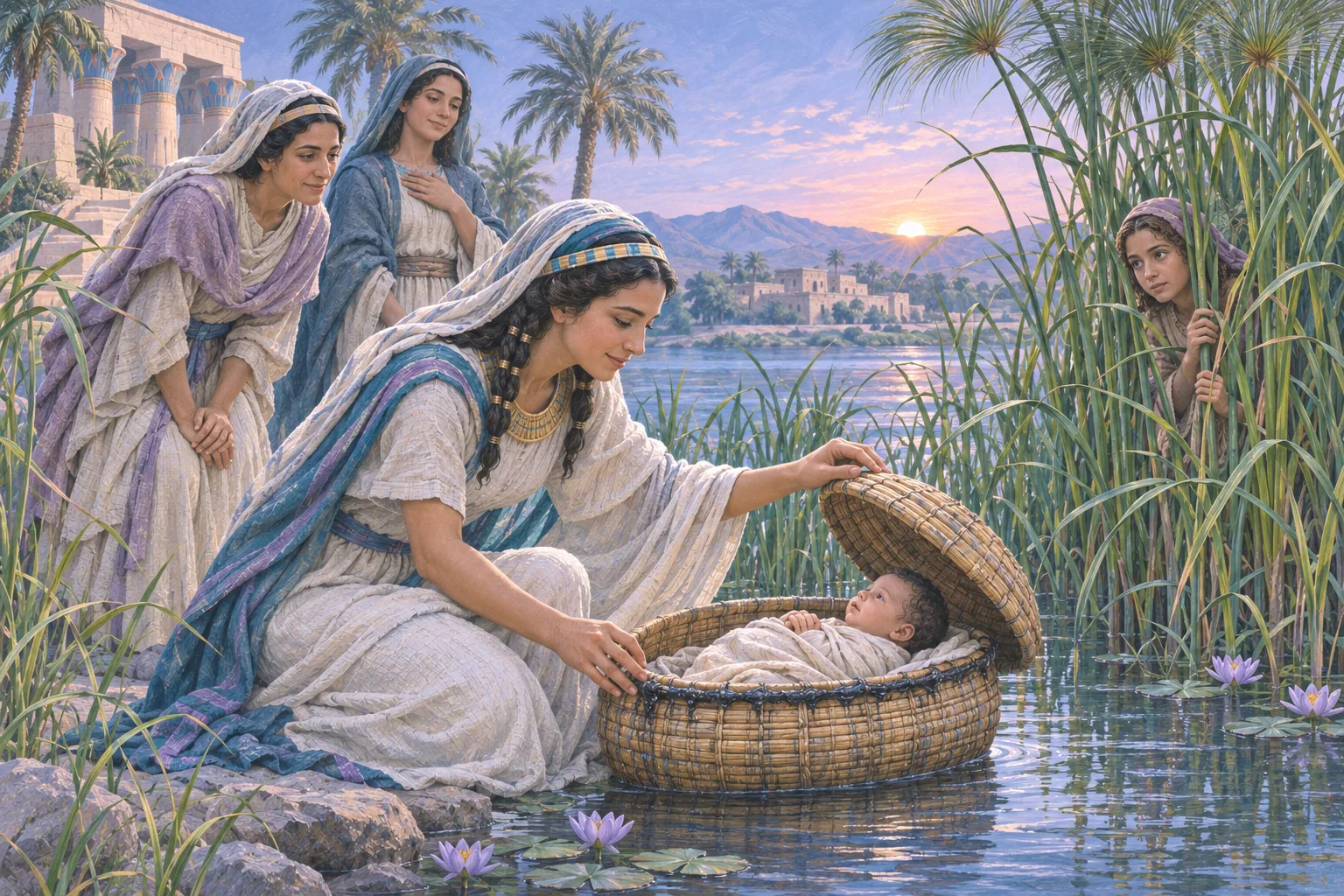
When Moses was grown, he saw an Egyptian striking a Hebrew. He killed the Egyptian and hid the body in the sand. The deed became known, and Pharaoh sought to kill him. So Moses fled to the land of Midian.
At a well in Midian, Moses defended the seven daughters of the priest of Midian from shepherds who were driving them away. Reuel, their father, welcomed him, and Moses married Zipporah. They named their son Gershom, because Moses had become a resident alien in a foreign land. Perhaps he thought his life would end quietly in that wilderness.
The cry of the Israelites in their slavery reached God, who remembered his covenant with Abraham, Isaac and Jacob. One day Moses led the flock of Jethro, his father-in-law, as far as Horeb, and saw a bush that was burning yet was not consumed. God called to him from the middle of the bush and told him to remove his sandals, because the place was holy ground.
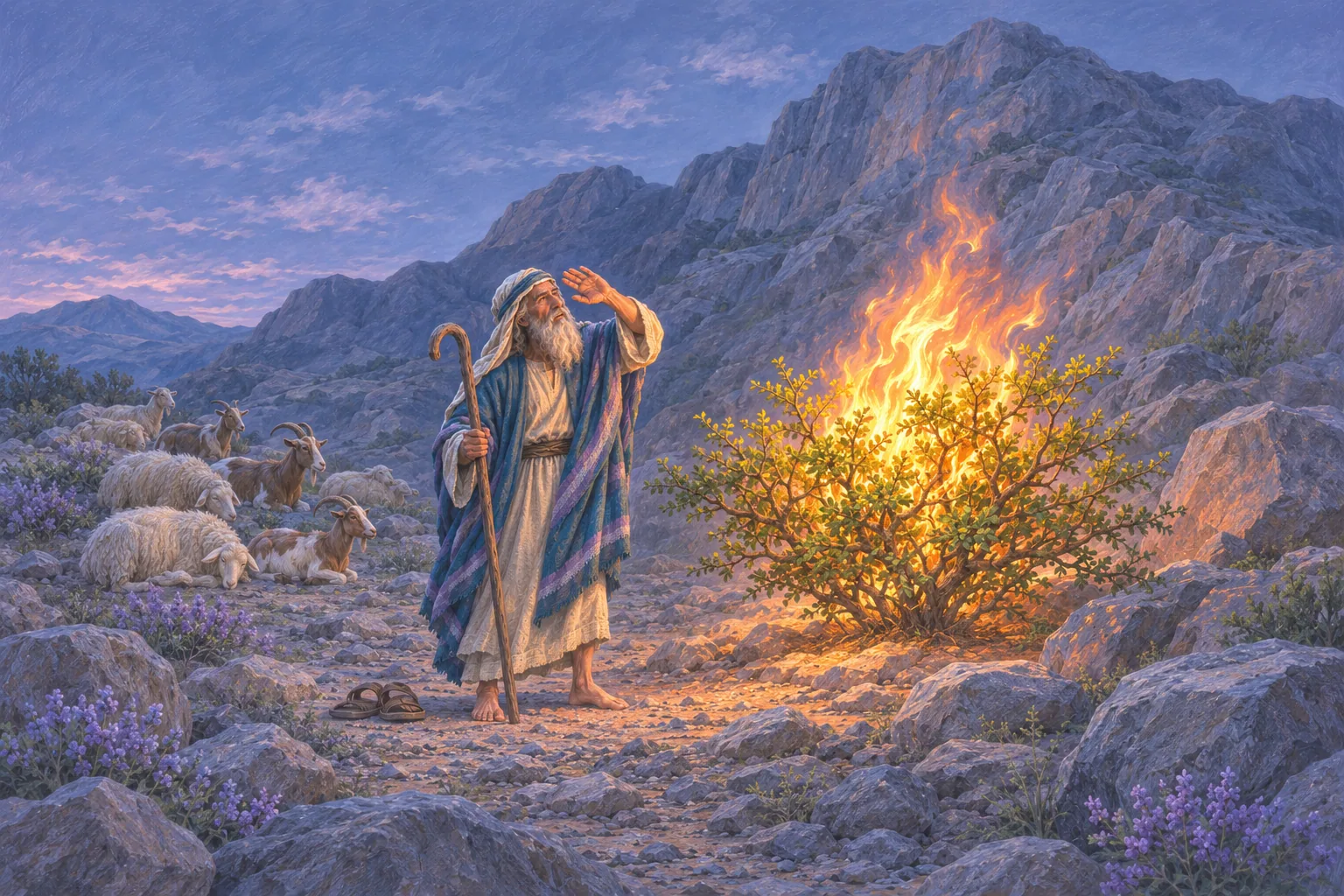
God sent Moses to Pharaoh to bring his people out of Egypt. Scripture records Moses' reply: “But Moses said to God, "Who am I that I should go to Pharaoh and lead the Israelites out of Egypt?"” (Ex 3:11) God promised to be with him, and then revealed his name, written as I AM WHO I AM (Exod 3:14).
Moses still hesitated. God gave him signs, such as a staff that turned into a snake. When Moses said he was slow of speech and tongue, God appointed Aaron, his eloquent brother, to speak for him. On the way back to Egypt with his family, the Book of Exodus briefly records a puzzling episode of circumcision performed by Zipporah.
With Aaron, Moses gathered the elders of Israel, and the people believed and bowed down in worship. But Pharaoh refused to let them go. The LORD then instituted the Passover: each household was to slaughter an unblemished lamb, put its blood on the doorposts, and eat it with unleavened bread and bitter herbs. The blood was a sign so that the LORD would pass over their houses.
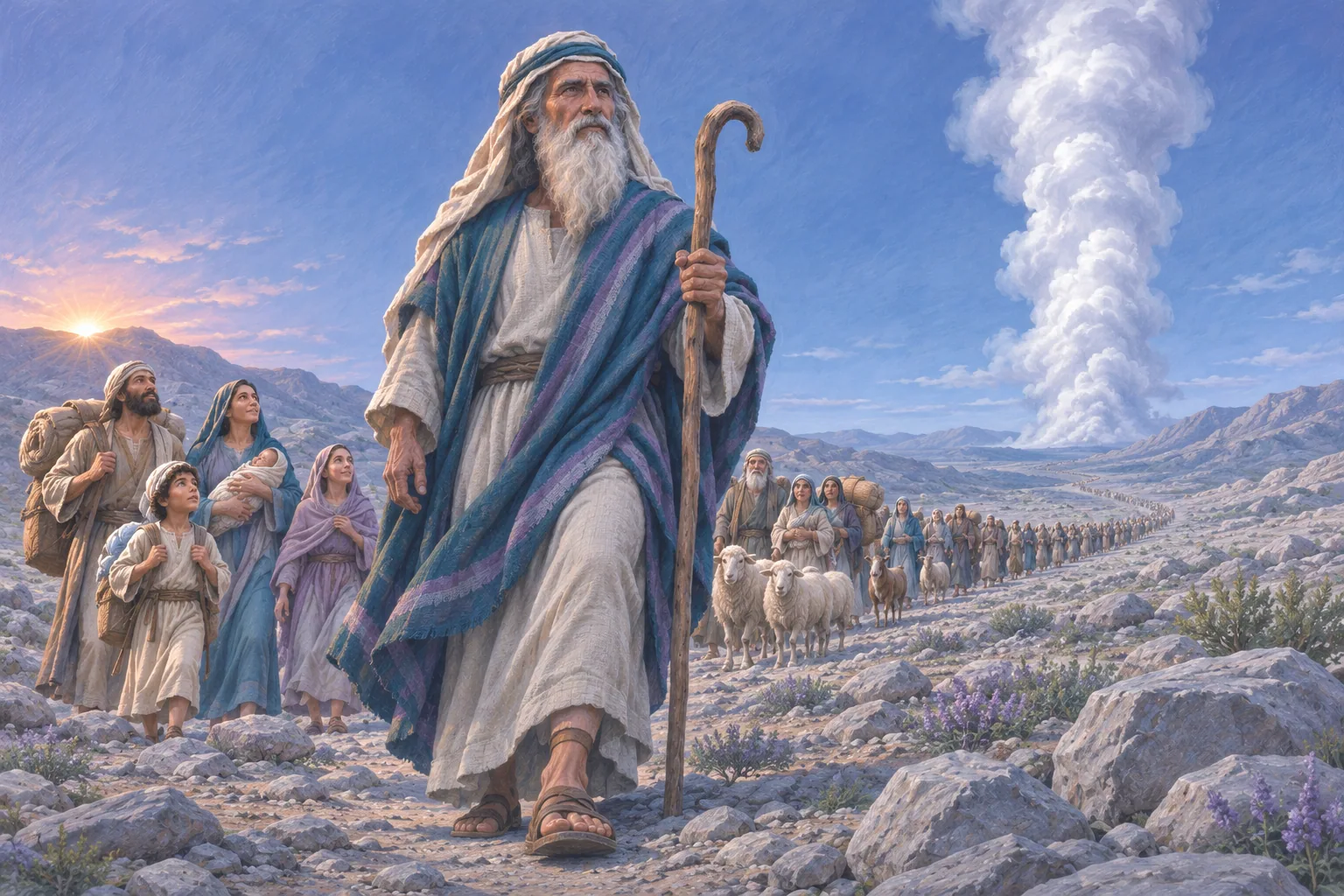
At midnight the LORD struck down the firstborn in the land of Egypt, and that same night Pharaoh told Moses and Aaron to go. The Israelites set out from Rameses to Succoth with their dough still unleavened, and Moses took the bones of Joseph with him. The LORD went before them in a column of cloud by day and a column of fire by night.
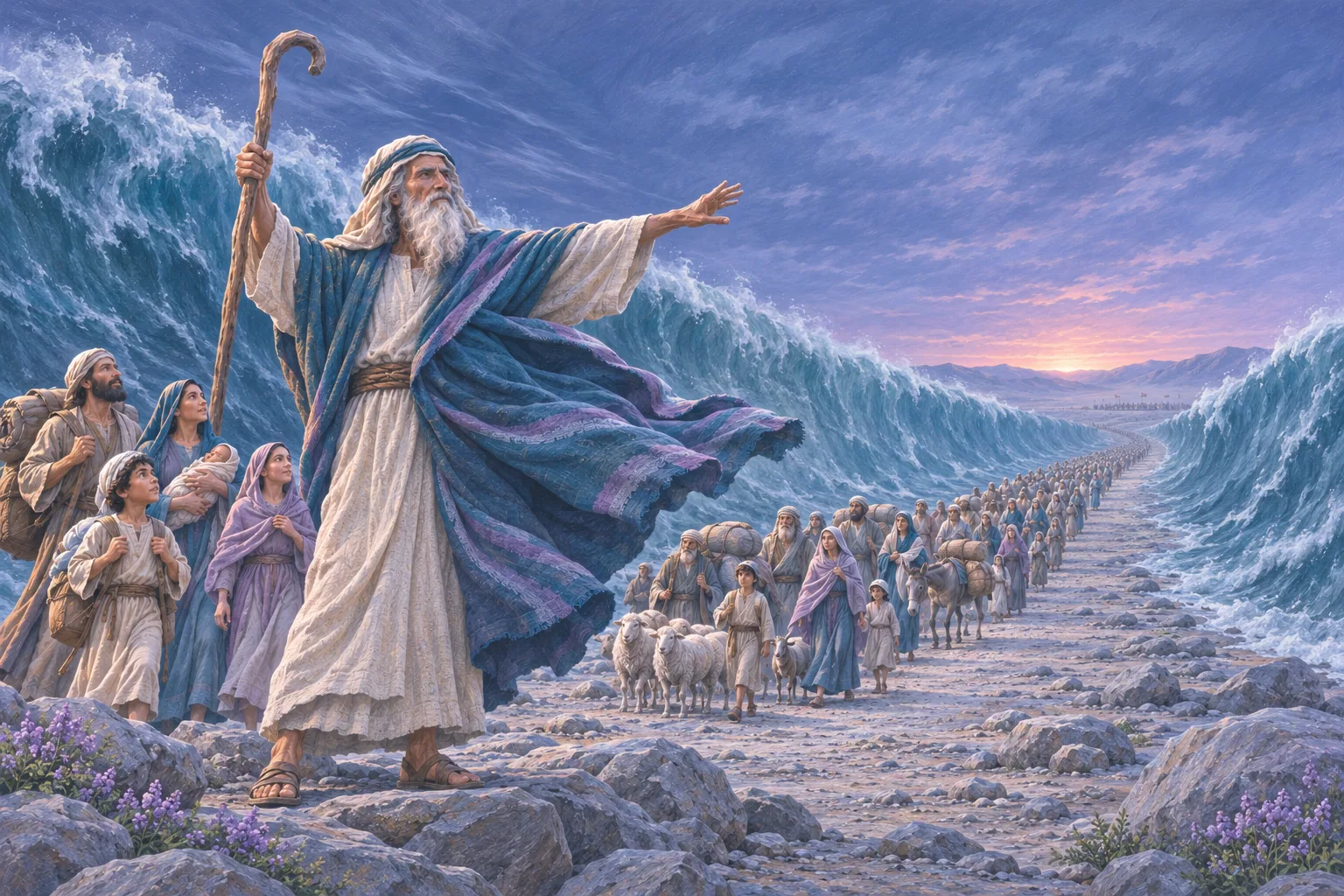
Pharaoh changed his mind and pursued them with his chariots. Imagine the Israelites at the edge of the sea, trapped between the water and the army. They were terrified and blamed Moses. Scripture records: “But Moses answered the people, "Fear not! Stand your ground, and you will see the victory the LORD will win for you today. These Egyptians whom you see today you will never see again.” (Ex 14:13)
Moses stretched out his hand over the sea, and all night the LORD drove back the water with a strong east wind. The Israelites walked on dry ground, with the water like a wall to their right and to their left. Toward morning the water flowed back over Pharaoh's army, and the people believed in the LORD and in Moses, his servant.
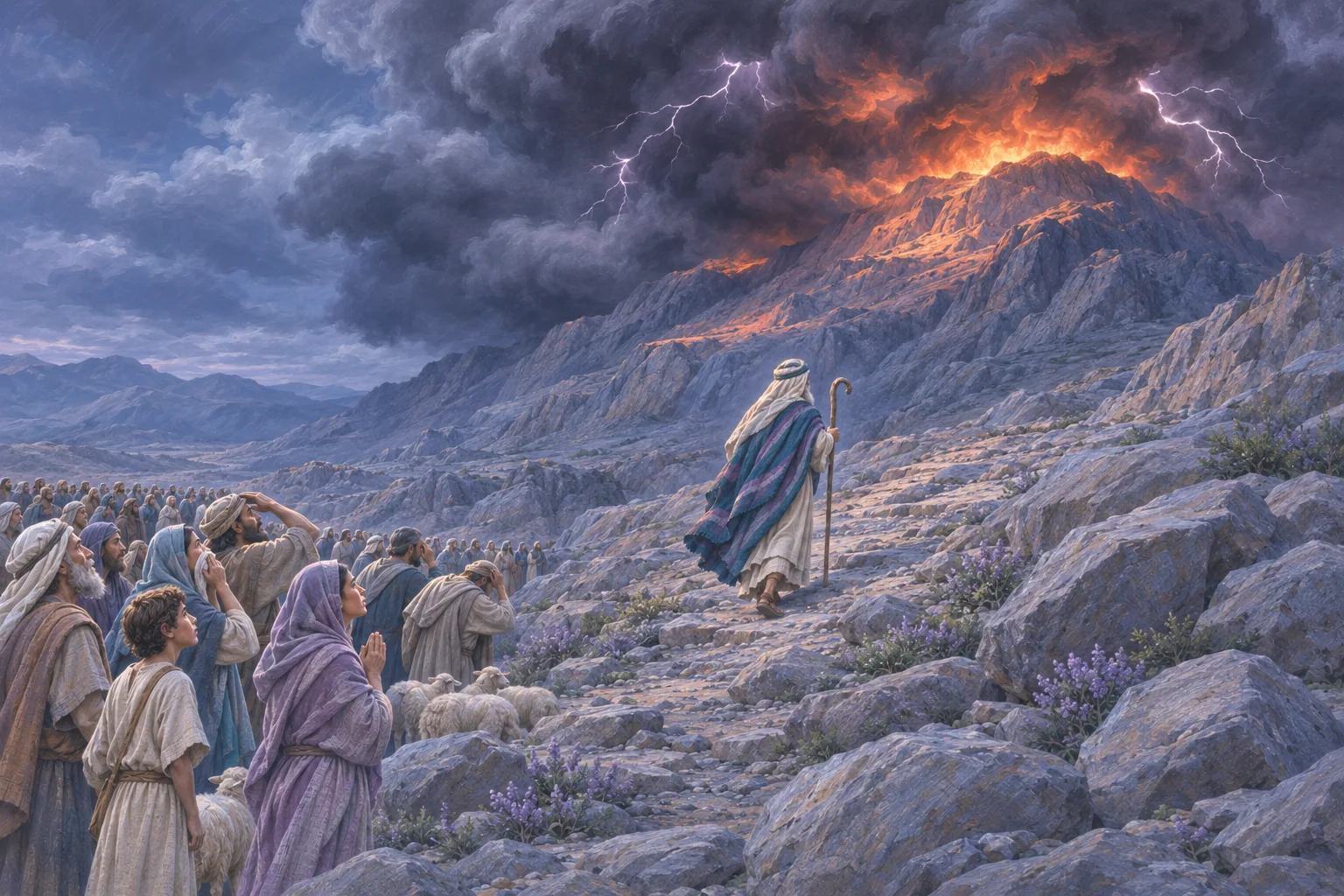
In the wilderness of Sinai, God offered a covenant: Israel would be a kingdom of priests and a holy nation. The LORD came down upon the mountain in fire, with thunder, lightning and the blast of a trumpet, and spoke the Ten Commandments. “Still the people remained at a distance, while Moses approached the cloud where God was.” (Ex 20:21)
Because Moses was so long in coming down from the mountain, the people asked Aaron to make them a god, and Aaron made a molten calf from their gold earrings. The LORD said he would destroy the people. Moses pleaded with him and recalled his promise to Abraham, Isaac and Israel, and the LORD relented from the punishment he had threatened.
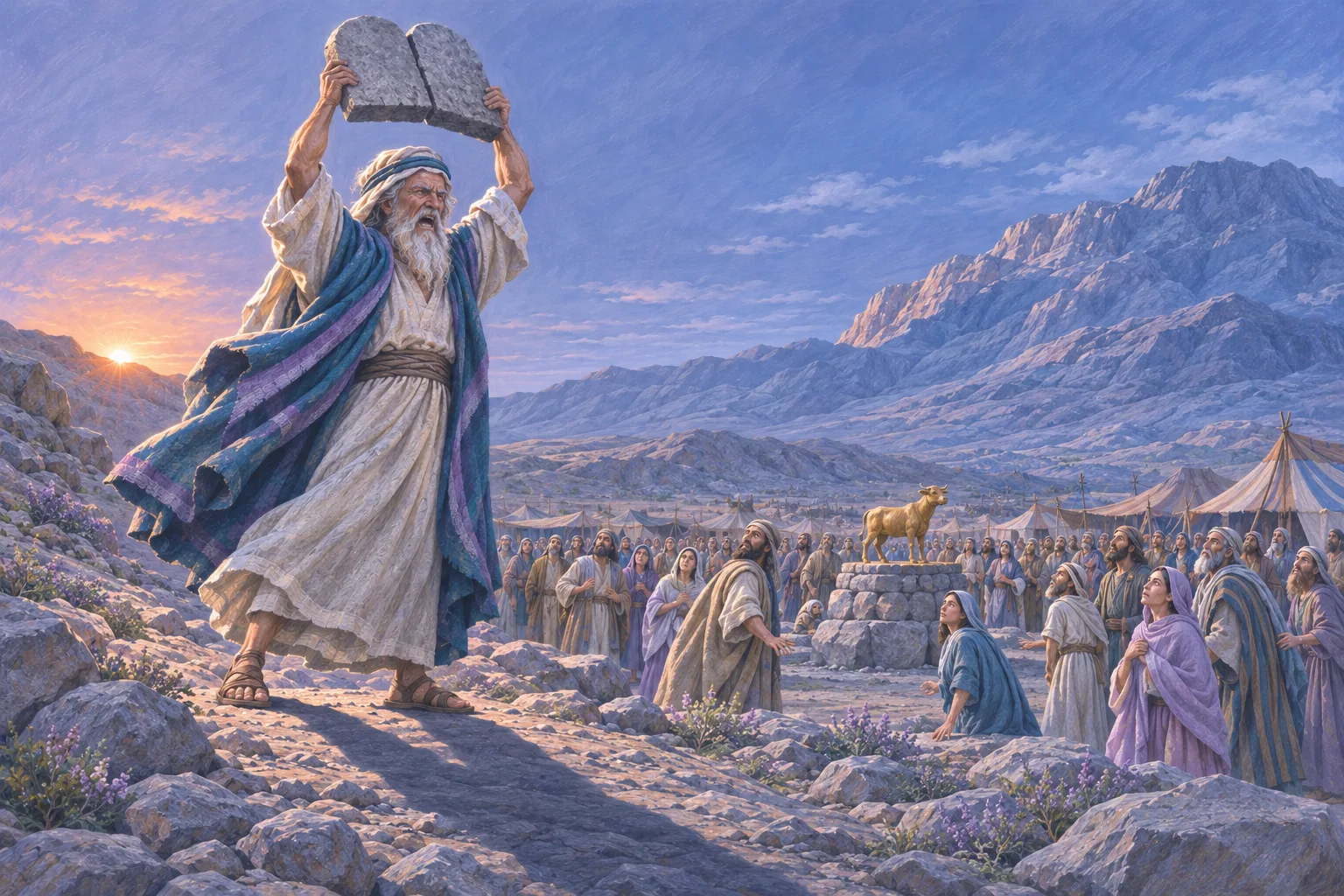
When Moses came down and saw the calf and the people dancing, he shattered the two tablets of the law at the foot of the mountain and destroyed the idol. The Levites carried out punishment on about three thousand people. The next day Moses went back before the LORD to ask forgiveness, even offering to have his own name blotted out of God's book. The LORD told him to go on leading the people.
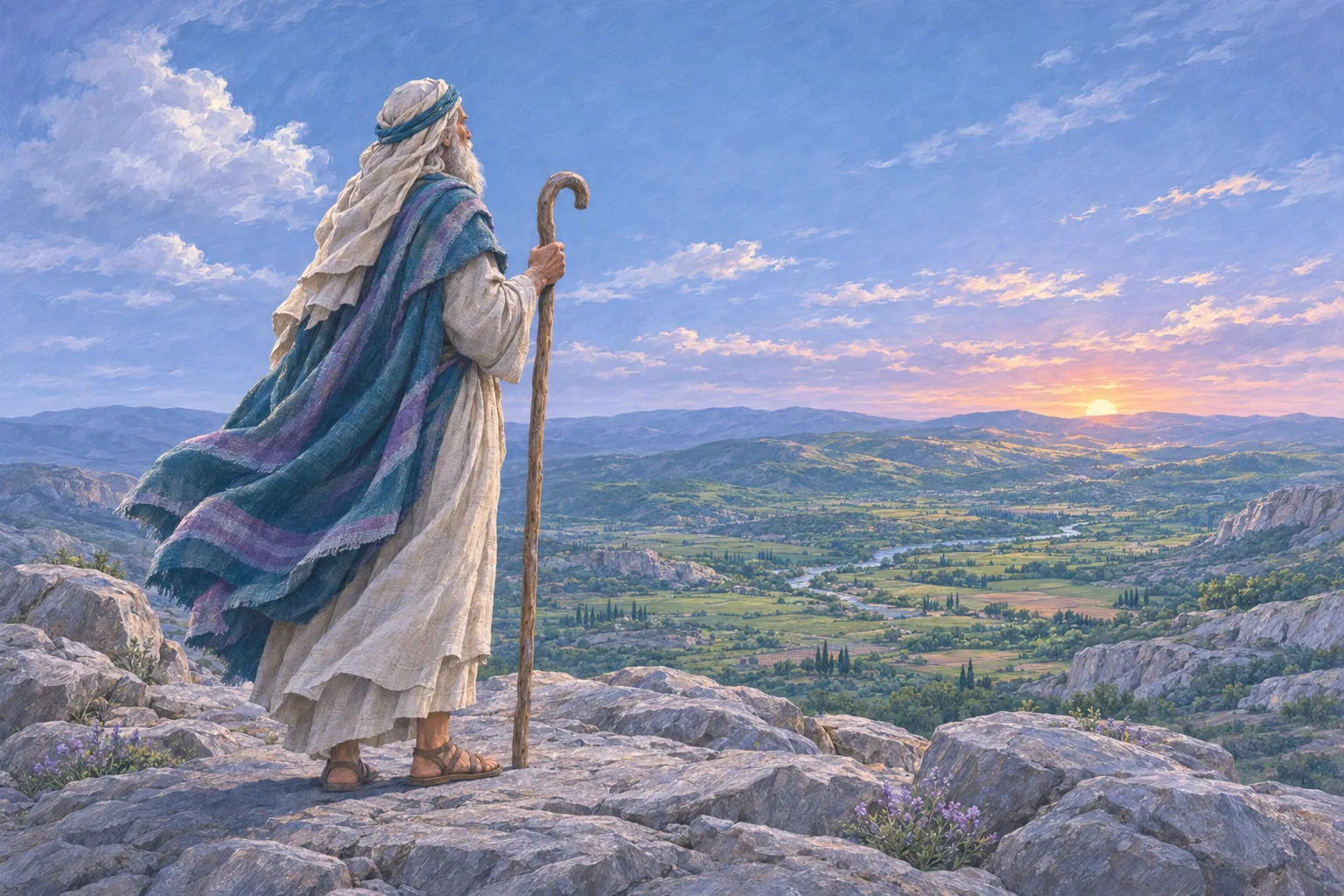
At the end of his life Moses climbed to the top of Pisgah on Mount Nebo. The LORD showed him the promised land, but Moses would not cross over into it. Perhaps he gazed at it for a long time in silence. He died in the land of Moab at the age of one hundred and twenty, and no one knows the place of his burial.
The Israelites mourned him for thirty days, and Joshua, son of Nun, on whom Moses had laid his hands, took up the leadership. The Book of Deuteronomy testifies that no prophet has arisen like Moses, whom the LORD knew face to face.
Background to Moses and the Exodus
The Book of Exodus records that the Israelites lived in Egypt for four hundred and thirty years and finally lived under forced labor. At Horeb, God introduced himself as the God of Abraham, Isaac and Jacob, so the story of Moses continues the promise made to the patriarchs. Moses' father-in-law is called by two names, Reuel and Jethro, while his sister is not named in Exodus 2.
The Passover was established as a memorial for all generations. The text asks parents to explain its meaning to their children, and the unleavened bread recalls that the people left in haste, before their dough could rise. Pope Benedict XVI adds that before receiving the tablets of the Law, Moses fasted forty days and forty nights on the mountain.
So why did Moses not enter the promised land? Pope Francis points to a passage of the Pentateuch, Numbers 20:12, where God rebukes Moses for his lack of faith.
What Moses Means for Catholic Faith
Pope Francis describes the young Moses as a man who felt compassion for his people, yet from his hands flowed violence rather than justice. He ran away, and when he was called, he resisted out of fear and a sense of unworthiness. Even so, God still sent him and promised to be with him.
Pope Francis, citing Catechism 2574, calls intercession the most characteristic form of Moses' prayer. Moses rejected neither God nor his people. Pope Benedict XVI explains that the words of anger at Sinai were spoken so that Moses would intervene, and so it becomes clear that what God always wills is salvation.
Moses also points to Christ. Pope Francis, citing Catechism 2577, calls him the first great prophet of Jesus, the Advocate and Mediator. Benedict XVI notes that from the cross Christ brings not tablets of stone but himself, his Body and Blood, as the New Covenant.
For teenagers and young adults, this story feels close. Many feel they are not good with words, or have taken a wrong step like the young Moses. God's call does not wait for perfect people. Intercession can be simple, too: praying for a friend who has fallen instead of walking away, because, as Benedict XVI says, love of neighbor and love of God cannot be separated.
At a glance
- Reading
- Exodus 2 – Deuteronomy 34
- Form
- People
- People
- Moses · Aaron · Zipporah · Reuel / Jethro · Pharaoh · Joshua, son of Nun
- Places
- Egypt and the Nile · Mount Horeb · Red Sea · Mount Sinai
This story is retold by the Light of Saints editorial team from the Catholic edition of Scripture and the Church sources listed, with the help of AI, and checked by an editor. Some of the atmosphere and the characters' feelings are our portrayal. For the full text, read the passage in Scripture.
Take this story into your prayer.
Common questions
Who was Moses in the Bible?
Moses was a child of a Levite family, rescued from the Nile, called by God at the burning bush, who led Israel out of Egypt. Pope Benedict XVI calls him the great prophet and leader of the Exodus, who acted as mediator between God and Israel.
Why didn't Moses enter the Promised Land?
Deuteronomy 34 records that the LORD showed Moses the land from Mount Nebo, but he did not cross over into it. Pope Francis points to Numbers 20:12, where God rebukes Moses for his lack of faith.
What does the name Moses mean?
According to Exodus 2:10, Pharaoh's daughter named him Moses because she had drawn him out of the water of the Nile.
How old was Moses when he died, and where is he buried?
Moses died in the land of Moab at the age of one hundred and twenty. He was buried in a valley opposite Beth-peor, and the Book of Deuteronomy records that no one knows the place of his burial.
How is Moses connected to Jesus?
Pope Francis, citing Catechism 2577, calls Moses the first great prophet of Jesus, the Advocate and Mediator. Moses' prayer for his people is an image of Jesus praying for his own.
Context & sources
Ex 2:1–4:31; Ex 12:1–14:31; Ex 19:1–20:26; Ex 32:1-35; Dt 34:1-12
Scripture quotations are from the New American Bible © Confraternity of Christian Doctrine, Washington, D.C.
Published at www.vatican.va
Cited as a Church source; the source text remains its publisher's.
Published at www.vatican.va
Cited as a Church source; the source text remains its publisher's.
Free to copy and share. Please credit lightofsaints.com. Copyright