Saint Catherine of Siena: Bold Honesty Out of Love
Saint Catherine of Siena learned to read with difficulty, prayed, served the sick, and respectfully urged Church leaders, even the Pope, to be faithful.
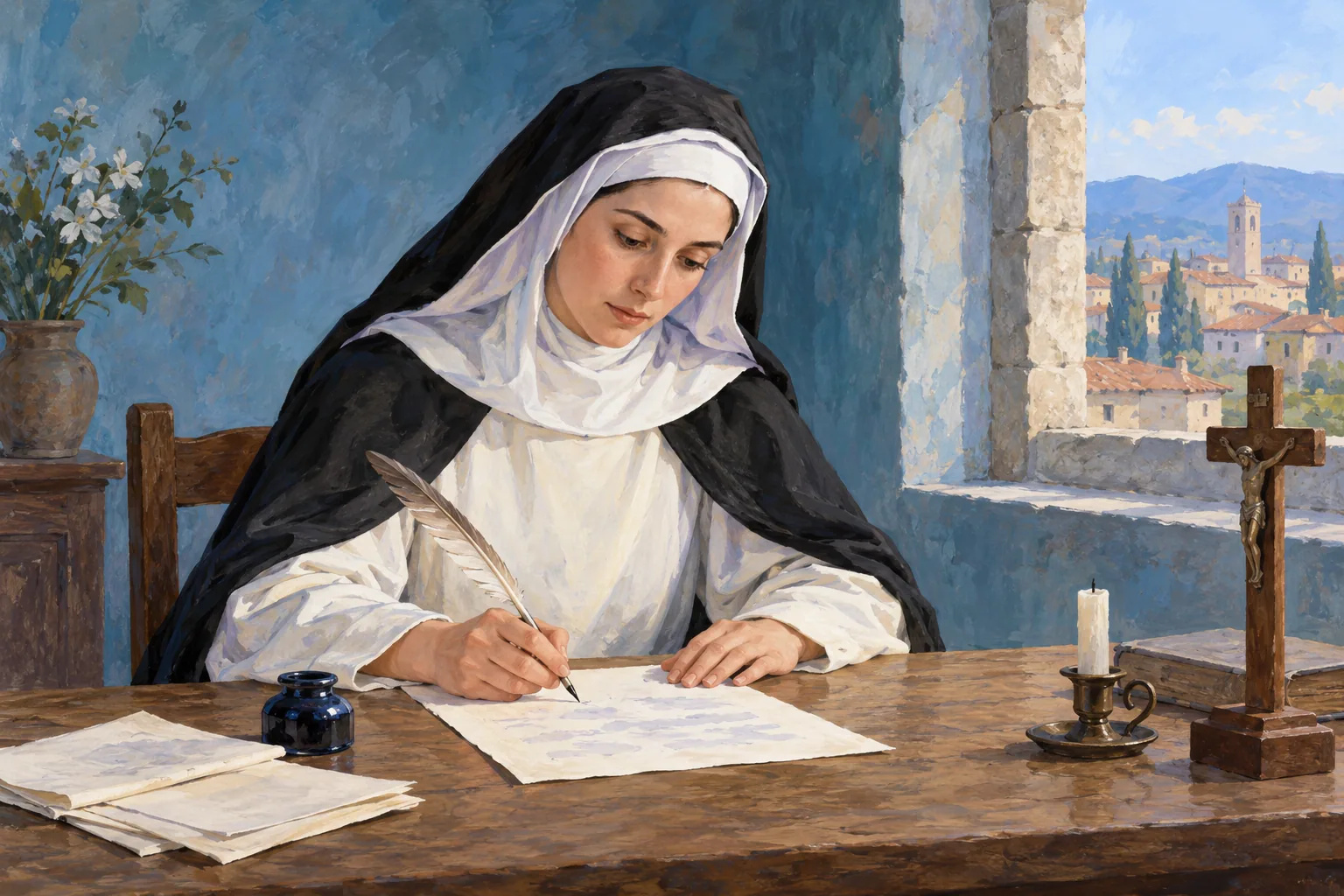
Saint Catherine of Siena did not begin her life as an educated person. She learned to read with difficulty and only learned to write as an adult. Even so, this woman from Siena would later dare to urge the leaders of the Church, even the Pope, to be faithful to their responsibilities.
Catherine was born in Siena, Italy, in 1347, into a very large family. The 14th century was a difficult time. The Church was struggling, and society in Italy and Europe was also full of problems.
At the age of 16, Catherine entered the Third Order of the Dominicans, the female branch known as the Mantellate. According to Pope Benedict XVI in one of his audiences, this step was motivated by a vision of Saint Dominic.
Catherine continued to live in her family's home. There she confirmed the vow of virginity that she had made privately as an adolescent. She filled her days with prayer, penance and works of charity, especially for the sick.
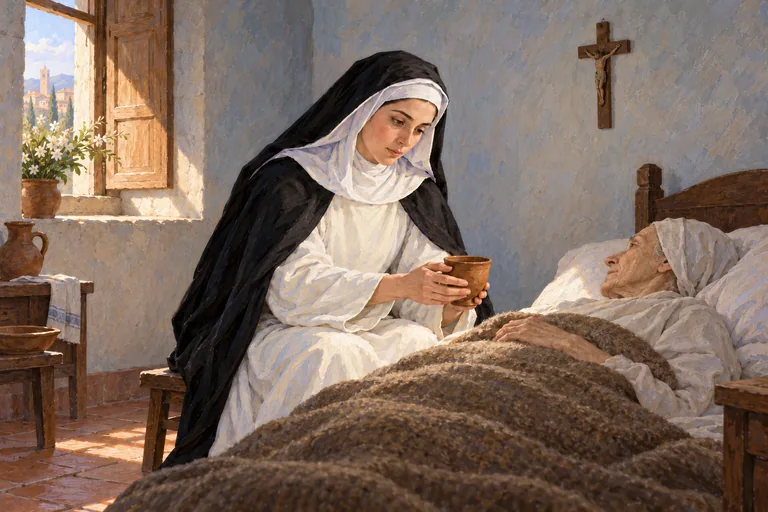
Not everyone accepted Catherine. Some even felt that she could not be trusted. In 1374, the General Chapter of the Dominicans, the meeting of the order's leaders, summoned her to Florence to be examined. They then appointed Raymund of Capua, a learned and humble friar, as her spiritual guide. Raymund later became her confessor and wrote the first complete biography of Catherine.
As word of Catherine's holiness spread, she gave spiritual guidance to many people: nobles and politicians, artists and ordinary people, as well as religious men and nuns. One of them was Pope Gregory XI, who at that time was living in Avignon, not in Rome. Catherine persistently urged him to return to Rome, and her urging succeeded.
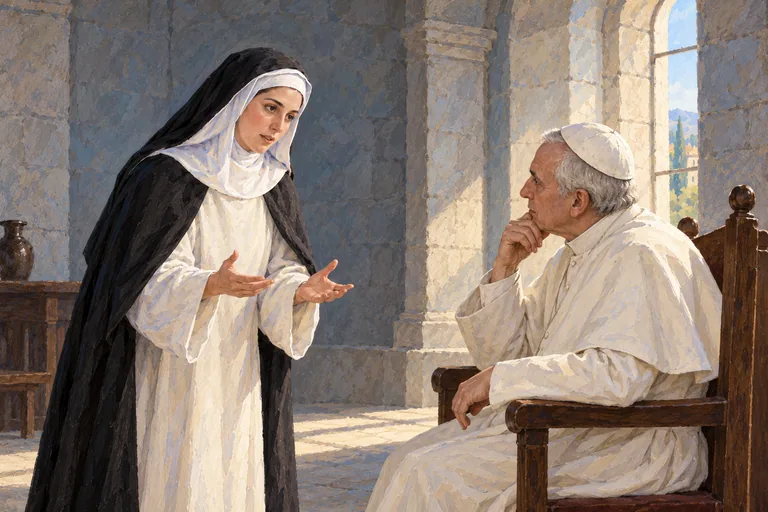
The way Catherine spoke is worth noticing. She knew that priests are human beings with weaknesses. Yet she always had great reverence for them, because through the sacraments and the word they dispense the saving power of Christ's Blood. This reverence did not make her silent. She kept urging the sacred ministers to be faithful to their responsibilities, including the Pope, whom she addressed with a loving title that linked him to Christ on earth.
According to Pope Benedict XVI, what moved Catherine was only her profound and constant love for the Church. This love also led her to travel widely to press for reform within the Church and to work for peace among states.
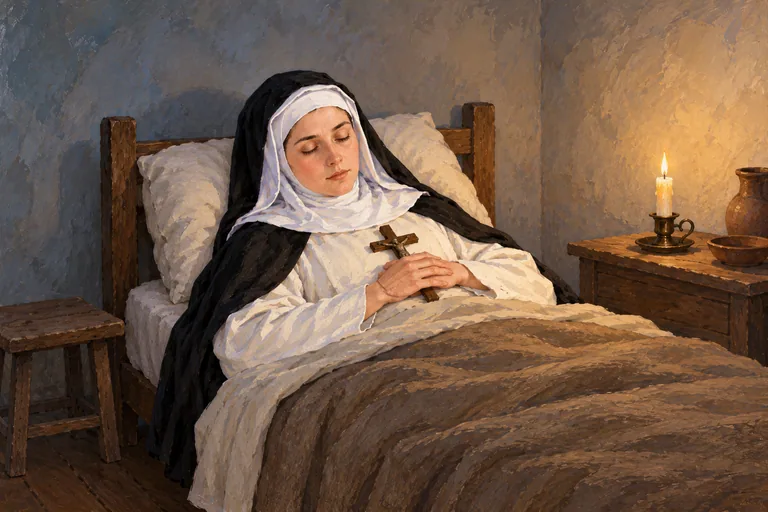
Catherine died in Rome in 1380. The biography written by Raymund, later cited by Pope Benedict XVI, records that before she died Catherine said she had given her life in and for the Holy Church. For her, this was a very special grace. In 1461, the Church canonized her as a saint.
- Born
- Siena, Italy, 1347, into a very large family
- Died
- Rome, 1380
- Spiritual family
- Third Order of the Dominicans (Mantellate), entered at the age of 16
- Writings
- Dialogue of Divine Providence, collected letters (Epistolario), and collected prayers
- Canonization
- 1461
Bring this story into your prayer.
Context & sources
General Audience of November 24, 2010 (GA), para. on suffering and Raymund of Capua; GA, opening para. of the biography; GA, first para.; GA, para. on suffering; GA, para. on Catherine's teaching; GA, para. on tears and Christ's Blood; GA, para. on sacred ministers and love for the Church; Audien
Official holy-see source from vatican.va, supplied in the approved brief. Official Holy See website; paraphrase and link, quotations within limits. Research snapshot; rights and final paraphrase require human review.
Free to copy and share. Please credit lightofsaints.com. Copyright