Saint Teresa of Calcutta: Faithful Service in Inner Darkness
Saint Teresa of Calcutta (Mother Teresa): Jesus' cry of thirst moved her to serve the poorest, and she prayed faithfully through years of inner darkness.
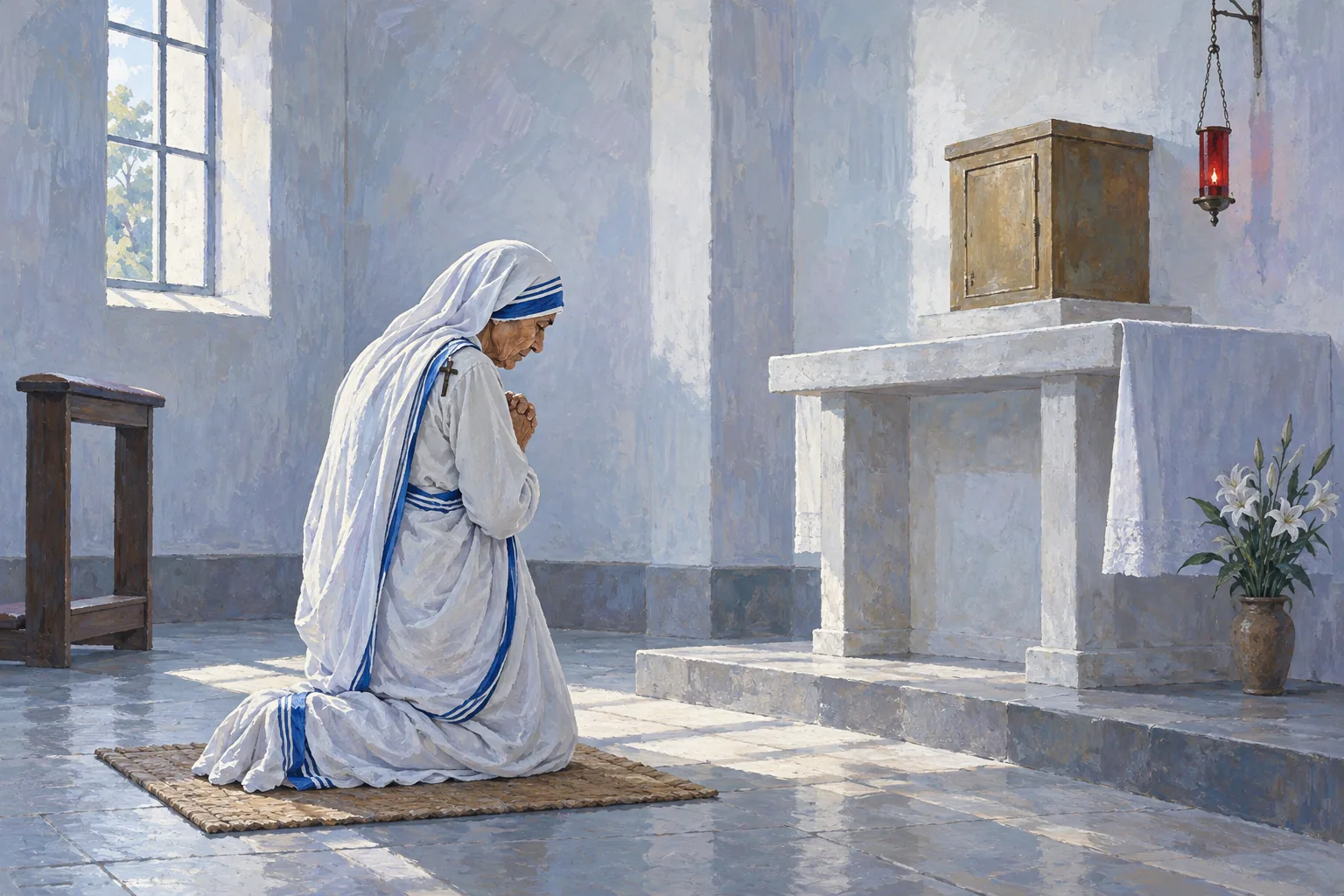
On the cross, Jesus cried out that he was thirsty. The Gospel of John records this short cry (Jn 19:28). For Saint Teresa of Calcutta, whom many people know as Mother Teresa, this cry was not simply part of the story of the Passion. According to the Vatican decree and her beatification homily, the cry touched her soul to its depths and took deep root in her heart.
The beatification homily reads that cry as an expression of God's longing for humanity. Teresa responded with her whole life. Church sources say that the aim of her life was to satiate Christ's thirst for love and for souls. Neither source tells when, where, or how this experience took place. What they emphasize is the direction of life that grew out of it.
That direction led her to the poorest of the poor. According to the beatification homily, she chose to be not only the least, but the servant of the least. She bent down to those suffering various forms of poverty, like a mother to them. Pope John Paul II called her the foundress of the Missionaries of Charity.
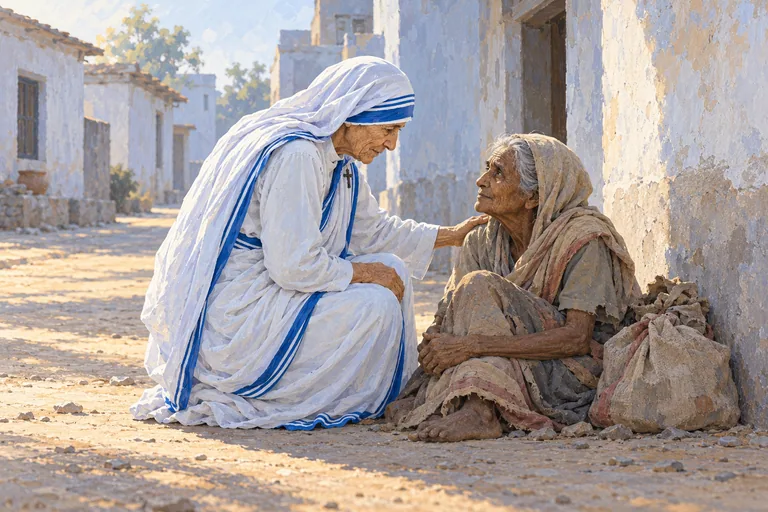
This service was rooted in the Gospel of Matthew (Mt 25:40), where Jesus declares that what is done for the least of his brothers is done for him. From this came her conviction: when she touched the wounded bodies of the poor, she was touching the body of Christ. For this reason, prayer and work were not separate in her life. She gave herself completely to the poor while continuing to live in prayer.
Yet her story does not end with the work that could be seen. For many years Teresa experienced what the homily calls inner darkness, a test of faith that was at times agonizing.
Part of this experience is known through her own testimony. In 1960 she wrote a letter to Father Joseph Neuner and opened her soul. According to Cardinal Arthur Roche's summary, in that letter she revealed the darkness of feeling God's absence, which she had already lived through for years. Even so, she joyfully offered that trial to God, so that many souls might be enlightened.
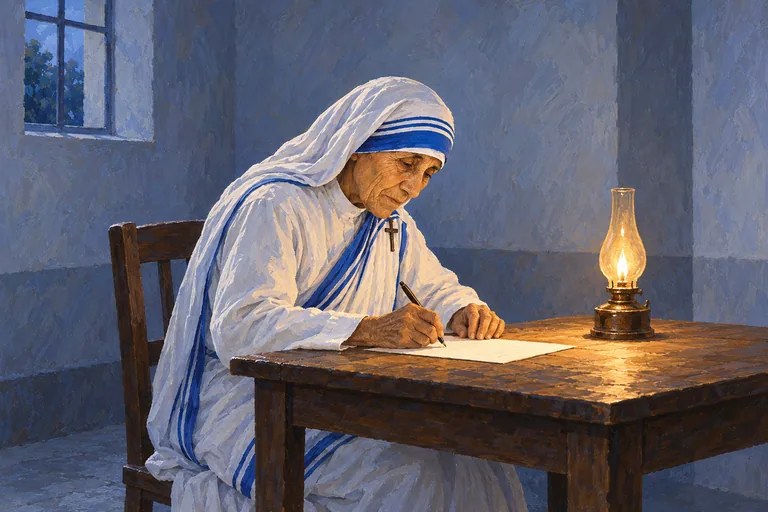
The beatification homily interprets that dark period as Teresa's special way of sharing in the Passion of the crucified Christ. She herself accepted it as a rare gift and privilege. In the darkest moments, she prayed all the more steadfastly before the Blessed Sacrament, that is, the Eucharist reserved in a church or chapel. Like the Psalmist, she often cried out that she still hoped in the Lord.
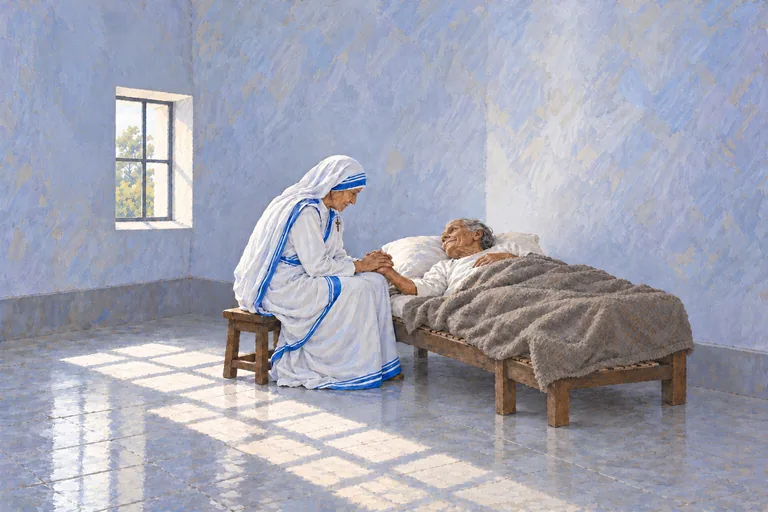
That dark period did not distance her from others. According to the homily, this harsh trial made her identify more and more closely with the people she served each day. She shared their pain, and at times even the rejection they experienced. She often said that the greatest poverty is to be unwanted and to have no one who cares.
On October 19, 2003, Pope John Paul II beatified her. Pope Francis later canonized her as a saint; the rite of canonization took place during Mass on September 4, 2016. Today her name is inscribed in the General Roman Calendar, with an optional memorial every September 5.
- Known as
- Foundress of the Missionaries of Charity
- Beatification
- October 19, 2003, by Pope John Paul II
- Canonization
- By Pope Francis during Mass on September 4, 2016
- Feast
- September 5, optional memorial in the General Roman Calendar
Bring this story into your prayer.
Context & sources
Decree, third paragraph; Commentary by Cardinal Arthur Roche, third paragraph; Decree, fourth paragraph; Decree, second paragraph; Commentary by Cardinal Arthur Roche, fifth paragraph (Liturgy of the Hours)
Official Vatican URL supplied in approved brief. Research snapshot; rights and final paraphrase require human review.
Beatification homily, October 19, 2003, no. 1; Beatification homily, no. 3; Beatification homily, no. 4; Beatification homily, no. 2; Beatification homily, no. 5; Beatification homily, no. 6
Official Vatican URL supplied in approved brief. Research snapshot; rights and final paraphrase require human review.
Free to copy and share. Please credit lightofsaints.com. Copyright