Saint Thérèse of Lisieux: The Little Way in Faith's Darkness
The story of Saint Thérèse of Lisieux, a Carmelite nun who found the little way and clung to Jesus through illness and darkness of faith until her death at 24.
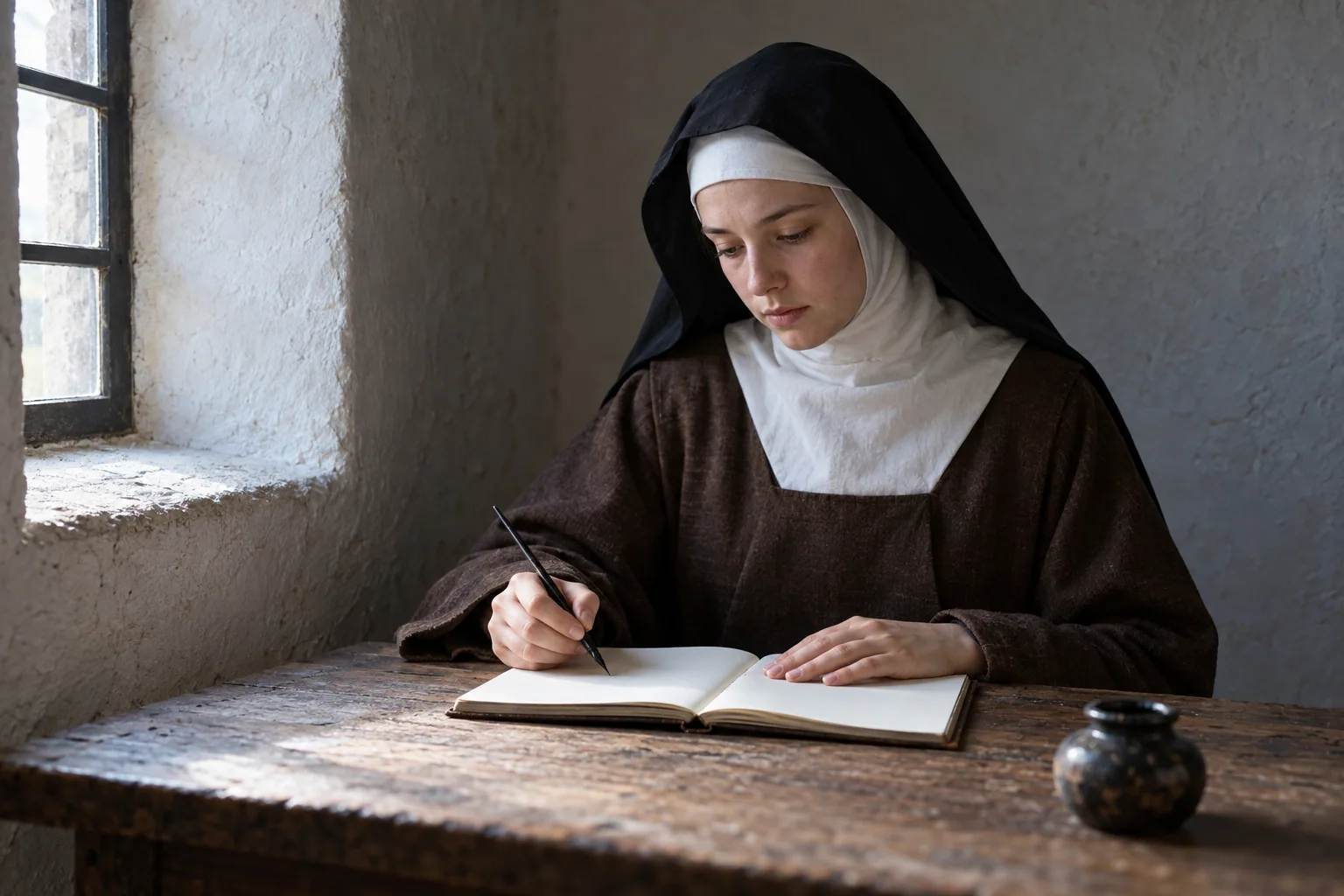
During a pilgrimage to Rome in 1887, a French girl named Thérèse met Pope Leo XIII. She asked for permission to enter the Carmel at the age of fifteen. On April 9, 1888, she entered the Carmel of Lisieux. Her life lasted only twenty-four years and, according to Pope Francis, was completely ordinary. How could such a simple life become a path to holiness?
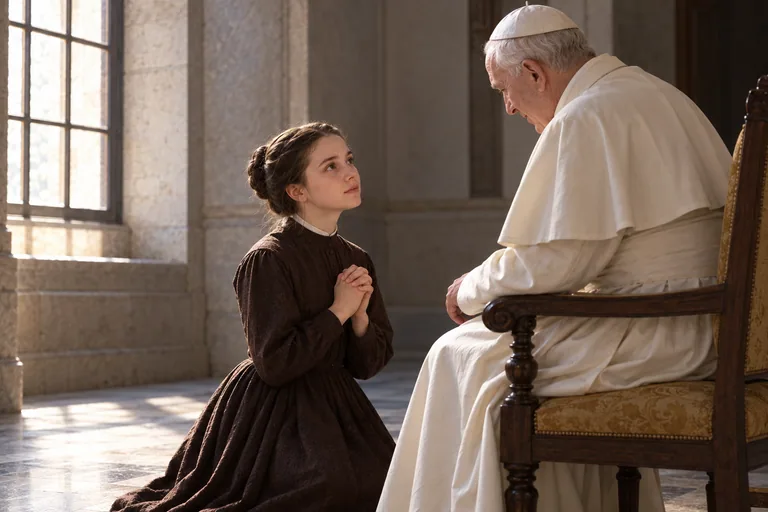
At Carmel, Thérèse was greatly tried by the illness of her father, Louis Martin. It was also in that monastery that she discovered what later came to be known as the little way, and she then taught it to the novices, the candidate sisters she guided. She told of this discovery in Story of a Soul. Pope Francis describes it this way: Thérèse knew she was little and unable to rely on herself, yet she leaned firmly on the power of the Lord's love. The Church calls it the path of trust and love, or the way of spiritual childhood, open to everyone who surrenders to the Lord's grace.
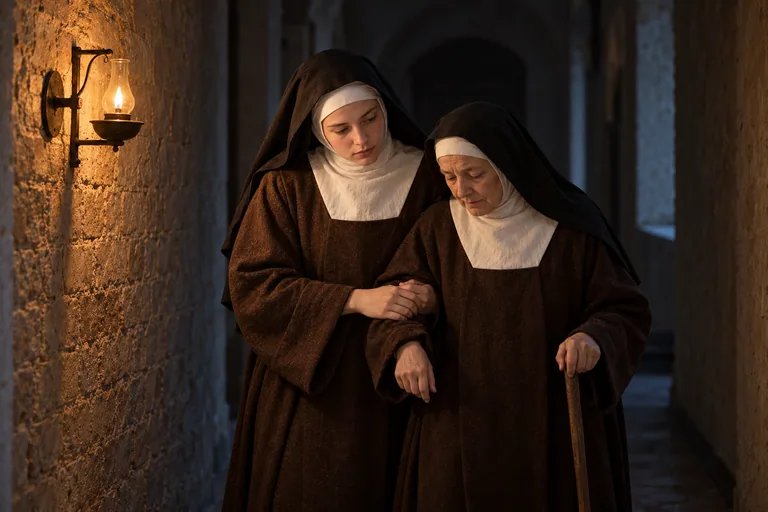
Thérèse herself wrote down one example of it. One winter evening, she was carrying out her small task: helping a sick sister walk. Music could be heard in the distance, and she imagined a lively party. Near her there was only the sister's complaining and the dim brick walls of the monastery. Yet she testified that the Lord lit up her soul; for her, ten minutes of serving with love were worth more than a thousand years of worldly celebration.
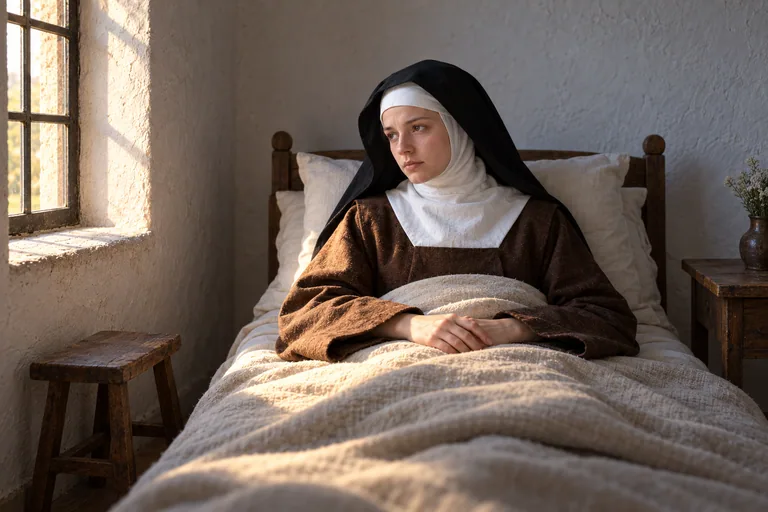
Around Easter 1896, the first sign appeared of the illness that would eventually lead to her death. The Church sources used here do not name the illness, but they record that her health kept getting worse until, on July 8, 1897, she was moved to the monastery infirmary. According to John Paul II, Thérèse welcomed the illness as a mysterious visit from her divine Spouse.
At the same time, a trial of faith began that lasted until her death. In the last part of Story of a Soul, written a few months before she died, she tells how Jesus allowed her soul to be covered by an extremely thick darkness. Pope Francis explains that Thérèse connected this darkness with the atheism of her time, so that she shared in the despair and emptiness behind the rejection of faith. She admitted that when she sang of the happiness of heaven, she felt no joy; she simply sang what she wanted to believe.
Yet she did not let go of that trust. She wrote that in the midst of the darkness she ran to Jesus and declared herself ready to shed all her blood to profess her faith in heaven. She was even willing not to taste the joy of heaven while on earth, as long as Jesus would open it to those who do not believe. According to Pope Francis, she kept praying for them while renewing her own act of faith again and again. At the end of her life, she also wrote out the Apostles' Creed in her own blood.
Her suffering grew heavier, but she bore it with patience. The sisters recorded what she said during that time: those who follow the way of love need not think about suffering that has not yet come, because such anxiety is a sign of a lack of trust. To Abbé Bellière she wrote that she was not dying but entering into life. Thérèse died on the afternoon of September 30, 1897; according to Church sources, her last words were a declaration of love for God.
On May 17, 1925, Pope Pius XI declared her a saint. In 1997, John Paul II named her a Doctor of the Church, the youngest of them all, and regarded the combination of her teaching and her life experience as an attractive model, especially for young people and for anyone seeking meaning in life.
- Born
- January 2, 1873, in Alençon, France
- Entered the Carmel of Lisieux
- April 9, 1888
- Father
- Louis Martin, died July 29, 1894
- Moved to the monastery infirmary
- July 8, 1897
- Died
- Afternoon, September 30, 1897
- Canonization
- May 17, 1925, by Pope Pius XI in St. Peter's Basilica
- Doctor of the Church
- Declared by Pope John Paul II in 1997
Bring this story into your prayer.
Context & sources
Homily of October 19, 1997, no. 4; Homily of October 19, 1997, no. 6; Homily of October 19, 1997, no. 5
Official Vatican URL supplied in approved brief. Research snapshot; rights and final paraphrase require human review.
Divini Amoris Scientia, no. 2; Divini Amoris Scientia, no. 5; Divini Amoris Scientia, no. 6; Divini Amoris Scientia, no. 9
Official Vatican URL supplied in approved brief. Research snapshot; rights and final paraphrase require human review.
C'est la confiance, no. 6; no. 5; no. 4; no. 14; no. 15; no. 16; no. 36; no. 37; no. 25; no. 42 (quoting Ms C, 7v); no. 26; no. 37 (quoting Ms C, 29v-30r); no. 25 (referring to Ms C, 5v); no. 25 (referring to Ms C, 6v); no. 26 (
Official Vatican URL supplied in approved brief. Research snapshot; rights and final paraphrase require human review.
Free to copy and share. Please credit lightofsaints.com. Copyright